Why a Letter to Verify Employment Can Make or Break Your Application
A letter to verify employment is one of the most requested documents in modern financial and legal life — and one of the easiest to get wrong.
Here's what you need to know at a glance:
| Question | Quick Answer | |---|---| | What is it? | A formal letter from an employer confirming job status, title, and dates | | Who needs it? | Renters, loan applicants, visa seekers, and new job candidates | | What's included? | Employee name, job title, employment dates, salary (if permitted) | | Who writes it? | HR, a manager, or a payroll administrator | | How fast? | Often within one business day with proper systems in place |
Banks need it before approving a mortgage. Landlords ask for it before handing over keys. Immigration officers review it before granting a visa. Without a clear, accurate verification letter, applications stall — or get rejected entirely.
The letter itself is simple. But the details matter enormously. A missing signature, an informal tone, or the wrong information can cause real problems for both the employee and the employer.
This guide walks you through exactly how to write one that works — and how to build a reliable process so you're never scrambling when the next request comes in.
I'm Francisco Ortiz, Lead Forensic Mental Health Evaluator and Director of Behavioral Health at District Counseling PLLC, and my work across six states regularly involves reviewing and producing documentation — including the letter to verify employment — that meets strict legal and institutional standards. That experience informs every recommendation in this guide.
What is a Letter to Verify Employment and Why is it Needed?
At its core, a letter to verify employment is a formal document provided by a current or past employer. It serves as an official confirmation that an individual is (or was) employed by the company. While it sounds like a simple administrative task, this letter is a "pillar of credibility" in the professional world. It bridges the gap between what an individual claims and what a third party can trust.
In May 2026, the need for these letters has only grown. As remote work and gig economy roles become more common, lenders and landlords require standardized proof to ensure financial stability.
Why People Ask for This Letter
We often see employees requesting these letters for several high-stakes life events:
- Mortgage and Loan Approval: Banks and lenders are the most common requestors. They need to ensure you have a steady income to pay back a loan.
- Rental Applications: Landlords in competitive markets like Houston or Austin want to see that your "substantial job security" matches your ability to pay rent.
- Visa and Immigration Processing: When applying for a visa, government agencies often require a Jackson & Hertogs style verification to prove that your travel is for leisure or that you have a permanent role to return to.
- New Job Background Checks: Prospective employers use these letters to verify that your resume accurately reflects your past titles and dates of service.
Employment Verification vs. Form I-9
It is important not to confuse a Employment (Income) Verification Letter with federal eligibility forms. While both deal with "verification," they serve completely different purposes.
| Feature | Employment Verification Letter | Form I-9 | |---|---|---| | Purpose | Confirms status, title, and income for third parties | Verifies legal authorization to work in the U.S. | | Required by | Landlords, Banks, Lenders | Federal Government (Department of Homeland Security) | | Content | Job title, salary, dates of employment | Identity documents, citizenship/visa status | | Standardization | Varies by company; no universal legal format | Strict federal form required for all new hires |
How to Draft an Effective Verification Document
Drafting a letter to verify employment shouldn't be a creative writing exercise. In fact, the more "boring" and professional it is, the better. Most HR departments in 2026 use standardized templates to ensure consistency and reduce the risk of including the wrong information.

When we draft these documents, we always use official company letterhead. This isn't just for aesthetics; it provides immediate visual proof of the letter's authenticity. A letter written on plain white paper without a logo or contact information is often flagged as a potential fraud by high-level lenders.
Key Information to Include in a Letter to Verify Employment
A successful letter must answer the requestor's questions clearly and concisely. According to standard HR practices, you should include:
- Employer Information: Company name, address, and contact details.
- Employee Details: Full legal name and, occasionally, a unique employee ID (avoiding SSNs).
- Employment Dates: The exact start date and, if applicable, the end date.
- Job Title: The official position held by the employee.
- Employment Status: Whether they are full-time, part-time, or a contractor.
- Salary (If Authorized): Only include income details if the employee has given explicit written consent.
For a ready-to-use format, you can refer to this FREE EMPLOYMENT VERIFICATION LETTER SAMPLE - Template Form.
What to Exclude from a Letter to Verify Employment
Knowing what not to say is just as important as the content itself. To protect the company and the employee's privacy, we recommend excluding:
- Social Security Numbers (SSN): Including a full SSN is a massive data security risk. If identification is needed, use only the last four digits or a company-specific ID.
- Performance Reviews: Never include whether the employee was "good" or "bad" at their job. This opens the door to legal liability.
- Personal Opinions: Stick to the facts. Avoid phrases like "He is a great guy" or "We were sad to see her go."
- Reason for Termination: Unless specifically required for a legal proceeding, it is best to simply state the dates of employment.
Standardizing the Verification Process for Employers
If you are an employer in Texas or any of the 50 states, you shouldn't be starting from scratch every time an employee asks for a letter. Standardizing this process saves time and ensures you stay compliant with privacy laws.
Many modern companies use HR and payroll software that can auto-generate a letter to verify employment within seconds. For larger organizations, third-party databases like The Work Number are invaluable. These databases contain more than 823 million employee records from over 5 million contributing employers, allowing lenders to verify data 24/7 without ever calling your HR office. In 2025 alone, 58 million people received verifications outside of regular business hours thanks to these automated systems.
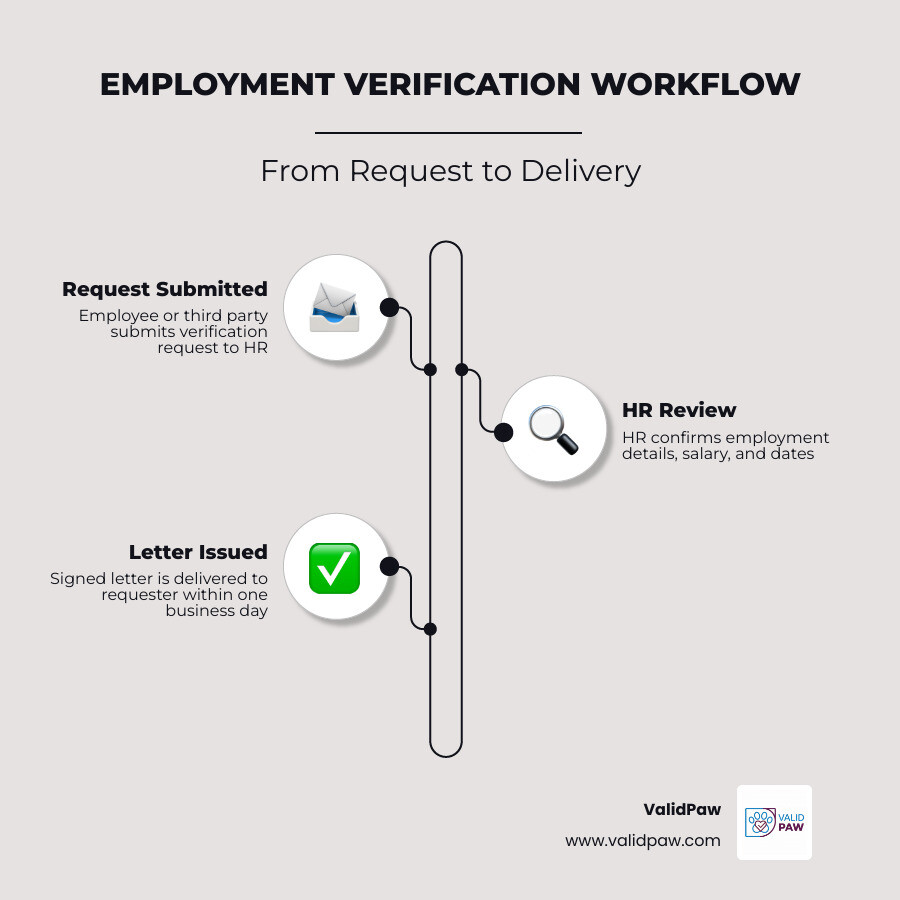
Creating a Request Workflow
We suggest including a clear policy in your employee handbook. This policy should explain:
- How to submit a request (usually via email or an HR portal).
- The typical processing time (one business day is the gold standard).
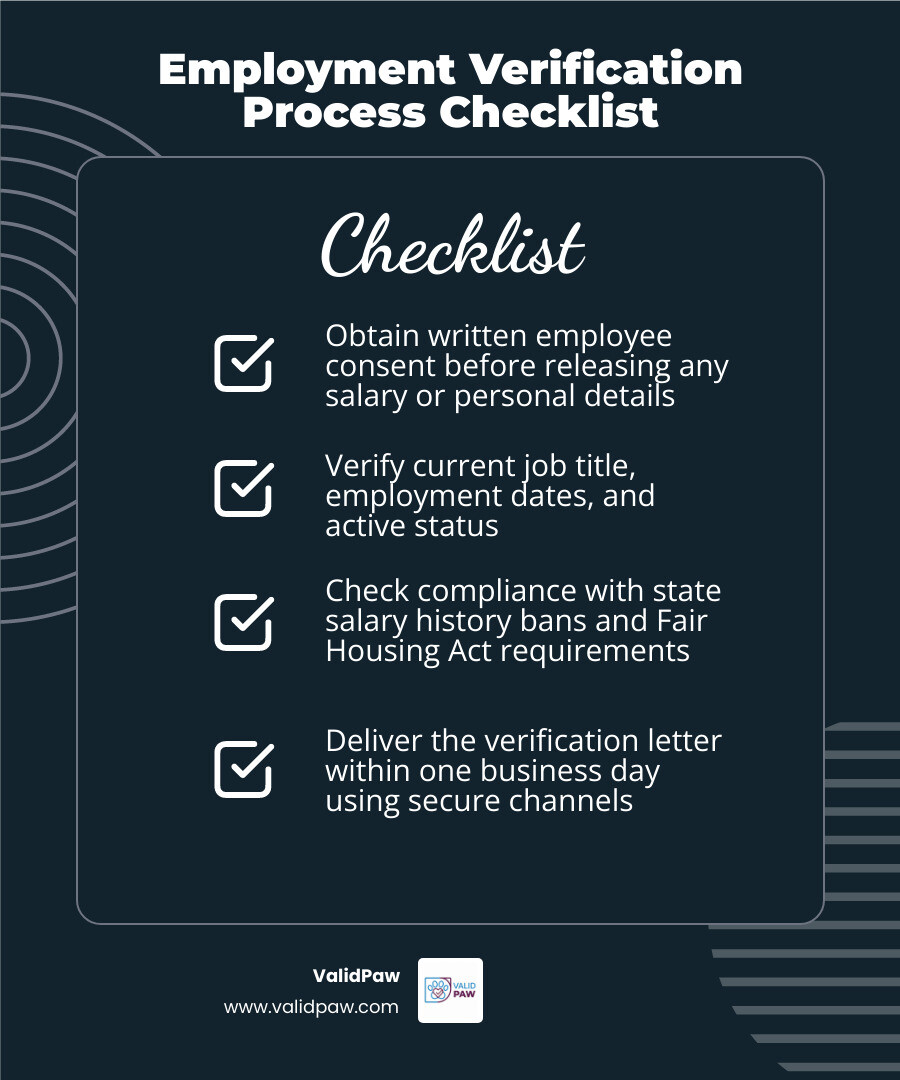
- The need for written consent if salary information is required.
For employees, knowing How To Request an Employment Verification Letter is the first step in a smooth application process. If you are a landlord or a renter looking for specific housing-related proof, you might also find our guide on Rental Verification Letters and How to Get Them Without the Stress helpful.
Legal Compliance and Privacy Considerations in 2026
The legal landscape regarding employment data is constantly shifting. As of May 2026, several states have implemented strict "salary history bans." These laws prevent employers from disclosing an employee's past or current salary to prospective employers without specific authorization.
Privacy and Consent
Before releasing any information, ensure you have a signed release form from the employee. This protects the company from claims of privacy violations. When dealing with sensitive requests, such as those related to the Fair Housing Act (FHA) or disability accommodations, the standards for documentation are even higher.
At ValidPaw, we understand the importance of compliant documentation. Whether it's a letter to verify employment for a mortgage or an ESA letter for housing, the document must be issued by a licensed professional and meet all federal and state guidelines.
Data Security
In an era of frequent data breaches, how you send these letters matters. Avoid sending unencrypted PDFs containing sensitive details via standard email if possible. Secure portals or direct-to-lender automated systems are much safer alternatives.
Frequently Asked Questions about Employment Verification
Can an employer refuse to provide a verification letter?
While it is rare, an employer can technically refuse to provide a letter unless mandated by state law or a specific contract. However, most companies comply because it is a standard professional courtesy. Refusing to provide one can damage employee morale and hinder their ability to secure housing or financing. If a company has a policy against letters, they will often still provide a "neutral" verification of dates and titles via a third-party service.
How long does the verification process typically take?
With modern HR software, many employers can prepare a letter to verify employment within one business day. If the company uses an automated system like The Work Number, the verification can be near-instant for the lender. Manual reviews by small business owners may take 3-5 business days, so employees should always request their letters as early as possible.
Is a pay stub a valid substitute for a verification letter?
A pay stub is excellent for proving current income, but it doesn't always prove "employment stability." A pay stub shows what you earned last week; a verification letter confirms you have been there for three years and are still currently active. Most lenders will ask for both: two recent pay stubs and one formal verification letter to get the full picture of your financial health.
Conclusion
Professionalism in documentation is the key to a stress-free life for both employees and employers. By using standardized templates and maintaining a clear request process, companies can support their staff's personal milestones—like buying a home or moving into a new apartment—without creating an administrative burden.
A well-crafted letter to verify employment is more than just a piece of paper; it is a testament to an individual's hard work and financial reliability. Whether you are an HR manager in Dallas or an employee in Chicago, getting the details right ensures that the wheels of commerce and housing keep turning smoothly.
At ValidPaw, we specialize in providing legitimate, telehealth-based evaluations for those who need reliable documentation for their lives and their pets. If you need to ensure your paperwork is up to the highest standards, we are here to help.