
How to Get an Employment Verification Letter for a Rental Application
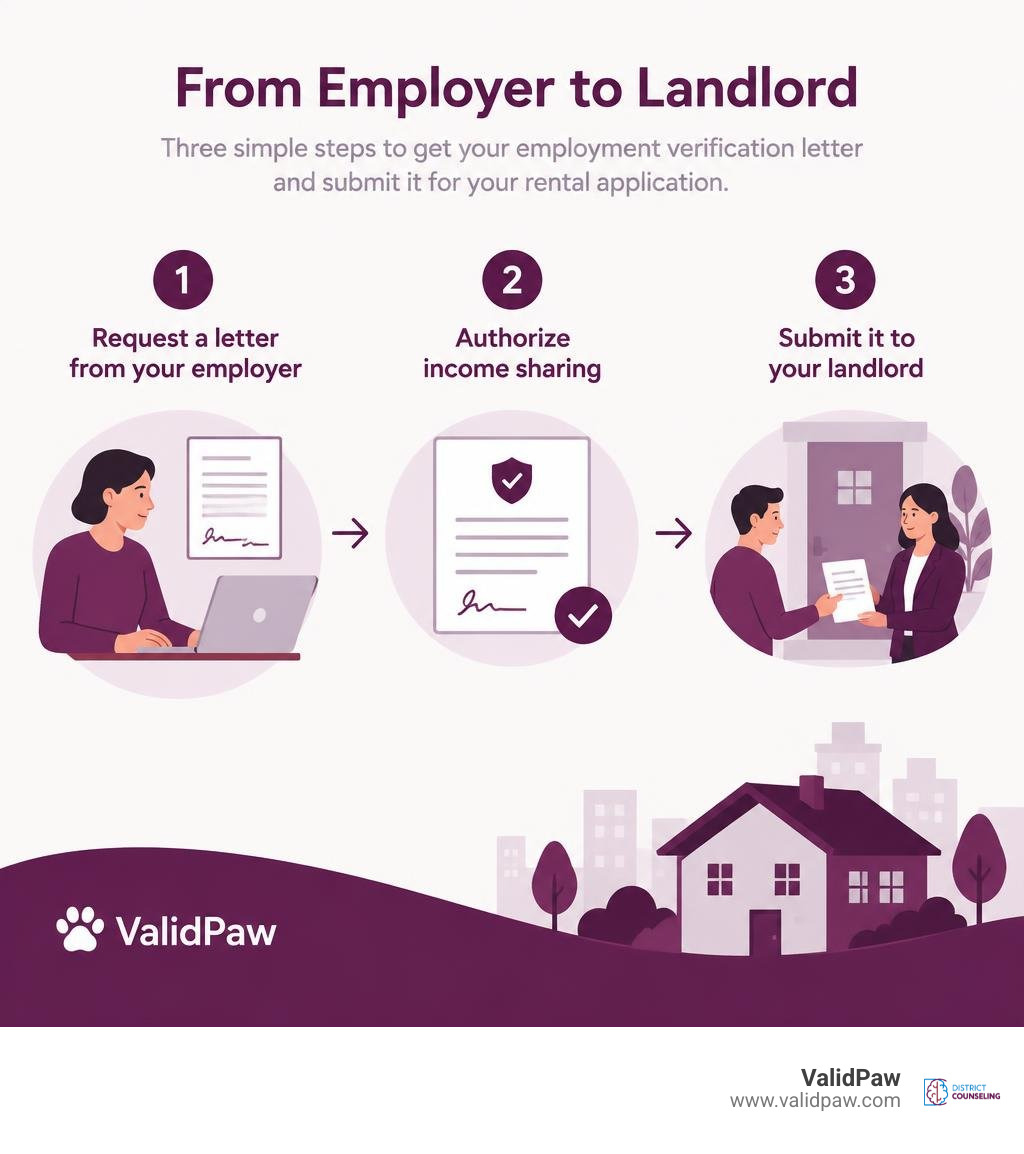
To get an employment verification letter for a rental application, ask your HR team or employer for a signed letter confirming your job title, start date, employment status, and income. Tell them when you need it, where to send it, and whether you authorize them to share your pay details. If your employer cannot provide a letter, ask the landlord whether recent pay stubs or other proof of income will work instead.
Keep the request simple. A clear, current letter gives the landlord a way to check your income without asking your employer for unrelated personal details.
I'm Francisco Ortiz, a forensic mental health evaluator whose work includes preparing housing-related ESA documentation. An employment verification letter for rental application review serves a different purpose, but I know how important clear, accurate documents are when someone is trying to secure housing.
What Is an Employment Verification Letter for a Rental Application?
An employment verification letter for a rental application is a formal statement issued by an employer confirming that a prospective tenant works for the organization and receives an ongoing wage or salary. In tenant screening, landlords use this document to calculate an applicant's gross monthly earnings and determine whether their rent-to-income ratio meets the property's financial benchmarks.
Housing affordability remains a pressing challenge across major rental markets. According to data from the U.S. Census Bureau, 49.7% of renter households were cost-burdened in 2023, spending more than 30% of their gross household income on rent and utilities. To protect both property operations and tenants from financial distress, property managers enforce income qualification thresholds.
The standard rule requires an applicant’s gross monthly income to equal at least 2 to 3 times the monthly rent. If an apartment in Dallas, Austin, or Chicago costs $2,000 per month, the landlord will generally require verified gross earnings between $4,000 and $6,000 per month. An official confirmation letter acts as a cornerstone in lease underwriting, proving the financial reliability needed to approve an application.
Why Landlords Require Income Verification Before Lease Approval
Landlords request proof of income to minimize default risk and maintain steady cash flow across their properties. When an applicant signs a 12-month lease, the property owner relies on predictable monthly payments to cover building maintenance, property taxes, insurance, and mortgage obligations.
By analyzing income verification records alongside standard household budgeting guidelines, property managers confirm job continuity and employment stability. A formal letter reassures the landlord that the applicant has regular working hours, reliable cash flow, and an active role within their company, reducing the likelihood of missed payments or early lease terminations.
Employment Verification vs Credit Checks vs Reference Checks
A comprehensive tenant screening package uses multiple independent verification steps. Each assessment tool provides a unique perspective on a prospective renter's qualifications:
- Employment Verification: Confirms active job status, position, hourly wage or salary, and tenure to verify that current income meets the property's affordability formula.
- Credit Checks: Examines consumer credit history, existing debt obligations, revolving balances, past collections, and overall payment track record.
- Reference Checks: Gathers qualitative feedback from previous property managers regarding lease compliance, care of property, and on-time rent habits.
| Verification Type | Primary Purpose | Key Data Evaluated | Source of Information | | :--- | :--- | :--- | :--- | | Employment Verification | Confirm income stability and affordability | Job title, hire date, gross earnings, hours worked | Employer HR or payroll department | | Credit Check | Measure debt load and payment reliability | Credit score, outstanding loans, payment history | Consumer credit reporting bureaus | | Reference Check | Assess tenancy behavior and lease compliance | Rental history, property care, noise complaints | Prior landlords or property managers |
Essential Details to Include in an Employment Verification Letter
A complete verification letter prevents back-and-forth communication between your prospective landlord and your human resources department. Knowing everything required in a valid letter to prove employment helps ensure your file contains every vital data point from the start.
A landlord-ready document should always appear on official company letterhead and feature:
- Employee Name and Job Title: Clear identification of the employee and their current professional role.
- Hire Date and Employment Status: Start date along with clear categorization as full-time, part-time, temporary, or seasonal.
- Gross Compensation and Pay Frequency: Exact pre-tax earnings stated on an hourly, weekly, monthly, or annual basis.
- Probability of Continued Employment: An affirmative statement confirming that the employee remains in good standing.
- Authorized HR Signature: The printed name, corporate title, direct phone line, business email address, and signature of the verifying manager.
Core Information Checklist for Employers and HR
When an employer drafts a verification document, mastering the secret to a perfect apartment employment letter means keeping the letter concise, factual, and strictly relevant to housing eligibility.
Property management teams frequently look for specific earnings breakdowns, such as:
- Primary Work Location: Clarifying whether the role is based on-site in a local market like Houston or San Antonio, or performed remotely.
- Variable Earnings Breakdown: Separate line items detailing guaranteed base pay versus variable compensation such as overtime earnings, regular production bonuses, or sales commissions.
- Direct Contact Information: Verified business email addresses and direct office extensions rather than central call-center switchboards.
- Corporate Authenticity: Official corporate seals or verifiable digital signatures that validate the document's origin.
How to Request an Employment Verification Letter for Rental Application Approval
Requesting your documentation early helps you stay ahead of competitive leasing timelines. Many HR departments take 2 to 5 business days to process formal paperwork.
When submitting your request to payroll or HR, provide a signed authorization letter for employee verification. State the leasing deadline clearly, provide the property manager's contact details, and specify which delivery channels—such as a secure direct email—the landlord prefers.
Alternative Proof of Income When You Cannot Get an Employer Letter
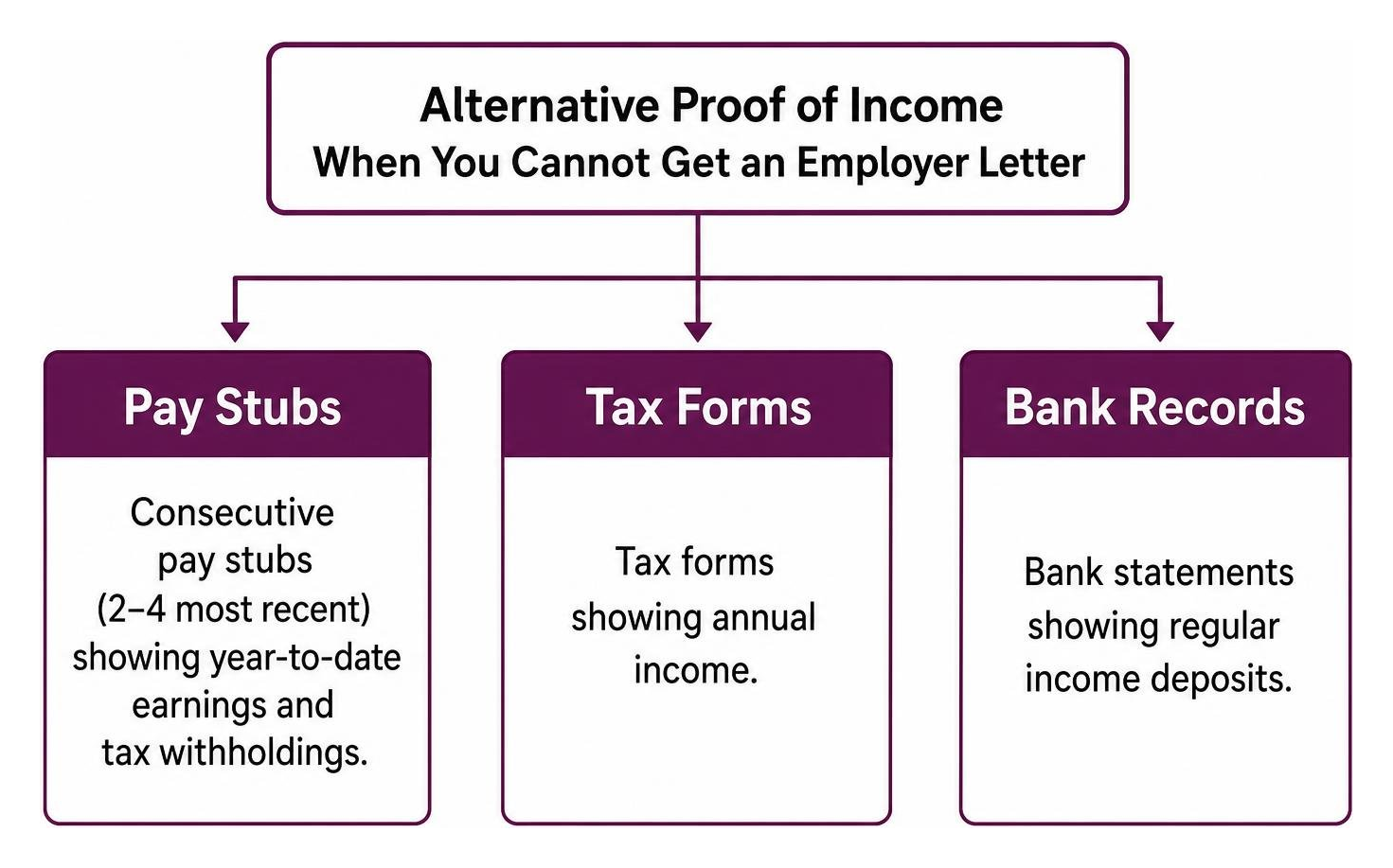
If your employer uses an automated corporate payroll provider that does not issue custom letters, or if you work on a contract basis, you can assemble alternative documentation to verify your income. Learning the full scope of applying to rent an apartment and the documents required gives you the flexibility to present a complete proof package.
Supporting Documents for Traditional Employees
Traditional W-2 employees who need immediate verification can provide:
- Consecutive Pay Stubs: The two to four most recent pay slips displaying cumulative year-to-date earnings and standard tax withholdings.
- Annual Tax Documents: Form W-2 statements from the most recent tax filing year confirming continuous earning history.
- Direct Deposit Bank Statements: Two to three months of checking account statements highlighting electronic payroll deposits that match your pay stubs.
- Signed Offer Letters or Onboarding Contracts: For renters relocating to take a new job in cities such as Fort Worth or Chicago, an official offer letter specifying your starting date, base salary, and acceptance signature satisfies initial underwriting needs. Utilizing organized rental verification letters keeps your leasing timeline on schedule.
Proving Income for Self-Employed, Freelance, and Gig Workers
Independent professionals cannot rely on a standard human resources department to confirm earnings. When drafting an employment verification letter for self-employed professionals, you must demonstrate financial consistency through business documentation.
Self-employed applicants, sole proprietors, and gig economy workers should prepare:
- Federal Tax Filings: The last two years of Form 1040 federal tax returns, accompanied by Schedule C forms detailing net business profit.
- Information Returns: Form 1099-NEC or 1099-MISC statements received from primary corporate clients over the past year.
- Business Bank Statements: Three to six consecutive months of complete business checking account statements proving steady cash inflow.
- Profit and Loss Statements: Year-to-date financial statements reviewed or prepared by a Certified Public Accountant (CPA).
- Independent Contractor Letters: Reviewing what belongs in an employment verification letter for independent contractors ensures that your ongoing client contracts clearly display project scopes, retained rates, and active agreement periods.
Tenant Privacy, Legal Protections, and Regional Rental Regulations
Federal, state, and local laws balance a property manager’s need to verify income with a renter’s right to personal data protection. Under the Fair Credit Reporting Act (FCRA) and the Fair Housing Act (FHA), property managers must apply objective, uniform screening criteria to every applicant without unlawful discrimination based on race, color, national origin, religion, sex, familial status, or disability.
Landlords must follow federal screening standards to ensure fair and lawful evaluations, as outlined in the HUD guidance on the application of the Fair Housing Act to tenant screening.
Protecting Personal Data and Redacting Sensitive Information
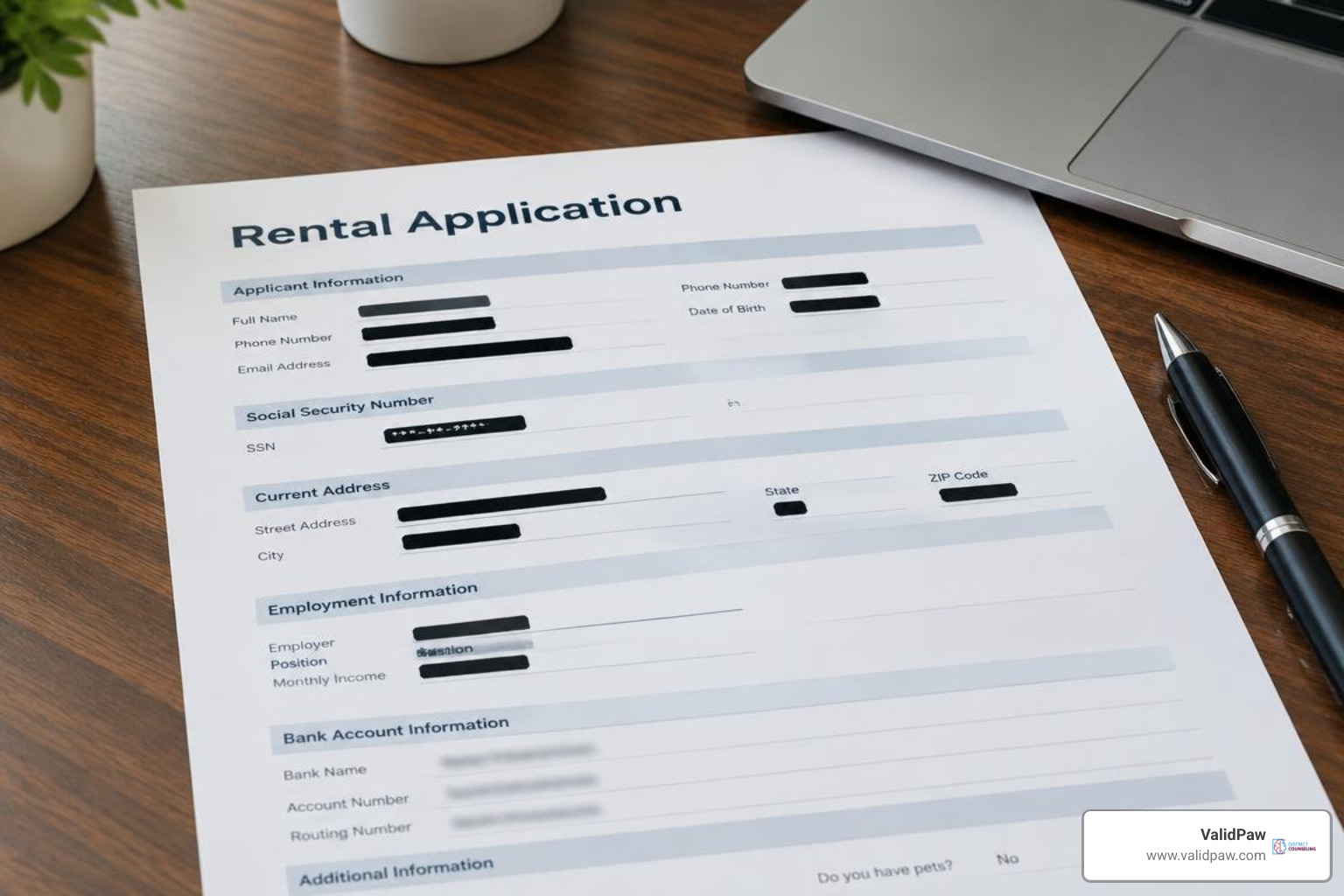
Employment records, pay slips, and financial statements contain private personal data. When sharing documentation with property managers, take active measures to safeguard your identity:
- Redact Sensitive Identifiers: Black out complete Social Security Numbers, driver's license numbers, and personal banking account numbers, leaving only the last four digits visible for matching purposes.
- Withhold Medical and Personal Information: Ensure that benefits deductions, health insurance plan choices, or family-related leave notes are excluded or blacked out.
- Use Secure Channels: Avoid sending unencrypted documents over public Wi-Fi or through unverified messaging platforms. Request an encrypted upload portal or hand-deliver physical copies when possible.
Legal Limits for Landlords and Specific Rules in Quebec and Beyond
Rental housing regulations vary significantly across regional jurisdictions. In the province of Quebec, residential leases and application procedures are governed by the Civil Code of Quebec and regulated by the Tribunal administratif du logement (TAL).
Understanding Quebec rules for employment letters and rental applications highlights vital privacy boundaries:
- Prohibited Identifiers: Landlords in Quebec cannot require an applicant’s Social Insurance Number (SIN), complete bank account numbers, or copies of credit cards.
- Alternative Proof Allowance: While landlords can ask for proof of income, tenants have the legal right to satisfy this request through pay slips, tax assessment notices, or proof of government assistance rather than a mandatory employer letter.
- Anti-Discrimination Protections: Under Quebec's Charter of Human Rights and Freedoms, applicants cannot be turned away solely because of their source of income or employment classification, provided their overall financial capacity supports the monthly rent.
How Landlords Screen and Verify Rental Employment Documents
Property managers cross-examine submitted employment letters to verify that the information is genuine. Understanding how to get a rental approval letter without delays begins with understanding the validation steps leasing offices use.
Professional screening protocols typically include:
- Independent Contact Verification: Looking up the employer's official business phone number or domain registration rather than relying solely on the phone number printed on the letter.
- Corporate Entity Checks: Checking state business registries, such as the Texas Secretary of State or Illinois Department of Financial and Professional Regulation, to ensure the employing business is actively registered and in good standing.
- Cross-Referencing Direct Deposits: Comparing reported monthly salary figures against actual deposits shown on submitted bank records.
Spotting Fraudulent Letters and Conducting Objective Screening
With digital editing tools widely available, leasing agents carefully check documents for common warning signs of falsified applications, including:
- Salary Inconsistencies: Gross pay numbers that do not align with standard deductions, tax rates, or typical industry wage ranges.
- Free or Generic Email Domains: Verification forms submitted from free consumer email addresses (such as
@gmail.comor@yahoo.com) rather than verifiable corporate domains. - Missing Payroll Withholdings: Pay stubs that lack typical Federal Insurance Contributions Act (FICA), Medicare, or state tax deductions.
When an application is denied due to information found in a consumer credit or background report, landlords must provide a formal adverse action notice in accordance with FCRA regulations, detailing the reason for the decision and the reporting agency used.
Best Practices for Employers When Responding to Verification Requests
Human resources departments and small business managers can simplify rental verification requests by adopting a few standardized operational practices:
- Require Written Employee Authorization: Never release compensation figures, salary histories, or employment details to a third-party property manager without signed consent from the employee.
- Stick Strictly to Factual Disclosures: Limit the contents of the letter to factual details: hire date, active position title, employment classification, and verified gross pay. Avoid subjective evaluations of personal character or job performance.
- Maintain Fast Turnaround Times: In fast-moving rental markets, taking advantage of a streamlined confirmation of permanent employment letter helps employees secure housing before property availability changes.
Frequently Asked Questions About Rental Employment Verification
What Should I Do If My Employer Refuses to Provide a Salary in an Employment Verification Letter for Rental Application Forms?
If your employer's corporate policy strictly prohibits releasing exact salary figures, ask HR to issue a letter confirming your active employment dates, job title, and full-time status. You can then supplement this document with your two most recent pay stubs, your most recent W-2 form, or official bank statements showing regular direct deposits. Landlords accept this combined package because the third-party pay slips verify the earnings that the employer's letter leaves unstated.
Do Landlords Look at Gross or Net Income on Rental Applications?
Property managers almost universally calculate affordability using your gross income (total pre-tax earnings) rather than your net income (take-home pay after taxes and deductions). Standard rent-to-income models, including the traditional 30% guideline and the 3x rent rule, are structured around pre-tax earnings. However, non-guaranteed bonuses, irregular overtime, and seasonal commissions may be discounted or averaged over a 12-to-24-month period unless your employer confirms they are regular and recurring.
How Fast Can Landlords Verify Employment for an Apartment?
Standard employment screening takes between 24 and 48 hours when your employer responds promptly. Verification can take longer if the property management company must route requests through third-party automated employment databases or if human resources requires manual phone validation. You can accelerate this timeline by alerting your HR manager in advance, signing all consent forms when you submit your application, and providing direct departmental contact information.
Conclusion
Securing an apartment requires a well-prepared application package. An employment verification letter for a rental application provides property managers with the factual certainty they need to verify your income, evaluate your rent-to-income ratio, and approve your lease. By pairing a complete employer letter with supporting pay stubs, bank statements, and redacted tax documents, you present an organized, credible application that leasing offices can process without delay.
At ValidPaw, we understand that securing a rental home involves navigating multiple documentation requirements. For renters who require legitimate Emotional Support Animal (ESA) documentation, our licensed therapists provide fast, 24-to-48-hour evaluations compliant with the Fair Housing Act across Texas and all 50 states. We support your housing journey with straightforward telehealth assessments and instant landlord verification services to make your move into your next apartment as seamless and stress-free as possible.