
What You Need to Know About ESA Documentation Requirements
ESA documentation requirements are simpler than most people think — but getting them wrong can cost you your housing.
Here is what you need to secure a valid ESA accommodation:
The only legally required document is an ESA letter from a licensed mental health professional (LMHP). No registry. No certification. No vest or ID card.
Your ESA letter must include:
- Licensed professional's letterhead with contact information
- Provider's license number and state of licensure
- Date of issuance
- Your full name
- Confirmation that you have a disability that limits a major life activity
- A statement explaining how the animal alleviates your symptoms
- Provider's signature
That's it. If someone is selling you anything beyond this — a certificate, a registration number, an official-looking ID card — it has no legal value.
Millions of renters deal with anxiety, depression, PTSD, and other mental health conditions every day. For many, their pet isn't just a companion — it's a critical part of managing their symptoms. But without the right paperwork, landlords can enforce no-pet policies and charge pet fees, even when an animal genuinely supports your mental health.
The Fair Housing Act (FHA) protects your right to live with an emotional support animal. But only if your documentation meets the legal standard.
This guide covers everything you need: what a valid ESA letter looks like, who can write one, what landlords can and cannot ask, and how to avoid the scams that are rampant in this space.
Federal and State ESA Documentation Requirements

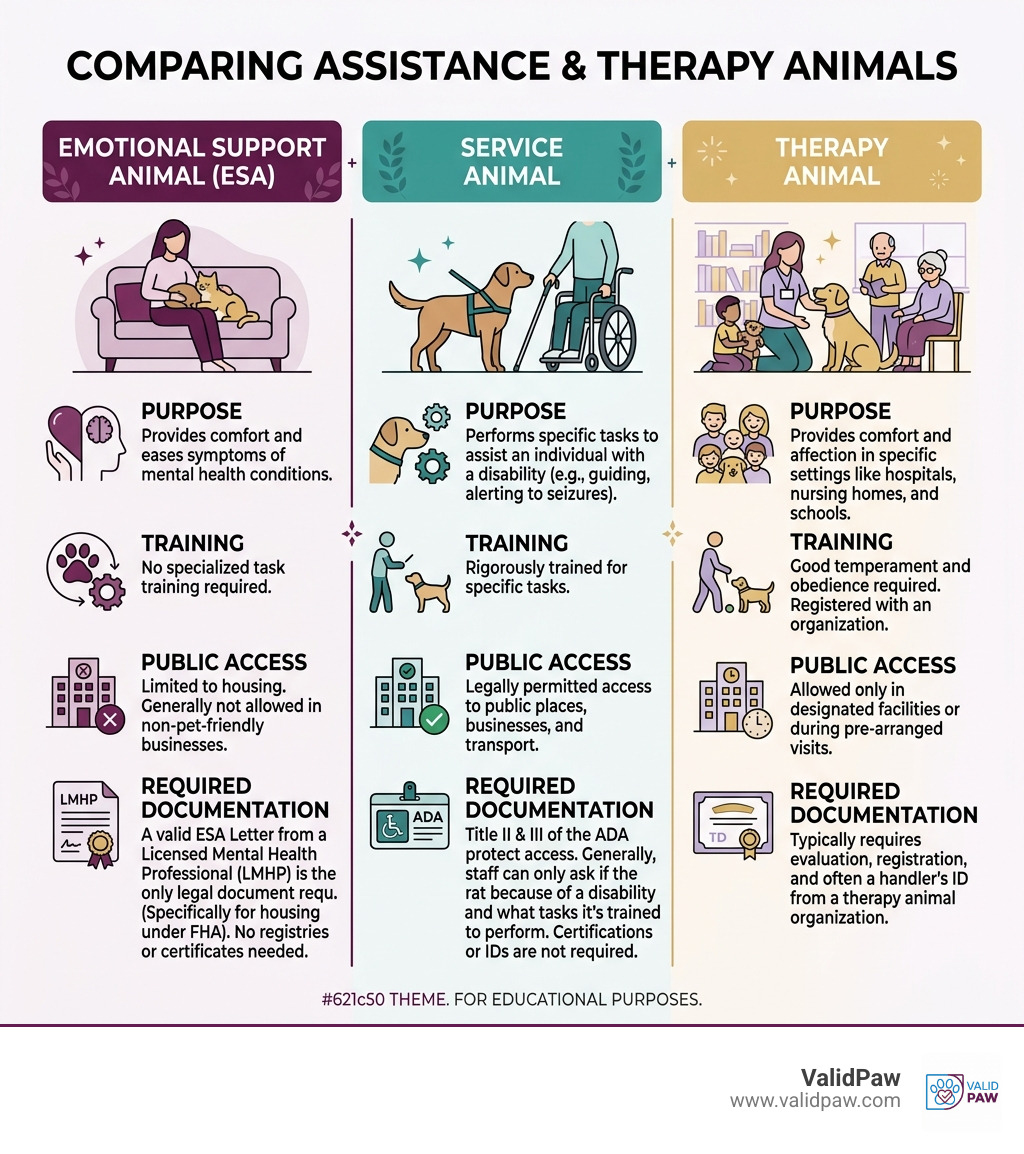
When we talk about esa documentation requirements, we are primarily operating under the jurisdiction of the Fair Housing Act (FHA). This federal law, overseen by the U.S. Department of Housing and Urban Development (HUD), mandates that housing providers make "reasonable accommodations" for individuals with disabilities.
Under the FHA, an emotional support animal is considered an "assistance animal," not a pet. This is a crucial distinction. Because they are not pets, they are exempt from:
- "No-pet" policies
- Breed restrictions (e.g., banning Pit Bulls or German Shepherds)
- Weight limits
- Monthly pet rent
- One-time pet deposits or fees
To trigger these protections, you must submit a request for reasonable accommodation to your landlord. While this request can be oral, it is best practice to provide it in writing alongside your official ESA letter. According to Texas Emotional Support Animal Laws, once you provide this documentation, a housing provider must generally grant the accommodation unless it creates an undue financial burden or the specific animal poses a direct threat to others.
| Feature | Emotional Support Animal (ESA) | Service Animal | | :--- | :--- | :--- | | Legal Protection | Fair Housing Act (FHA) | Americans with Disabilities Act (ADA) & FHA | | Training Required | None | Must be task-trained | | Public Access | No (Housing only) | Yes (Everywhere) | | Documentation | ESA Letter Required | No documentation allowed to be requested | | Species | Any common household animal | Dogs (and miniature horses) |
For more detailed insights on how these laws apply specifically in the Lone Star State, you can explore this guide to ESA in Texas.
Essential Components of ESA Documentation Requirements
A valid ESA letter is a medical recommendation, not a "permit." To ensure your letter stands up to landlord scrutiny, we ensure every document we facilitate includes these non-negotiable elements:
- Official Letterhead: The letter must be on the professional stationery of the licensed mental health professional.
- License Information: It must clearly state the provider's license type (e.g., LCSW, LPC, Psychologist), license number, and the state where they are licensed.
- Issuance Date: Letters are typically considered "current" for one year from the date of issue.
- Disability Confirmation: The provider must state that you have a mental or emotional impairment that substantially limits one or more major life activities (such as sleeping, working, or social interaction).
- Therapeutic Necessity: The letter must establish a "nexus" or connection between your disability and the support the animal provides.
If you already have a letter and want to ensure it meets these standards, you can Verify Letter through our secure system.
Navigating State-Specific ESA Documentation Requirements
While the FHA is a federal law, several states have passed additional legislation to curb "ESA mills" and ensure legitimate therapeutic relationships. As of April 2026, several states have implemented a "30-day rule."
In states like California, Arkansas, Iowa, Louisiana, and Montana, a healthcare provider must have an established therapeutic relationship with the client for at least 30 days before issuing an ESA letter for a dog. This often requires at least two consultations. In Illinois and Texas, while the 30-day rule is not currently the standard, landlords are becoming increasingly diligent about verifying the legitimacy of the provider.
In San Antonio and other major Texas hubs, property managers often use specific verification protocols. Landlords are permitted to verify that the professional who wrote the letter is actually licensed and that the letter is authentic. For a deeper look at the landlord's perspective, see The Landlord's Guide to Emotional Support Animal Laws in San Antonio.
Who Can Legally Issue an ESA Letter?

The question of "who" is just as important as "what" when it comes to esa documentation requirements. Only a Licensed Mental Health Professional (LMHP) or a medical doctor who is familiar with your mental health can legally issue an ESA letter.
Qualifying professionals include:
- Licensed Clinical Social Workers (LCSW)
- Licensed Professional Counselors (LPC)
- Psychologists
- Psychiatrists
- Licensed Marriage and Family Therapists (LMFT)
- Primary Care Physicians (if treating the mental health condition)
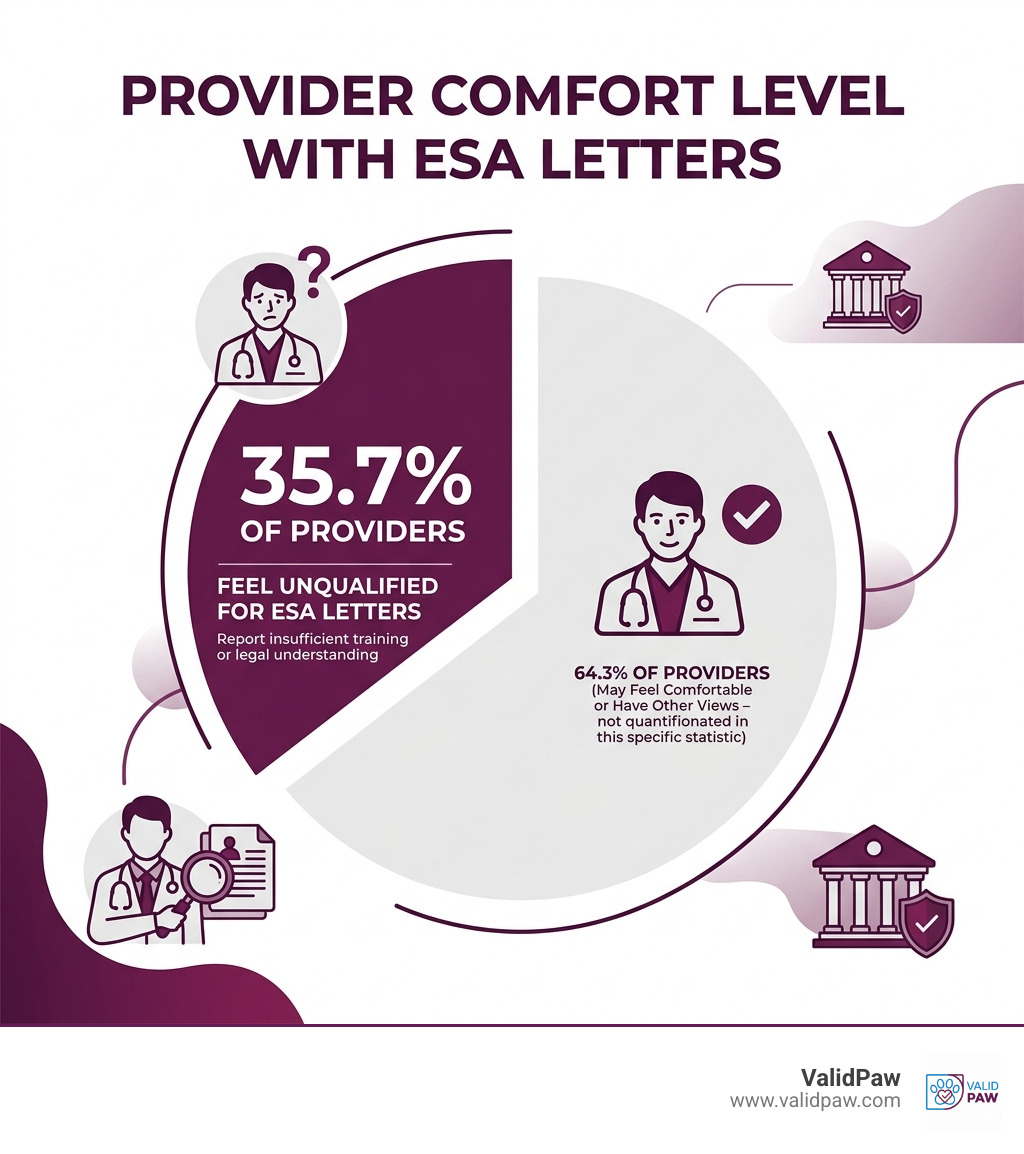
It is a significant red flag if a website offers a letter signed by a "registrar" or a "consultant" who is not a licensed clinician. Furthermore, about 35.7% of mental health providers have reported feeling unqualified to make ESA determinations. This is why we work with therapists who specialize in this area of clinical assessment.
The evaluation process should involve a clinical assessment of your mental health history and a discussion of how an animal helps mitigate your symptoms. For example, a patient with PTSD might explain how their dog’s presence prevents night terrors or provides a "grounding" influence during a panic attack.
Ethically, the professional must determine that the animal is a necessary part of your treatment plan. If you are ready to begin this professional evaluation, you can fill out our Application Form to be matched with a therapist licensed in your state.
How to Obtain Legitimate Documentation and Avoid Scams
The internet is flooded with "ESA Registries" that promise instant approval for a fee. We want to be very clear: There is no such thing as a "certified" or "registered" ESA.
Landlords are increasingly aware of these scams. If you present a "Certificate of Registration" from a database, a landlord can legally deny your request because those documents do not meet the esa documentation requirements set by HUD.
Red Flags to Watch For:
- Instant Approvals: If you get a letter without ever speaking to a licensed professional, it is likely a scam.
- No License Number: If the letter doesn't include a verifiable license number, it’s worthless.
- Lifetime Letters: Legitimate ESA letters are generally valid for one year. Anyone promising a "lifetime" letter is ignoring standard housing industry practices.
- Required "Gear": If a site tells you that you must buy a vest, ID card, or tag to be legally protected, they are lying. While a vest might be helpful for identification in your apartment complex, it holds zero legal weight.
We prioritize your data security and legal protection. You can review our Privacy Policy to see how we handle your sensitive health information during the evaluation process.
Landlord Rights and ESA Owner Responsibilities
While the FHA provides strong protections, it is not a "blank check." Landlords have rights, too. We believe in transparency, so it's important to know when a landlord can legally say "no."
Circumstances for Legal Denial:
- Direct Threat: If the specific animal has a history of aggressive behavior or bites someone, the landlord can demand its removal.
- Undue Burden: If the animal is a horse in a high-rise apartment (yes, it happens), the landlord may argue it fundamentally alters the nature of the housing or creates an undue financial burden.
- Property Damage: If the animal causes significant damage to the unit beyond normal wear and tear, the landlord can charge the tenant for repairs or, in extreme cases, move for eviction.
- Insurance Issues: If the landlord's insurance company threatens to cancel the policy because of a specific animal, this can be considered an undue burden.
Owner Responsibilities: As an ESA owner, you are still responsible for the animal's behavior. The animal must be housebroken and under your control at all times. You are also liable for any damage the animal causes to the property. Most landlords will include an addendum to the lease outlining these responsibilities. If you have more questions about these boundaries, check our FAQ.
Frequently Asked Questions about ESA Documentation
Can I still fly with my ESA in 2026?
The short answer is: No, not for free. In December 2020, the Department of Transportation (DOT) changed its rules. Airlines are no longer required to recognize emotional support animals. Most airlines now treat ESAs as standard pets, meaning they must stay in a carrier and you must pay a pet fee (often $125+ each way).
However, Psychiatric Service Dogs (PSDs) are still protected under the Air Carrier Access Act. A PSD is a dog trained to perform a specific task to assist with a mental disability. If your dog is task-trained, they can still fly in the cabin at no extra charge, but they are subject to different documentation requirements (DOT forms) than a standard ESA.
How often do I need to renew my ESA letter?
Most housing providers require an ESA letter to be "current," which in the industry typically means issued within the last 12 months. Annual renewal is the safest way to ensure you are never in violation of your lease. This also allows you to maintain an ongoing therapeutic relationship with your provider, which is a requirement in many states.
Can a landlord ask for my specific diagnosis?
No. Under the Fair Housing Act, a landlord cannot ask for your specific medical diagnosis, nor can they ask to see your medical records. They are only entitled to know that you meet the definition of disability under the Act and that there is a disability-related need for the animal. We ensure our letters provide exactly enough information to satisfy the law without compromising your private medical details.
Conclusion
Navigating esa documentation requirements doesn't have to be a headache. At ValidPaw, we specialize in connecting you with Texas-licensed therapists (and therapists licensed across all 50 states) who understand the clinical and legal nuances of ESA evaluations.
Whether you are in Houston, Austin, Dallas, San Antonio, or even Chicago, our telehealth process is designed to be fast, compliant, and stress-free. We provide FHA-compliant letters within 24–48 hours, complete with instant landlord verification to ensure your move-in process is as smooth as possible.
Don't let "no-pet" policies stand in the way of your mental health. Get your legitimate ESA letter today and live where you want with the support you need.

