
Why an Employee Work Verification Letter Can Make or Break Your Application
An employee work verification letter is a formal document from an employer that confirms a person's job title, employment dates, and current work status. It is one of the most commonly requested documents when you apply for housing, a loan, or a visa.
Here's what you need to know at a glance:
- What it is: An official letter from your employer confirming your employment details
- Who requests it: Landlords, lenders, government agencies, and prospective employers
- What it includes: Your name, job title, start date, employment status, and sometimes salary
- How to get it: Contact your HR department or manager and specify what information is needed
- How long it takes: Most employers respond within 3 to 5 business days
- How long it stays valid: Most requesting parties want a letter issued within the last 30 to 90 days
This single document can determine whether you get approved for an apartment, a mortgage, or a work visa. When someone needs one, the request is almost always urgent — and the stakes are very personal.
Large employers may use automated services like The Work Number, which gives credentialed verifiers instant access to more than 823 million employee records from nearly 5 million contributing employers. But millions of workers still rely on a straightforward written letter from their HR team.
I'm Francisco Ortiz, Lead Forensic Mental Health Evaluator and Director of Behavioral Health at District Counseling PLLC — and while my clinical work centers on disability documentation and mental health assessments, I regularly work alongside individuals navigating housing applications where an employee work verification letter is a required piece of the puzzle. Understanding how this document works is essential to helping clients secure stable housing without unnecessary delays.
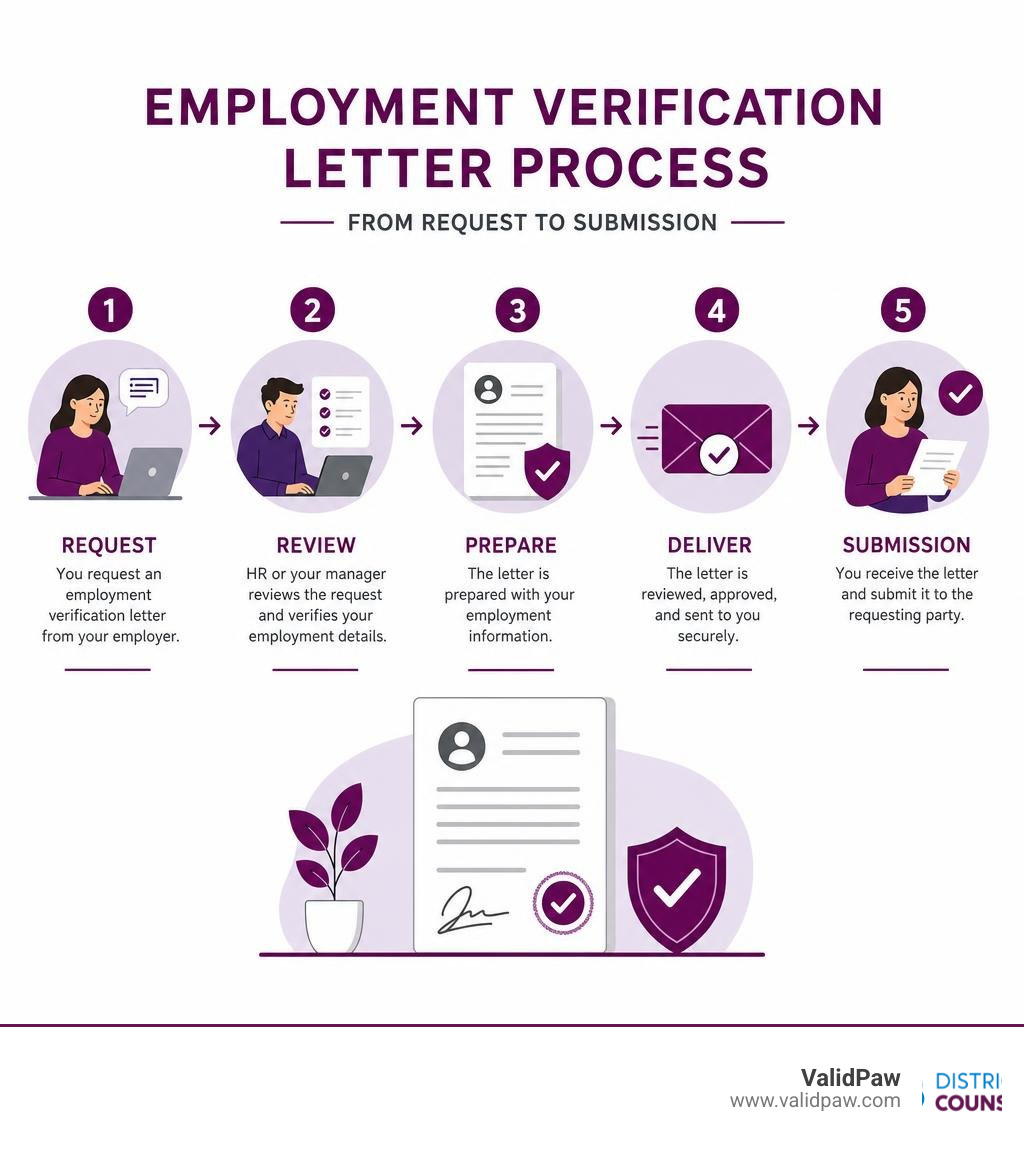
What is an Employee Work Verification Letter and Why Do You Need It?
At its core, an employee work verification letter (often referred to as a Proof of Employment or Verification of Employment) is a factual statement. It is not a recommendation letter or an evaluation of your work ethic; rather, it is a formal, objective snapshot of your employment relationship with a company.
Whether you are based in Houston, TX, Chicago, IL, or anywhere across the 50 states, you will likely need this document at several major milestones in your life. The most common scenarios include:
- Rental Agreements: Landlords and property managers need to know that you have a steady, reliable source of income to cover rent. A solid tenancy confirmation or apartment employment letter provides them with the peace of mind they need before handing over the keys.
- Mortgage and Loan Applications: Financial institutions are incredibly risk-averse. When you apply for a home loan, the lender will heavily scrutinize your financial stability. Having a comprehensive mortgage employment verification letter can be the deciding factor in securing your dream home.
- Visa and Immigration Processing: Government agencies often require official proof of employment to verify that visa applicants are gainfully employed and will not rely on public assistance.
- New Job Onboarding: Prospective employers frequently conduct background checks to confirm that your resume matches your actual work history.
Even federal entities like the Employment Verification - U.S. Department of Labor rely on standardized verification protocols to manage data for current and former public servants. This document acts as financial and professional trust in written form.
Key Components and Legal Compliance for Verification Letters
Creating an employee work verification letter is not just about typing up a quick note on a blank sheet of paper. It requires structured, objective details and strict adherence to federal and state laws.

Core Fields to Include
Every professional verification letter should contain these essential elements:
- Employer Information: Official company letterhead, physical address, and contact details.
- Date of Issuance: To establish how current the information is.
- Recipient Information: The specific person or organization requesting the verification (or "To Whom It May Concern").
- Employee Details: Full legal name and department.
- Employment Dates: The exact start date and, if applicable, the end date of employment.
- Job Title: The employee's current or final official role.
- Employment Status: Clear classification (full-time, part-time, temporary, or contract).
- Authorized Signature: The signature, printed name, and title of the verifying HR professional or manager.
Legal Compliance and Risk Management
When drafting or requesting these letters, employers must navigate a complex web of compliance rules.
- Salary History Bans: More than a dozen U.S. states and several major cities have enacted salary history bans. In places like Illinois, employers are highly restricted in how they handle historical compensation data. Always obtain the employee's explicit, written consent before disclosing any salary or income details.
- Privacy and Fair Credit Reporting Act (FCRA) Compliance: Under the FCRA, employers must obtain written authorization before sharing employment data with third-party background screening companies.
- Data Protection: Avoid including highly sensitive personally identifiable information (PII) such as Social Security Numbers, medical history, or details about protected class characteristics.
To understand how these letters fit into the broader landscape of HR documentation, it is helpful to compare them to other common forms:
| Feature | Employee Work Verification Letter | Form I-9 | | :--- | :--- | :--- | | Primary Purpose | Confirms job title, dates, and income history for third parties. | Verifies identity and legal authorization to work in the U.S. | | Recipient | Landlords, mortgage lenders, or prospective employers. | U.S. Citizenship and Immigration Services (USCIS) / Internal Records. | | Required by Law? | Generally optional (unless contractually obligated). | Mandated by federal law for all U.S. employees. | | Contains Salary Details?| Yes (with written employee consent). | No. |
For a deeper dive into the exact phrasing required for housing-specific verifications, you can read more about structuring a tenancy confirmation letter to ensure you meet all rental standards. For a complete operational overview, consult the Employee Employment Verification Letter: 5-Step Guide (2025) to keep your HR department fully compliant.
How to Request and Streamline the Verification Process
Handling verification requests can easily become a administrative bottleneck for busy HR departments in cities like Dallas, Fort Worth, or Chicago. Streamlining this workflow helps both the business and the employee who is waiting on a time-sensitive approval.
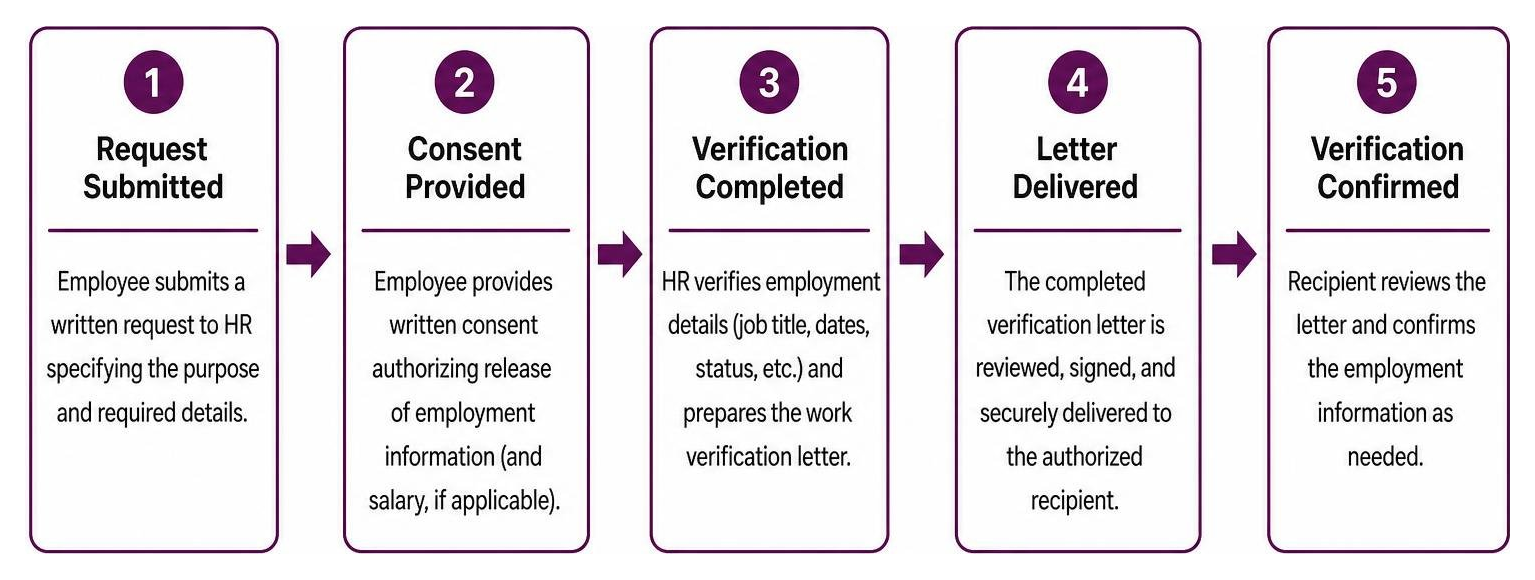
How to Request an Employee Work Verification Letter from Your Employer
If you are an employee who needs proof of employment, you should not leave things to the last minute. Follow these simple steps to ensure a smooth, stress-free process:
- Submit a Written Request: Send a formal email to your HR department or direct supervisor.
- Provide Explicit Consent: Clearly state that you authorize the company to release your employment details (and specify if they are allowed to share your salary).
- Detail the Requirements: Let HR know exactly what the requesting party needs. Does the landlord need your average weekly hours? Does the mortgage lender need your bonus structure?
- Allow 3-5 Business Days: Give your HR team ample time to process the request.
If you are currently trying to secure a new home and want to avoid administrative headaches, check out our guide on getting rental verification letters without the stress.
Modern Automation and Third-Party Verification Services
Many mid-to-large-sized organizations have transitioned away from manual letter writing entirely. Instead, they leverage automated Human Resources Information Systems (HRIS) or third-party databases.
The most prominent of these services is The Work Number (operated by Equifax). This secure, automated database has revolutionized the verification landscape:
- Massive Scale: The platform now serves over 3 million employers.
- Huge Database: It contains more than 823 million secure employee records contributed by nearly 5 million employers.
- 24/7 Access: In 2025 alone, The Work Number helped 58 million people receive verifications outside of regular business hours, meaning a mortgage lender could verify an applicant's income on a Sunday night.
Many major public institutions across Texas, such as the University of Texas at San Antonio, direct all external verifiers to automated portals. You can read more about how these systems function in practice on the UTSA Employment Verification (TWN) portal.
Templates and Best Practices for Creating Verification Letters
Using a standardized template ensures that your company provides consistent, legally compliant information every single time, minimizing liability and saving valuable hours.
Best Practices for Writing an Employee Work Verification Letter
- Use Company Letterhead: This immediately establishes authenticity. Letters written on plain paper are often flagged or rejected by strict mortgage underwriters.
- Keep it Objective: Stick strictly to dates, titles, and numbers. Do not include subjective opinions about the employee's performance, character, or future job security.
- Accept Electronic Signatures: Under the federal ESIGN Act and the Uniform Electronic Transactions Act (UETA), electronic signatures carry the same legal weight as traditional "wet" ink signatures.
To see real-world examples of how these elements come together, explore these highly effective employment verification letter templates.
Free Customizable Templates for Quick Drafting
If you need to draft a letter quickly, you do not have to start from scratch. You can download and customize pre-formatted templates designed to meet professional standards:
- For a highly customizable, editable Word and Google Docs format, use the Paycor Employment Verification Letter Template [Free].
- If you prefer to send and sign your document securely online, utilize the Docusign Employer Verification Letter Template.
Frequently Asked Questions about Employment Verification
Do employment verification letters expire?
While there is no legal expiration date stamped on an employee work verification letter, most banks, landlords, and government agencies operate under strict policy guidelines. Generally, they expect the letter to be issued within 30 to 90 days of your application submission. Anything older than 90 days is typically considered outdated, and you will likely be asked to provide a fresh copy.
Can a former employer refuse to provide a work verification letter?
In most states, private employers are not legally mandated to provide employment verification letters unless contractually obligated (such as through a union agreement or employment contract). However, most companies will gladly provide basic factual details (start date, end date, and job title) as a matter of professional courtesy and standard company policy, as it helps maintain good relationships with former staff.
Are electronic signatures accepted on verification letters?
Yes. Under the ESIGN Act and state-level UETA regulations, electronic signatures are widely accepted by landlords, private employers, and lenders. However, some conservative government agencies (such as those processing specific international work visas) may still request a traditional "wet" ink signature. It is always wise to ask the requesting party about their specific preferences beforehand.
Conclusion
Securing an employee work verification letter is a vital step in navigating life's major transitions, from renting a beautiful new apartment in Chicago to purchasing a home in San Antonio. By keeping the process structured, objective, and compliant with local regulations, both employers and employees can avoid unnecessary delays.
At ValidPaw, we understand how stressful it can be to gather the perfect documentation for your housing needs. While we specialize in providing legitimate, FHA-compliant Emotional Support Animal (ESA) letters via seamless telehealth evaluations with licensed Texas therapists, we know that housing approvals require a complete package of trusted paperwork.
Are you ready to ensure your housing documentation is fully verified and accepted by your landlord without the hassle? Verify your documentation with us today and take the stress out of your next move!