
Understanding the Legal Difference: ESA vs. Service Dog vs. Pet
To make your dog an emotional support animal (ESA), you must undergo an evaluation with a licensed mental health professional (LMHP) and obtain an official ESA letter. Under federal housing law, this letter confirms that you have a qualifying mental or emotional condition and that your dog provides therapeutic comfort that mitigates your symptoms. Unlike service animals, emotional support dogs do not require specialized task training, registration, or certifications to qualify.
When exploring how to make my dog an emotional support animal, understanding the legal categories that define assistance animals in the United States is essential. Many people confuse emotional support animals with service dogs, but their legal protections, training requirements, and public access rights differ significantly.
Under the Americans with Disabilities Act (ADA), a service dog is individually trained to perform specific tasks directly related to a person's physical, sensory, psychiatric, or intellectual disability. These tasks might include alerting a handler to low blood sugar, guiding a visually impaired individual, or interrupting a panic attack through deep pressure therapy. Because of this specialized training—which often costs anywhere from $15,000 to $30,000—service dogs are granted public access rights to accompany their handlers into restaurants, grocery stores, hotels, and public transit.
In contrast, an emotional support animal (ESA) provides therapeutic comfort, companionship, and affection that alleviates symptoms of a mental or emotional disability. Their presence alone provides the therapeutic benefit. Because they lack formal task training, emotional support dogs are not covered under the ADA for public access. You cannot legally take an ESA into non-pet-friendly grocery stores or restaurants.
However, emotional support dogs are protected under federal housing law. The Fair Housing Act (FHA) ensures that individuals with qualifying mental health conditions can live with their support animals without paying extra pet fees or facing standard pet restrictions. Reviewing the qualifying criteria for emotional support canines can help you understand how federal housing protections apply to your living situation.
The table below breaks down the essential legal distinctions between these animals:
| Category | Primary Governing Law | Specific Task Training Required? | Public Access Rights (Stores, Cafes) | Housing Protections (No Pet Fees / Restrictions) | Airline Cabin Rights (ACAA) | | :--- | :--- | :--- | :--- | :--- | :--- | | Service Dog | Americans with Disabilities Act (ADA) | Yes (must perform specific disability-mitigating tasks) | Yes (broad access to public spaces) | Yes | Yes (treated as service animal) | | Emotional Support Dog (ESA) | Fair Housing Act (FHA) | No (provides therapeutic comfort via presence) | No (pet-friendly locations only) | Yes (exempt from pet rent, deposits, and bans) | No (subject to standard airline pet policies) | | Household Pet | Local municipal animal laws | No | No (pet-friendly locations only) | No (subject to lease terms, fees, and breed bans) | No (standard pet fees and carrier rules apply) |
Understanding these distinctions protects you from legal misunderstandings and sets realistic expectations for your dog's role in your mental wellness journey. As highlighted by Pets vs. Service and Emotional Support Animals, knowing these legal definitions helps ensure smooth communication with housing providers.
Step-by-Step Guide on How to Make My Dog an Emotional Support Animal
Qualifying your dog as an emotional support animal is a straightforward clinical and legal process. It centers on your personal mental health needs rather than your dog's credentials.
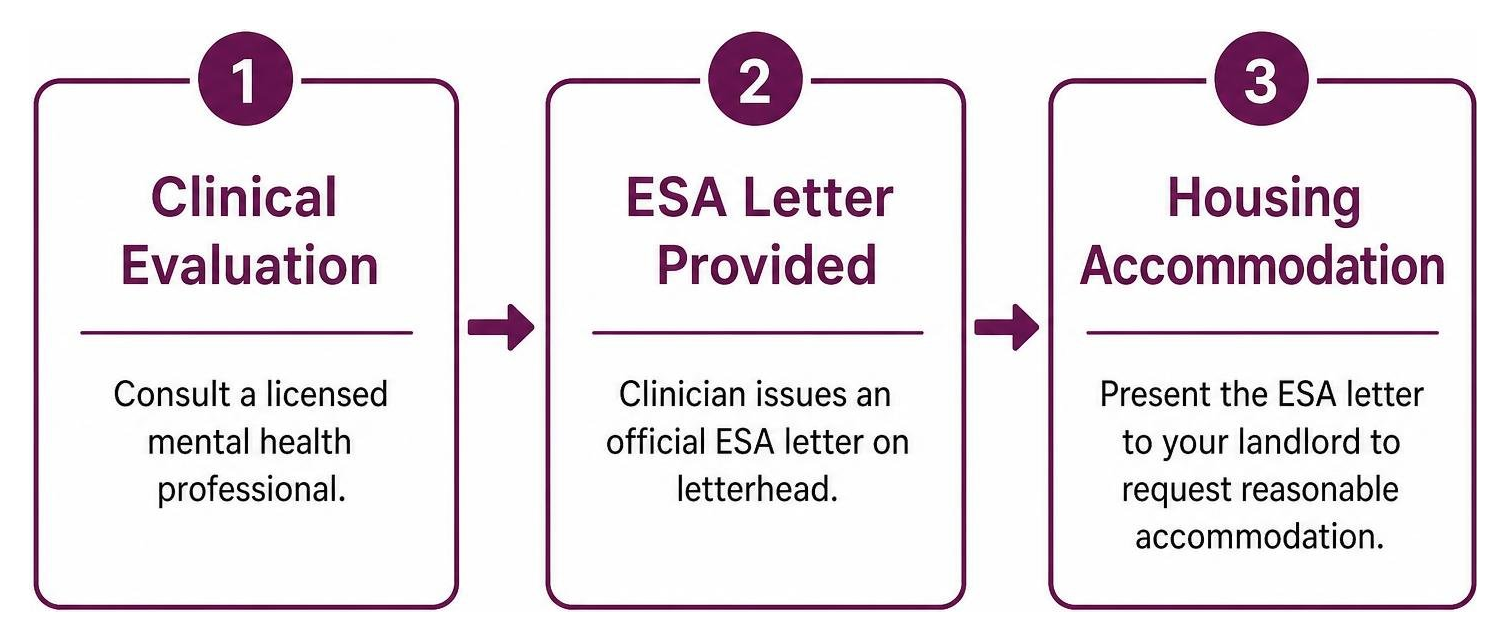
Step 1: Consult a Mental Health Professional on How to Make My Dog an Emotional Support
The foundation of every legitimate ESA designation is a formal evaluation by a licensed mental health professional (LMHP)—such as a licensed professional counselor, clinical social worker, psychologist, or psychiatrist.
During this assessment, the clinician evaluates whether you have a mental or emotional condition documented in the Diagnostic and Statistical Manual of Mental Disorders (DSM-5)—such as generalized anxiety disorder, major depressive disorder, post-traumatic stress disorder (PTSD), or chronic panic attacks—that substantially limits one or more major life activities.
Clinicians also evaluate how the presence of your canine companion mitigates these symptoms. Scheduling a clinical emotional support animal assessment allows a licensed professional to evaluate your daily challenges and determine whether an emotional support dog fits into your overall mental health care plan. As discussed in The Essential Role of Emotional Support Animals in Mental Health, the bond between a person and their pet can play an active, recognized part in managing emotional distress.
Step 2: Obtain an Official ESA Letter
If the clinician determines that an emotional support animal is a necessary accommodation for your condition, they will issue an official ESA letter. To be legally binding under the Fair Housing Act and withstand scrutiny from property managers, the letter must contain specific details:
- The clinician's full name, professional license type, license number, and state of licensure.
- Official letterhead with contact information and date of issuance.
- Confirmation that you have an impairment that meets the definition of a disability under the Fair Housing Act.
- A clear statement that the dog provides therapeutic support that alleviates one or more identified symptoms of your condition.
Understanding valid ESA letter requirements ensures that your documentation complies with state guidelines and HUD directives.
Step 3: Submit Documentation to Your Landlord
Once you have your official ESA letter, the final step is requesting a reasonable accommodation from your landlord or homeowners association (HOA).
Under the Fair Housing Act, housing providers must make reasonable accommodations for individuals with disabilities. This means landlords must waive "no-pet" policies, eliminate breed or weight restrictions for your support dog, and waive all pet-related deposits, upfront move-in fees, and monthly pet rent.
Provide your landlord with a polite written request along with a copy of your ESA letter. Landlords may verify the license of the clinician who signed the letter, but they cannot demand your private medical records, ask for a detailed medical history, or require your dog to demonstrate special training.
Training and Socialization Standards for Emotional Support Dogs
Although the Fair Housing Act does not mandate task-specific training for emotional support animals, keeping your dog well-mannered is essential for safe, stress-free housing. Landlords can legally deny an accommodation if an animal poses a direct threat to the health and safety of others or causes substantial physical property damage.

Obedience Benchmarks on How to Make My Dog an Emotional Support
To ensure your dog thrives in an apartment community or rental home, focus on basic domestic obedience and manners. Aim for the behavioral standards outlined in the American Kennel Club's Canine Good Citizen (CGC) program, which include:
- Reliable House-Training: Your dog must consistently eliminate outdoors or in designated areas.
- Basic Command Response: Reliable responses to "Sit," "Stay," "Down," "Come," and "Leave it."
- Calm Leash Walking: Walking without aggressive pulling, lunging at passing neighbors, or barking at other animals in hallways and elevators.
- Absence of Destructive Habits: Ensuring your dog does not chew fixtures, scratch doors, or engage in persistent nuisance barking when you leave the home.
For practical guidance on home obedience, veterinary resources like How to Train an Emotional Support Dog: Our Vet Explains — Dogster emphasize setting clear routines and building impulse control.
Ideal Temperaments and Breed Considerations
Any dog can qualify as an emotional support animal regardless of breed, size, or age—from a tiny Chihuahua to a gentle Great Dane, as well as mixed-breed rescues. However, the most effective support dogs typically share key temperament traits:
- Affectionate and People-Oriented: A natural desire to offer comfort, sit close, and lean into their handler during moments of distress.
- Low Reactivity: A stable, non-reactive temperament that remains unfazed by loud noises, strangers, or other animals.
- Attunement to Handler Emotions: An innate sensitivity to changes in human tone, posture, and emotional state.
Breeds like Golden Retrievers, Labrador Retrievers, Cavalier King Charles Spaniels, and Poodles are popular choices due to their friendly dispositions, but an individual rescue dog with a calm personality can be just as effective. A holistic approach to pet care, such as that discussed in Transforming Your Canine Companion: A Comprehensive Guide on How to Turn a Dog into an Emotional Support Dog - TheGrubbyPuppy, pairs training and routine veterinary care to support your animal's well-being throughout their life.
Common Myths: Why You Do Not Need to Register or Certify Your Dog
The emotional support animal space is full of misleading claims online. Many websites claim that you must "register" your dog in a federal database or buy a "certified ESA badge" to make their status legal.
Federal registries and official government certifications for ESAs do not exist. The U.S. Department of Housing and Urban Development (HUD) has explicitly stated that commercial registries, certificates, ID cards, and vests sold online do not convey legal ESA status on their own. Landlords are within their legal rights to reject internet registration badges that lack an authentic clinical evaluation from a licensed professional.
Instead of paying for meaningless badges, focus on obtaining legitimate clinical documentation. Learning about registering your dog properly will save you money and protect you from fraudulent services that leave you vulnerable to housing disputes.
Frequently Asked Questions About Emotional Support Dogs
Can any dog breed qualify as an emotional support animal?
Yes. Under federal Fair Housing rules, ESA protections apply across all breeds, sizes, and weights. A housing provider cannot deny your accommodation simply because your dog is a Pit Bull, German Shepherd, Rottweiler, or another breed subject to general property restrictions. Denials can only be made on an individualized assessment if a specific dog demonstrates dangerous behavior or causes property damage.
Do landlords have to accept an emotional support animal letter?
Yes, provided the letter is authentic and issued by a properly licensed mental health professional who evaluated your need for the accommodation. Landlords must grant reasonable accommodations unless doing so would impose an undue financial and administrative burden, fundamentally alter the nature of their operations, or if the individual animal poses a direct threat to safety.
How long is an emotional support dog letter valid?
Most housing providers, property management companies, and legal standards expect an ESA letter to be dated within the past calendar year (12 months). Because mental health conditions and treatment plans evolve, annual clinical consultations ensure your accommodation documentation stays up to date and compliant.
Conclusion
Turning your canine companion into an emotional support animal does not require expensive training academies or registration databases. The process focuses on your personal mental health and securing legitimate documentation from a licensed clinician.
When you establish a clinical relationship and obtain a valid letter, your dog receives legal protections under the Fair Housing Act, allowing you to live together peacefully without unnecessary pet restrictions or fees.
At ValidPaw, we connect you directly with licensed mental health professionals via secure telehealth evaluations across Texas and nationwide. Our clinicians conduct thorough, compliant assessments to provide fast, FHA-compliant documentation with landlord verification support. If you are ready to take the next step with your dog, you can apply for a legitimate ESA letter online today.

