Understanding Emotional Support Animals vs. Service and Therapy Dogs
To make your dog an emotional support animal (ESA), you must complete a clinical evaluation with a state-licensed mental health professional who writes an official ESA recommendation letter. This document confirms that you have a qualifying mental health condition and that your dog's presence alleviates one or more of your symptoms, granting you legal housing protections under the Fair Housing Act without requiring public registrations, certificates, or specialized task training.
When exploring how to make your dog an ESA, understanding assistance animal terminology is essential. Many people confuse emotional support animals with service animals or therapy dogs. However, federal law draws sharp lines between these roles regarding legal rights, training expectations, and public access.
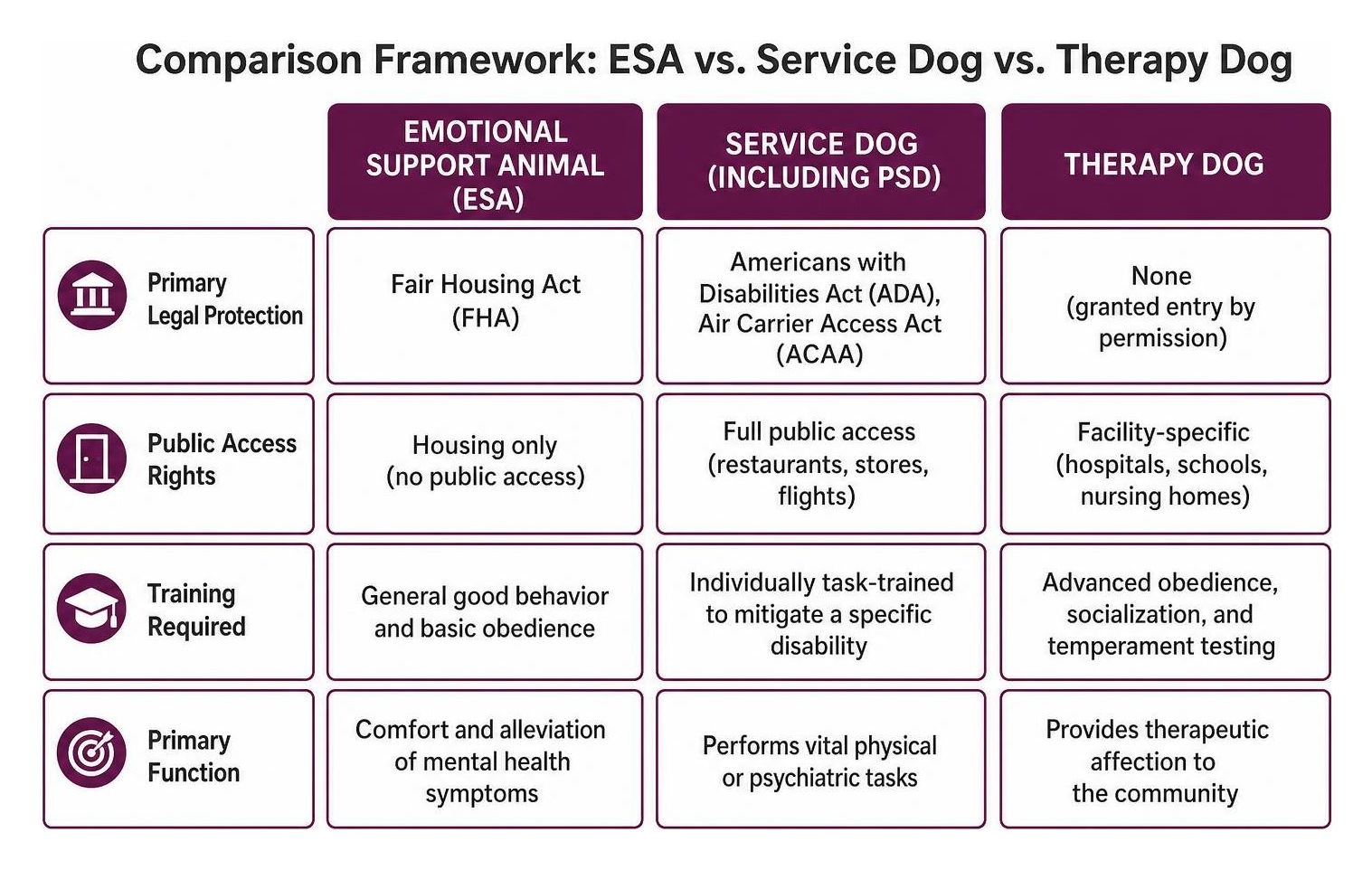
| Animal Role | Primary Legal Protection | Public Access Rights | Training Required | Primary Function | | :--- | :--- | :--- | :--- | :--- | | Emotional Support Animal (ESA) | Fair Housing Act (FHA) | Housing only (no public access) | General good behavior and basic obedience | Comfort and alleviation of mental health symptoms | | Service Dog (including PSD) | Americans with Disabilities Act (ADA), Air Carrier Access Act (ACAA) | Full public access (restaurants, stores, flights) | Individually task-trained to mitigate a specific disability | Performs vital physical or psychiatric tasks | | Therapy Dog | None (granted entry by permission) | Facility-specific (hospitals, schools, nursing homes) | Advanced obedience, socialization, and temperament testing | Provides therapeutic affection to the community |
Service dogs are recognized under the Americans with Disabilities Act (ADA) and receive rigorous training to execute specific tasks that mitigate a handler's disability—such as alerting someone with diabetes to dangerous blood sugar levels or guiding someone with visual impairment. Reviewing our comprehensive ESA dog requirements can help you see where your pup fits best.
Legal Protections Under the Fair Housing Act and Air Travel Rules
The Fair Housing Act protects emotional support animals. Under the FHA, an emotional support animal is considered an "assistance animal" rather than a standard pet. This distinction provides several key housing rights:
- No-Pet Housing Exemptions: Housing providers must make reasonable accommodations for individuals with documented disabilities, allowing ESAs to live with their owners even in buildings with strict no-pet rules.
- Waiver of Pet Fees and Deposits: Landlords cannot charge extra pet rent, pet security deposits, or one-off administrative animal fees for an ESA.
- Breed and Weight Exemption: Building bans on specific breeds (such as Pit Bulls, Rottweilers, or German Shepherds) or weight caps do not apply to verified assistance animals.
Air travel rules operate under a different framework. The Department of Transportation updated its regulations to clarify cabin access standards. Under this framework, airlines are no longer federally required to accommodate emotional support animals for free in the passenger cabin.
Instead, ESAs are treated under regular pet policies, requiring carriers and pet transit fees. In contrast, Psychiatric Service Dogs (PSDs) maintain full cabin access under the ACAA because they are trained to execute distinct psychiatric tasks during transit.
Distinct Roles and Legal Requirements
While a service dog requires specialized task training—such as interrupting self-harm, providing tactile grounding during panic attacks, or retrieving medication—an ESA provides comfort through its natural presence.
Therapy dogs play a community role, visiting schools, hospice facilities, and disaster relief zones to cheer up groups of people. Because therapy dogs have no federal public-access rights under the ADA or FHA, their handlers must secure permission from individual facilities before bringing them inside.
Step-by-Step Guide on How to Make My Dog an ESA Legally
Turning your companion into a legitimate support animal does not involve state registrations, official government badges, or costly gear. It is an entirely clinical process grounded in your relationship with a qualified healthcare professional. If you want to qualify your beloved pet as an emotional support animal, you must follow a straightforward clinical pathway.
Step 1: Qualifying Mental Health Conditions and Assessing Eligibility
The first step is determining whether you have a mental or emotional condition that substantially limits one or more major life activities. Qualified conditions recognized under the Diagnostic and Statistical Manual of Mental Disorders (DSM-5) include:
- Generalized Anxiety Disorder (GAD)
- Major Depressive Disorder (MDD)
- Post-Traumatic Stress Disorder (PTSD)
- Bipolar Disorder
- Panic Disorder and Agoraphobia
- Obsessive-Compulsive Disorder (OCD)
- Severe Chronic Stress and Insomnia
To qualify, a licensed provider must establish a disability nexus: a direct connection showing that your dog's presence alleviates one or more symptoms of your condition, allowing you to function better day to day.
Step 2: Consulting a Licensed Professional for an Official ESA Letter
To get legitimate documentation, you must consult with a Licensed Mental Health Professional (LMHP) who is actively licensed in your state. This clinician could be a licensed clinical social worker (LCSW), licensed professional counselor (LPC), psychologist, psychiatrist, or marriage and family therapist (LMFT).
During your evaluation—which can take place via a secure telehealth appointment—the provider will assess your history, symptoms, and the specific therapeutic benefits your dog provides.
If they conclude that an ESA is a vital part of your treatment plan, they will write and sign an official prescription. Securing official ESA letters for housing protection ensures you have valid documentation issued on your provider's clinical letterhead.
Step 3: Presenting Your Documentation to Housing Providers
Once you have your signed letter, write a formal Reasonable Accommodation Request to present to your landlord or property manager.
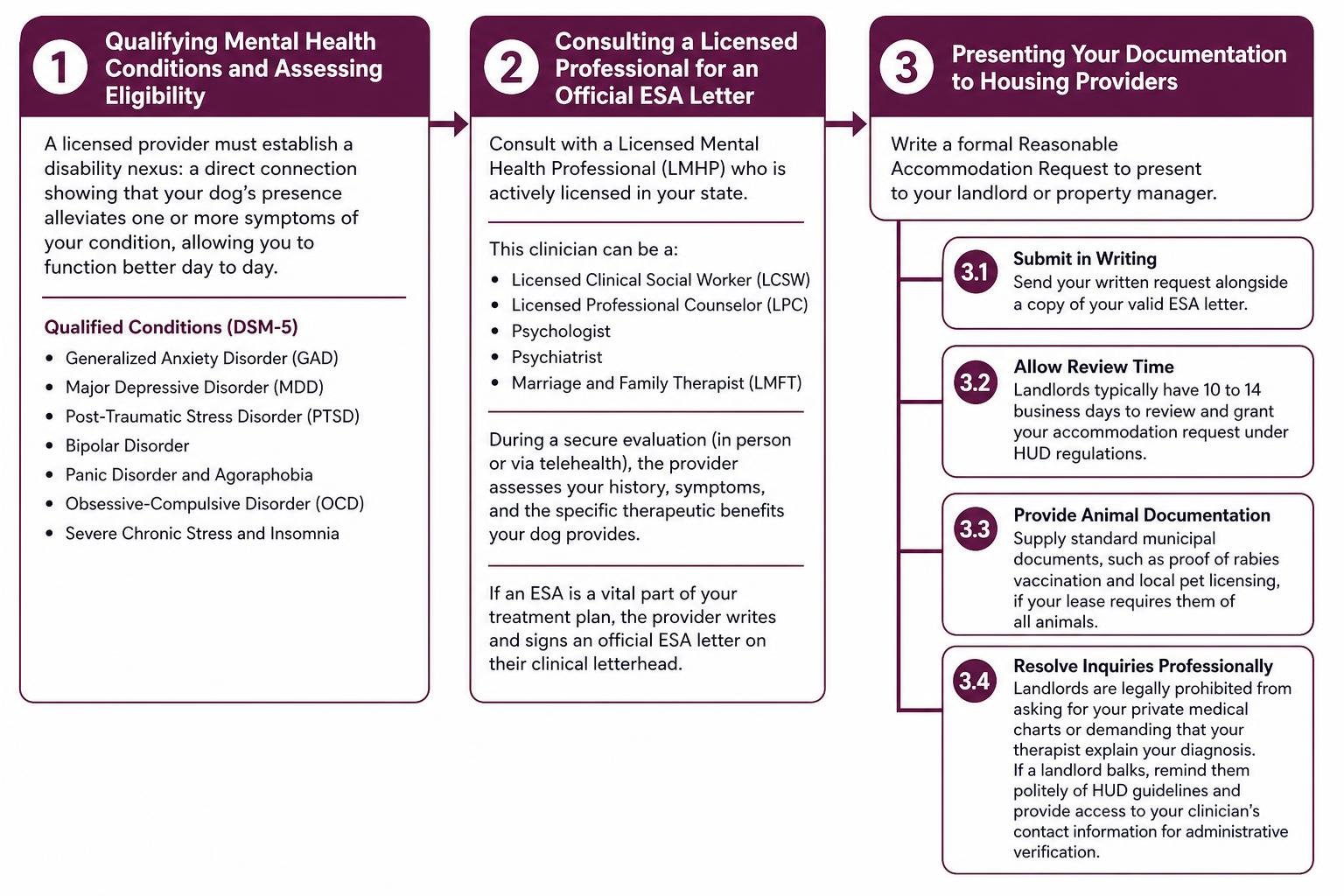
- Submit in Writing: Send your written request alongside a copy of your valid ESA letter.
- Allow Review Time: Landlords typically have 10 to 14 business days to review and grant your accommodation request under HUD regulations.
- Provide Animal Documentation: Supply standard municipal documents, such as proof of rabies vaccination and local pet licensing, if your lease requires them of all animals.
- Resolve Inquiries Professionally: Landlords are legally prohibited from asking for your private medical charts or demanding that your therapist explain your diagnosis. If a landlord balks, remind them politely of HUD guidelines and provide access to your clinician's contact information for administrative verification.
Avoiding Fake Registries, Certificates, and Common ESA Scams
The market is full of deceptive websites preying on renters who want quick documentation for their dogs. These sites sell worthless PDF badges, embossed ID cards, and "lifetime registration numbers" that carry no legal weight.
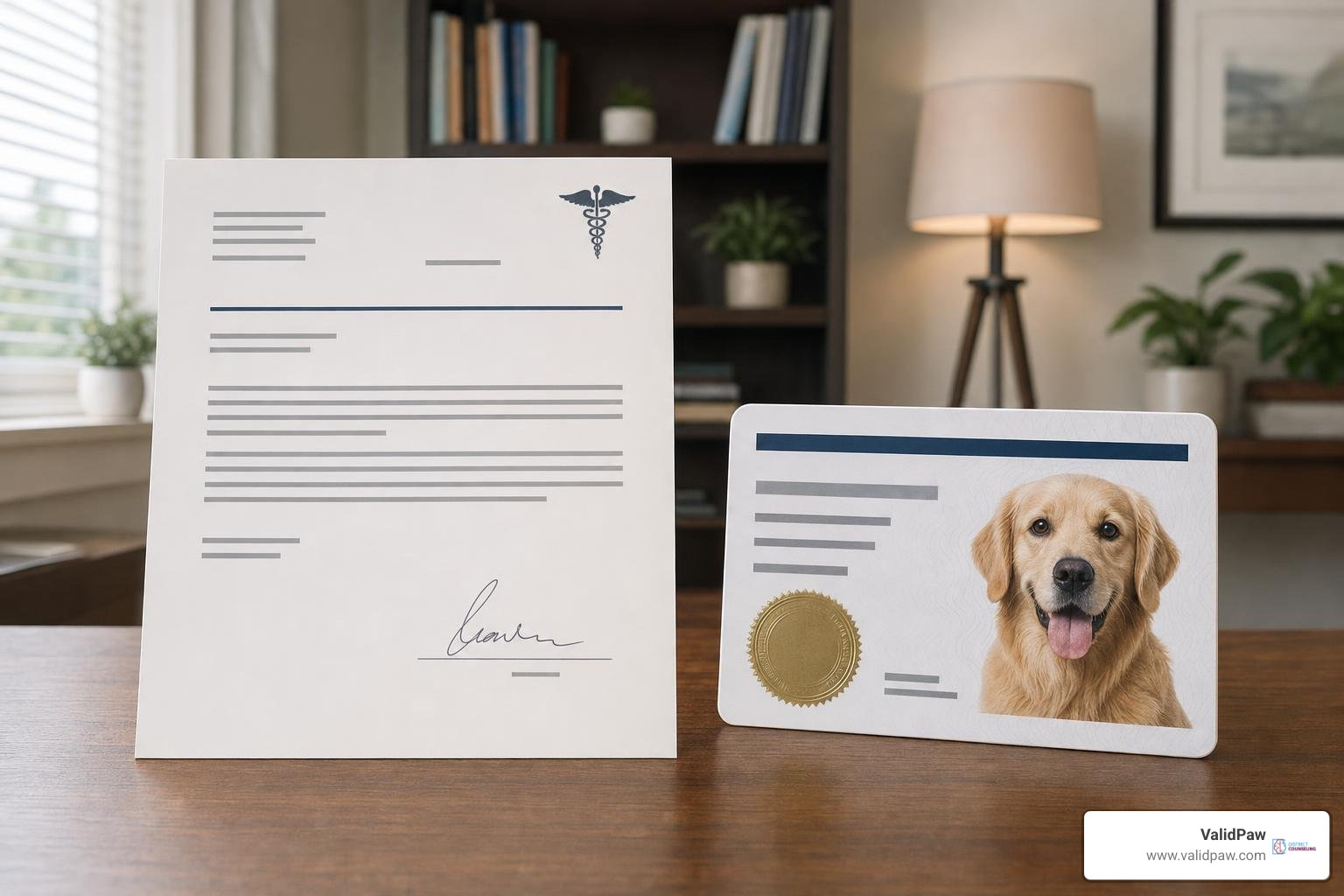
Landlords and property management companies have grown savvy. Submitting a bogus certificate from an online registry can result in the immediate denial of your accommodation request, leaving you exposed to pet fees, eviction notices, or lease termination. You can read our guide to avoid fake online registries to keep yourself safe from non-compliant services.
The Myth of Federal Registries and Useless Vests
There is no such thing as an official government ESA registry, national animal database, or mandatory federal certificate. The U.S. Department of Housing and Urban Development (HUD) has repeatedly confirmed that documents from websites that issue certificates, registrations, and licensing for a fee without a clinical relationship are insufficient to establish a disability-related need.
Putting a vest, patch, or badge on your dog does not grant legal protections under the law. The only document that establishes an ESA under the Fair Housing Act is a legitimate letter from a licensed mental health professional.
How to Make My Dog an ESA Without Falling for Online Certification Traps
Watch out for these warning signs when looking for ESA services online:
- Instant Approvals: Any website promising a letter in 5 minutes without a live clinical assessment is issuing non-compliant paperwork.
- Lifetime Packages: Legitimate ESA letters must be renewed periodically (usually annually) to confirm ongoing clinical care.
- Vests and ID Card Bundles: Packaging plastic ID badges and dog vests as "legal proof" is a marketing gimmick.
- Absence of Clinician Details: If the service cannot confirm that you will be evaluated by a professional licensed in your home state, walk away.
Essential Behavioral Expectations and Home Training
While an ESA does not require the extensive task training of a service animal, it must remain well-behaved, safe, and manageable at home. If you want to transform your faithful canine into a support animal, establishing foundational home manners is essential.

Under HUD guidelines, landlords can legally deny an accommodation or evict an assistance animal if the dog causes a direct threat to the health and safety of others, causes substantial physical property damage, or creates an unmanageable nuisance (such as non-stop barking).
Practical Training Tips on How to Make My Dog an ESA Landlords Welcome
- Basic Obedience: Master core foundation cues such as Sit, Stay, Leave It, and Quiet. A dog that responds reliably to basic cues creates far fewer housing headaches.
- Noise Management: Desensitize your dog to shared-wall apartment triggers, like opening elevator doors, footsteps in the hallway, and delivery knocks.
- Deep Pressure Therapy (DPT): Many owners teach their support dogs to provide tactile relief. You can train your dog to place its head, paws, or entire body across your lap during moments of heightened anxiety to lower your resting heart rate.
- Reliable Socialization: Expose your dog to varied indoor and outdoor spaces so it learns to stay calm around delivery workers, children, and other neighborhood animals.
Essential House Training and Good Canine Manners
Indoor hygiene is a baseline requirement for any animal living in rental housing. Landlords can easily evict an ESA that damages rental floors or soils common hallways.
- Supervision is Vital: Statistical studies show that puppies left unsupervised are 2.3 times more likely to house-soil indoors than those monitored closely.
- Establish a Predictable Routine: Take your dog outside to the exact same elimination spot first thing in the morning, right after meals, and before bed.
- Positive Reinforcement: Reward successful outdoor potty breaks with high-value treats within three seconds of completion. Reward-based training methods are statistically more effective than aversive methods.
- Manage Expectations: Most young puppies achieve reliable house-training between 4 and 6 months of age, with only 4% fully house-trained by 12 weeks. Be patient and use an enzymatic cleaner to break down indoor accident odors.
Frequently Asked Questions About Emotional Support Dogs
What specific information must be included in a valid ESA letter?
An FHA-compliant emotional support animal letter must be written on the professional letterhead of your licensed clinician and include:
- The provider's full legal name, professional credentials, and medical or clinical license number.
- The state in which their clinical license was issued and the date it was granted.
- Confirmation that you are under their professional care for an emotional or mental health disability.
- A clinical statement confirming that your dog provides therapeutic assistance that alleviates one or more identified symptoms of your condition.
- The issue date of the letter along with the clinician's signature.
Can a landlord reject my ESA or charge extra pet rent?
Under the Fair Housing Act, landlords cannot charge pet rent, initial pet deposits, or administrative pet fees for an emotional support animal. They also cannot reject an ESA based on breed, size, or weight.
However, a landlord can legally reject an ESA under specific narrow exceptions:
- The building is an owner-occupied property with four or fewer units (the "Mrs. Murphy" exemption).
- Single-family housing rented without the use of a real estate broker (provided the owner holds three or fewer homes).
- The specific animal poses a documented, direct threat to the safety of other residents that cannot be reduced through reasonable steps.
- The animal causes severe property destruction or creates an undue financial and administrative burden on the housing provider.
How much does obtaining and maintaining an ESA letter cost?
The costs associated with getting an ESA letter break down into two main categories: clinical evaluations and regular pet maintenance.
Watch out for services charging hundreds of dollars for "lifetime packages" or useless identification kits. A legitimate clinical telehealth assessment and valid letter usually fall well within standard therapy consultation rates.
Conclusion
Making your dog an emotional support animal is a legitimate, clinical way to manage your mental wellness while protecting your housing rights. You do not need expensive registration kits, government registries, or flashy vests. All you need is an honest conversation with a licensed clinician who can evaluate your needs and provide a compliant recommendation letter.
At ValidPaw, we simplify the entire process through secure, compassionate telehealth evaluations. Our network of licensed clinicians provides fast 24-to-48-hour turnaround times for FHA-compliant letters, complete with instant verification support to help you resolve landlord questions easily.
Ready to protect your housing rights alongside your four-legged companion? Apply for your verified ESA letter online today.