
What Is an Authorization Letter for Employment Verification?
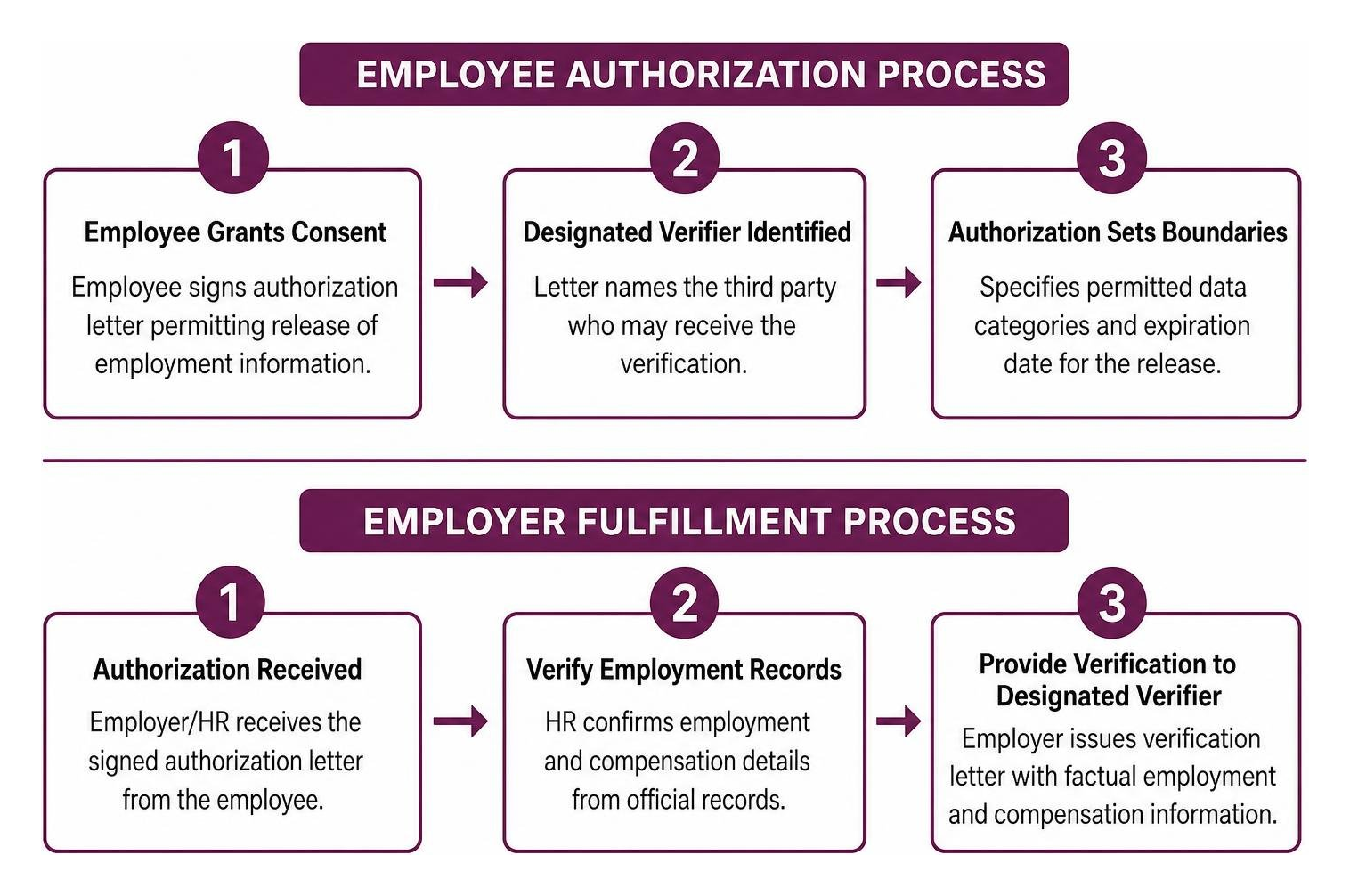
An authorization letter for employment verification is a legally binding consent document signed by a current or former employee. It officially permits an employer or Human Resources department to disclose verified employment records to a designated third party. Without this explicit release form, employers are legally restricted from disclosing non-public personnel details to outside screeners, property managers, or financial institutions.
Whether you are applying for a new job in Houston, securing a mortgage in Dallas, or moving into a new rental property in Chicago, third parties need to confirm that you work where you say you work and earn what you claim to earn. The authorization establishes the legal bridge between your private personnel file and the inquiring verifier.
When undergoing housing screening, landlords routinely request background checks alongside rental verification letters and how to get them without the stress. Having your paperwork properly organized ensures you avoid costly move-in delays.
| Document Type | Primary Author & Signatory | Core Purpose | Typical Information Disclosed | | :--- | :--- | :--- | :--- | | Employee Authorization Letter | The Employee | Grants legal permission to release confidential personnel data | Permitted data categories, named verifier, expiration date | | Employer Verification Letter | HR Manager / Employer | Verifies factual employment and compensation history | Job title, employment dates, active status, verified salary |
Why Third Parties Require Employee Consent
Federal and state privacy laws strictly guard personal identifying information and employment records. Under the Fair Credit Reporting Act (FCRA), consumer reporting agencies and background screening firms cannot legally pull your employment history without obtaining your standalone written consent first.
Employers who disclose confidential records without documented employee authorization open themselves up to severe liability, including common-law privacy torts and statutory regulatory penalties. Official guidance from state agencies like the Texas Workforce Commission provides standard frameworks such as the Authorization for Prior Employer to Release Information to help companies avoid unlawful disclosures. Requiring a formal authorization letter ensures that data disclosures remain voluntary, clear, and legally defensible.
Authorization Letter vs. Employer Verification Letter
It is easy to confuse an authorization letter with an employment verification letter, but they serve two opposite sides of the exact same transaction:
- The Authorization Letter (The "Permission"): Drafted and signed by you (the worker). It instructs your current or former employer that they have permission to share your records with a specified verifier.
- The Employer Verification Letter (The "Proof"): Drafted and signed by your employer's HR department or manager on corporate letterhead. It delivers the factual confirmation of your job title, dates of hire, and earnings.
To see what the employer side looks like, review our guide on employee work verification letters templates tips and tricks to understand how HR departments format and fulfill these requests once your consent is logged.
How to Write an Authorization Letter for Employee Verification Step-by-Step
Writing a verification authorization letter is straightforward when you follow a structured approach. Because employment verification letters are used in over 80% of mortgage applications to confirm income stability and employment status, following a precise, professional structure prevents underwriting hold-ups.
If you are buying real estate or refinancing, our walkthrough on the ultimate guide to your mortgage employment verification letter outlines the exact timing requirements mortgage underwriters demand.
Essential Components of an Authorization Letter for Employee Verification
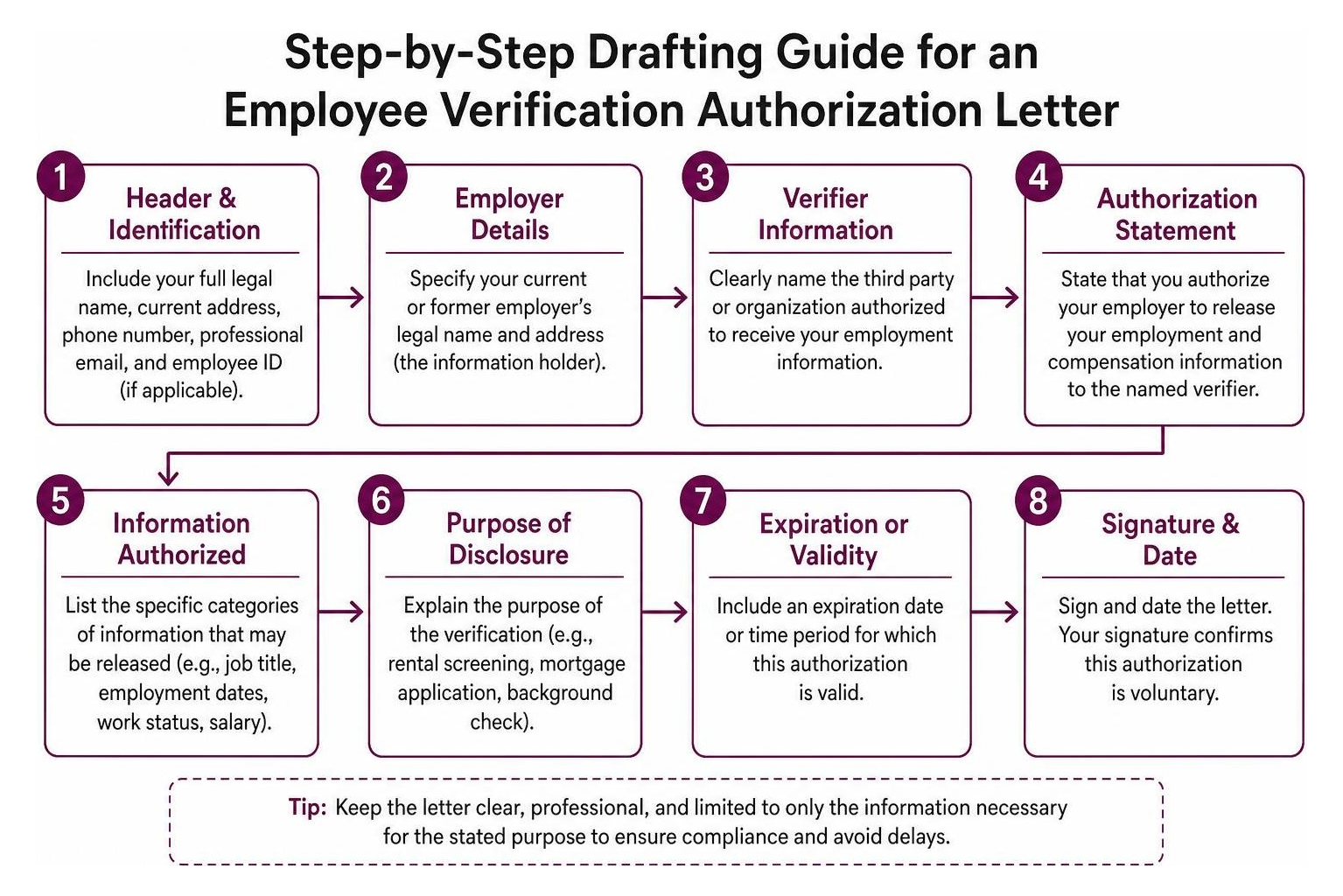
To ensure your authorization letter is accepted without pushback from your employer's legal or HR department, it must include these core elements:
- Header & Identification: Your full legal name, current residential address, phone number, professional email address, and employee identification number (if applicable).
- Employer Designation: The exact legal name of the company holding your records, including the specific Human Resources department address.
- Authorized Verifier: The full name of the company, bank, landlord, or agency authorized to receive your information.
- Scope of Release: An explicit checklist or statement defining which records can be shared (e.g., job title, dates of employment, gross salary, full-time/part-time status).
- Limitation & Exclusions: Clear language excluding non-relevant data such as medical leaves, disciplinary history, or internal performance ratings.
- Time Limit / Expiration Date: A definitive date when the authorization automatically lapses (typically 30 to 90 days from signing).
- Signature and Date: Your handwritten or secure digital signature.
Handling Salary Details and Sensitive Records
Salary is among the most sensitive data points in your personnel file. Under standard data minimization practices, you should only authorize salary disclosures when strictly required by the verifier—such as during a home loan application or apartment lease review. If you are undergoing a pre-employment background check for a new role, you may prefer to restrict your authorization to job titles and employment dates only.
Furthermore, ensure that sensitive statutory items are separated from basic verification. For example, federal identity compliance governed under I-9, Employment Eligibility Verification forms must remain separate from public reference checks. Never authorize the release of your full Social Security number, medical history, or family status on a standard verification release.
Execution and Delivery Methods
Once drafted, your authorization letter can be executed using several methods depending on company policy:
- Digital E-Signatures: Secure e-signature platforms with automated audit logs are widely accepted and reduce processing bottlenecks significantly.
- Wet Signatures: Some traditional financial institutions or government agencies still request a physically signed and scanned PDF.
- Direct HR Submission: Deliver the authorization directly to your employer's HR or payroll team via corporate email or your internal HR portal. HR teams that use standardized processing workflows can reduce turnaround time by up to 85% compared to ad-hoc email requests.
Customizable Authorization Letter Samples for Any Scenario
Below are practical, fillable authorization letter templates designed for different verification needs. You can adjust the bracketed text to suit your specific circumstances.
To explore ready-made templates for the employer response, see our curated list of employment verification letter templates that actually work.
Standard Authorization Letter for Employee Verification Template
Use this standard template when applying for a mortgage, loan, or apartment lease where proof of current income and active employment status is mandatory. If you are applying for housing, pair this release with the secret to a perfect apartment employment letter to make your rental application seamless.
Authorization Template for Former Employees
When you have transitioned to a new opportunity, prospective employers will often verify your past work history during background checks. Use this template to authorize your former employer to confirm historical dates and job titles while maintaining control over sensitive personnel details.
Legal, Privacy, and Compliance Considerations in 2026
Managing employment data requires strict adherence to evolving privacy frameworks. In August 2026, employee data protection standards demand precision from both workers and employers.

Key legal standards include:
- Fair Credit Reporting Act (FCRA): Governs third-party background screening agencies. Requires clear, standalone written authorization from the individual before any employment check is conducted.
- State Salary History Bans: Numerous states and municipalities prohibit employers from asking about or disclosing prior salary history to prospective employers. Make sure your authorization does not inadvertently request past wage disclosures if restricted under local laws.
- Data Minimization Principles: Modern privacy frameworks require that employers disclose only the minimum necessary information to fulfill the stated purpose of the verification.
- Record Retention Protocols: Employers must retain written employee authorizations alongside the issued verification records. While federal guidelines vary, retaining records for three to five years protects organizations against improper disclosure claims.
Whether you are submitting documentation for an apartment application or reviewing lease terms, keeping your verification clear and compliant protects your housing rights. Review our breakdown of everything you need in a tenancy confirmation letter to see how landlords evaluate supporting employment documents.
Avoiding Common Authorization Errors
To avoid verification rejections, watch out for these frequent mistakes:
- Overly Broad Authorizations: Signing a blanket waiver that allows third parties to access your "entire personnel file" rather than specific, required data fields.
- Omitting Expiration Dates: Leaving out an expiration date leaves your authorization open indefinitely, increasing long-term privacy risks.
- Incorrect Identifying Details: Listing an outdated address, nickname, or misspelled legal name that doesn't match official HRIS records.
- Missing Recipient Names: Submitting an authorization addressed vaguely "To Whom It May Concern" when your employer requires a named third-party verifier before releasing compensation records.
Frequently Asked Questions about Employee Verification Authorization
Can a single authorization letter cover multiple verification requests?
Generally, no. Best practices and data privacy standards strongly favor single-use, recipient-specific authorization letters. Blanket authorizations that give open-ended permission to verify employment at any time can expose your private data to unauthorized checks. Furthermore, mortgage underwriters and strict background check providers typically require consent forms that specifically name their institution and are dated within 30 to 90 days of the inquiry.
Who is required to sign the verification authorization letter?
The employee whose records are being requested must sign the document. In rare circumstances—such as medical incapacity or legal guardianship—a court-appointed legal representative with documented power of attorney may sign on the employee's behalf. Corporate representatives or HR managers cannot sign an authorization letter on behalf of an employee; they only sign the resulting verification letter once valid employee consent is received.
How long is an employment verification authorization valid?
Standard authorization letters remain valid for 30 to 90 days from the date of signature, depending on the purpose stated in the letter. Mortgage lenders standardly operate within a 90-day window, while rapid pre-employment background screening agencies usually execute verifications within 30 days. You always retain the legal right to revoke your authorization in writing at any time before the records are transmitted.
Conclusion
A well-crafted authorization letter for employee verification protects your privacy while ensuring landlords, lenders, and prospective employers get the exact information they need without unnecessary delays. By specifying the recipient, limiting the data scope, and including a clear expiration date, you stay in complete control of your personal employment records.
At ValidPaw, we understand how critical timely, legally compliant documentation is when securing your housing and lifestyle needs. Just as proper authorization streamlines your employment checks, our team provides fast, professional support for housing accommodations across Texas and all 50 states. Explore our instant verification solutions to learn how we help individuals and property managers verify legitimate documentation quickly and securely.