What Is a Confirmation of Permanent Employment Letter and Why It Matters
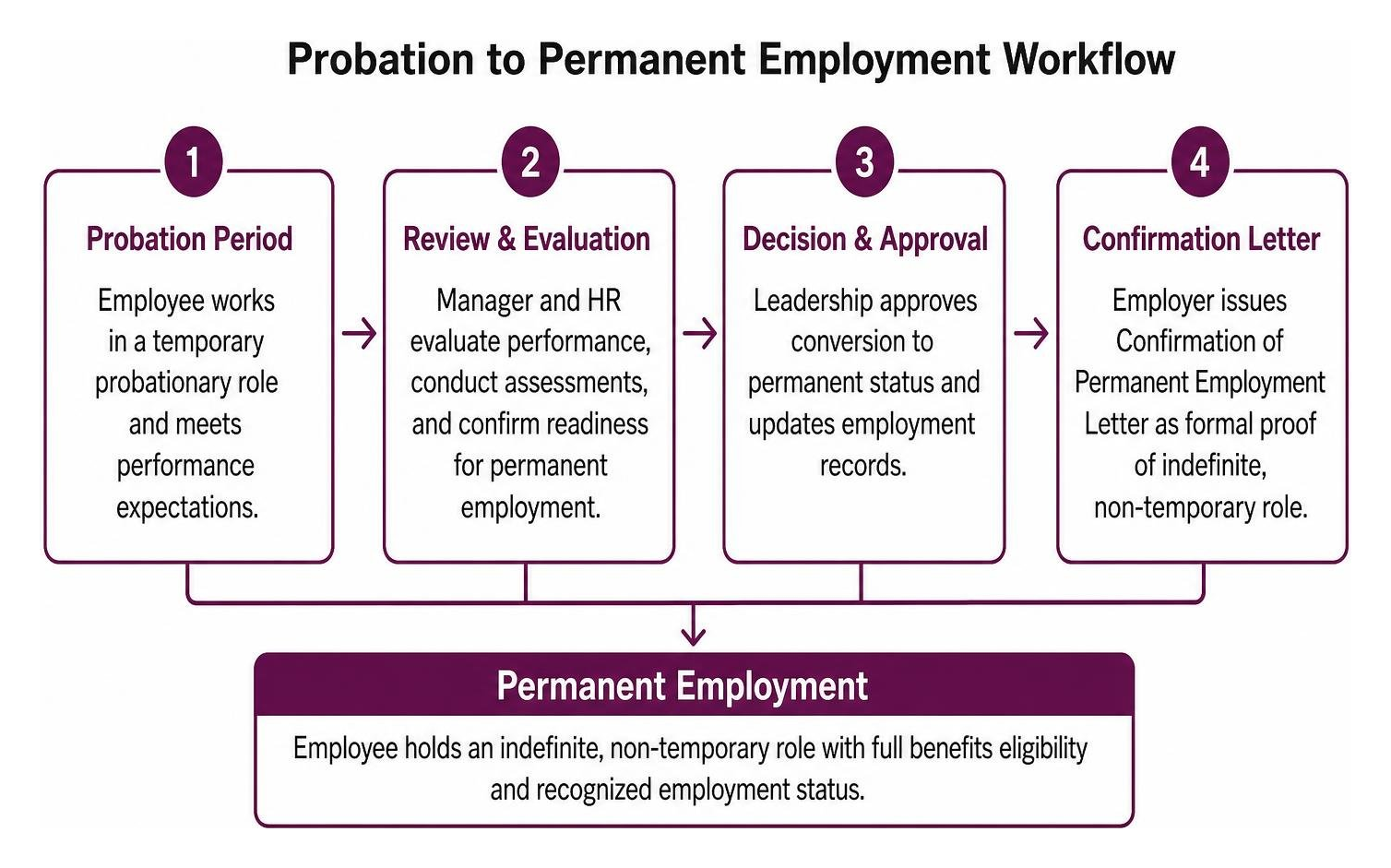
A confirmation of permanent employment letter is an authoritative statement from an employer confirming that a worker holds an indefinite, non-temporary role within the organization. For employees, it supports job stability, benefits eligibility, and financial credibility. For renters, including people preparing housing paperwork alongside an emotional support animal letter, it can also help landlords or property managers verify that the applicant has stable income for a lease.
ValidPaw helps tenants and housing providers with a different but often related part of the rental process: legitimate ESA letters issued through telehealth evaluations by licensed therapists, with fast landlord verification support. A confirmation of permanent employment letter does not replace an ESA letter, and an ESA letter does not verify income. When both are requested during a housing application, each document should clearly serve its own purpose.
When team members apply for major life milestones, such as securing a home loan, renting an apartment, or petitioning for immigration adjustments, third parties often require concrete proof of income stability. Lenders and property managers routinely review these records to assess financial risk. For instance, preparing comprehensive paperwork aligned with the ultimate guide to your mortgage employment verification letter helps underwrite loans efficiently by proving ongoing tenure rather than short-term project engagement.
Key Differences Between Confirmation, Verification, and Reference Documents
Employers, tenants, and third-party reviewers often confuse confirmation letters, verification notices, reference certificates, and housing accommodation documents. While they may all appear in a rental or compliance file, their legal intent, operational audience, and content scope differ significantly.
| Feature / Document | Confirmation of Permanent Employment Letter | Employment Verification Letter | Service / Reference Certificate | | :--- | :--- | :--- | :--- | | Primary Purpose | Confirms transition from probationary/temporary status to regular, permanent standing. | Verifies factual employment details (tenure, title, pay) for external third parties. | Evaluates past performance, conduct, and contributions upon departure. | | Primary Audience | Internal HR records, the employee, and designated institutional recipients. | Banks, mortgage lenders, leasing offices, background check agencies. | Future prospective employers, recruitment agencies, licensing boards. | | Performance Assessment | Objective outcome (probation passed); no detailed qualitative critique. | Strictly neutral and factual; zero performance commentary. | Qualitative assessment of skills, accomplishments, and character. | | Timing of Issuance | At the completion of probation, contract conversion, or direct permanent hire. | Issued on-demand whenever requested by the worker or an authorized entity. | At or following the termination or resignation of the employee. | | Standard Inclusions | Effective permanent date, updated compensation, benefits tier, at-will clauses. | Job title, hire date, salary history, current status, employer contact. | Role scope, key achievements, professional conduct, reason for separation. |
In housing matters, these employment documents are separate from an ESA letter, which addresses disability-related accommodation needs under fair housing rules. ValidPaw's role is to help eligible clients obtain legitimate ESA documentation after a licensed telehealth evaluation and to support landlord verification when a housing provider needs to confirm the ESA letter's legitimacy.
For standard third-party inquiries that do not involve internal status transitions, utilizing specialized employment verification letter templates that actually work ensures external compliance without exposing internal personnel notes.
When to Issue a Confirmation of Permanent Employment Letter
There are several standard operational junctures when HR teams and managers may generate a confirmation letter:
- Successful Probation Completion: When a new hire satisfies the performance expectations of their initial trial window, typically 30, 60, or 90 days.
- Contract-to-Permanent Conversion: When a temporary contractor, seasonal worker, or fixed-term staff member transitions into an open-ended role.
- Direct Permanent Hires: When an experienced professional is hired directly into a permanent executive or specialized role with waived probation.
- Immigration & Labor Filings: When federal authorities evaluate immigrant visa petitions for Permanent Workers to confirm ongoing, full-time employment availability.
- Rental Application Support: When a tenant needs to show job stability to a landlord or property manager as part of a lease application, separate from any ESA accommodation documentation.
Essential Components and Legal Requirements
Drafting a reliable confirmation of permanent employment letter requires balancing corporate clarity with regional statutory compliance. Omitting key clauses can expose companies to unintentional contractual liabilities or cause document rejections by reviewing authorities. When the letter is used in a housing file, it should verify employment facts only; it should not include medical, disability, or emotional support animal information. ESA-related information should be handled through the appropriate accommodation documentation, such as a legitimate ESA letter issued after evaluation by a licensed professional.
For employees and tenants in Texas, Chicago, Illinois, or elsewhere in the United States, clear separation between employment verification and housing accommodation documentation protects privacy and helps landlords review each record for the right purpose.
Mandatory Information and Cross-Border Legal Disclaimers
Every confirmation letter issued across operational hubs, from Texas cities like Houston, Austin, Dallas, San Antonio, and Fort Worth to Chicago, Illinois, and nationwide, should incorporate core standardized data points:
- Company Letterhead & Identifiers: Official entity legal name, registered operating address, employer identification number (EIN), and direct HR contact details for audit trails.
- Employee Identification: Full legal name, internal employee identification number, social security trailing digits if required by the receiving institution, and current department.
- Position & Classification: Exact job title, Fair Labor Standards Act (FLSA) status (exempt vs. non-exempt), and full-time or part-time distinction.
- Effective Date: The precise calendar date when permanent status takes legal effect, marking the end of any provisional or trial milestones.
- Compensation Structure: Base annual salary or hourly wage, pay disbursement frequency (bi-weekly, semi-monthly), scheduled review cycles, and direct reporting hierarchy.
- At-Will Disclaimer and Statutory Frameworks: In standard US employment agreements, an explicit disclaimer confirming that permanent status does not alter the underlying at-will employment relationship is vital. For multinational organizations with teams subject to civil or commercial codes abroad, such as §630 BGB or §109 GewO in German statutory frameworks, the letter must also accommodate local statutory rights regarding separation documentation and employment confirmation notices.
- Privacy and Consent Controls: If the letter is being sent to a landlord, lender, or agency, obtain written employee consent before disclosing employment or salary information. This is especially important when the employee is also handling sensitive housing accommodation paperwork.
- Public Assistance Form Alignment: When handling public service inquiries or state agency audits, ensure details mirror state-mandated records like Form H1028, Employment Verification.
Optional Clauses: Remote Work, Benefits Schedules, and Equity
Depending on the complexity of the compensation package, housing application requirements, and operational model, employers can expand the core letter with optional schedules:
- Remote & Hybrid Work Terms: Explicit parameters detailing telecommuting arrangements, designated primary work locations, home office stipends, core collaboration hours, and physical office attendance expectations.
- Benefits Vesting Schedules: Formal eligibility markers for 401(k) matching, comprehensive health coverage commencement dates, life insurance policies, disability benefits, and paid time off (PTO) accrual acceleration.
- Equity & Incentive Grants: Stock option vesting schedules, restricted stock unit (RSU) terms, profit-sharing participation, or performance-based discretionary bonus formulas.
- Tenancy Support Language: Supplementary income verification clauses structured to satisfy the secret to a perfect apartment employment letter during residential lease applications.
Employers should avoid adding health details, diagnosis information, therapy records, or ESA-related claims to an employment confirmation letter. If a renter needs an emotional support animal accommodation, that documentation should come from the appropriate licensed provider and should be reviewed separately from employment status.
Managing Special Scenarios and Operational Best Practices
The confirmation process is rarely one-size-fits-all. Human resources teams frequently encounter nuanced performance scenarios that require specialized handling before finalizing records. Tenants may also need the letter quickly when a leasing office requests updated income proof during a move, renewal, or housing accommodation review. In those situations, the best practice is to keep the employment letter factual and direct, while keeping ESA or disability accommodation materials in a separate, privacy-conscious process.
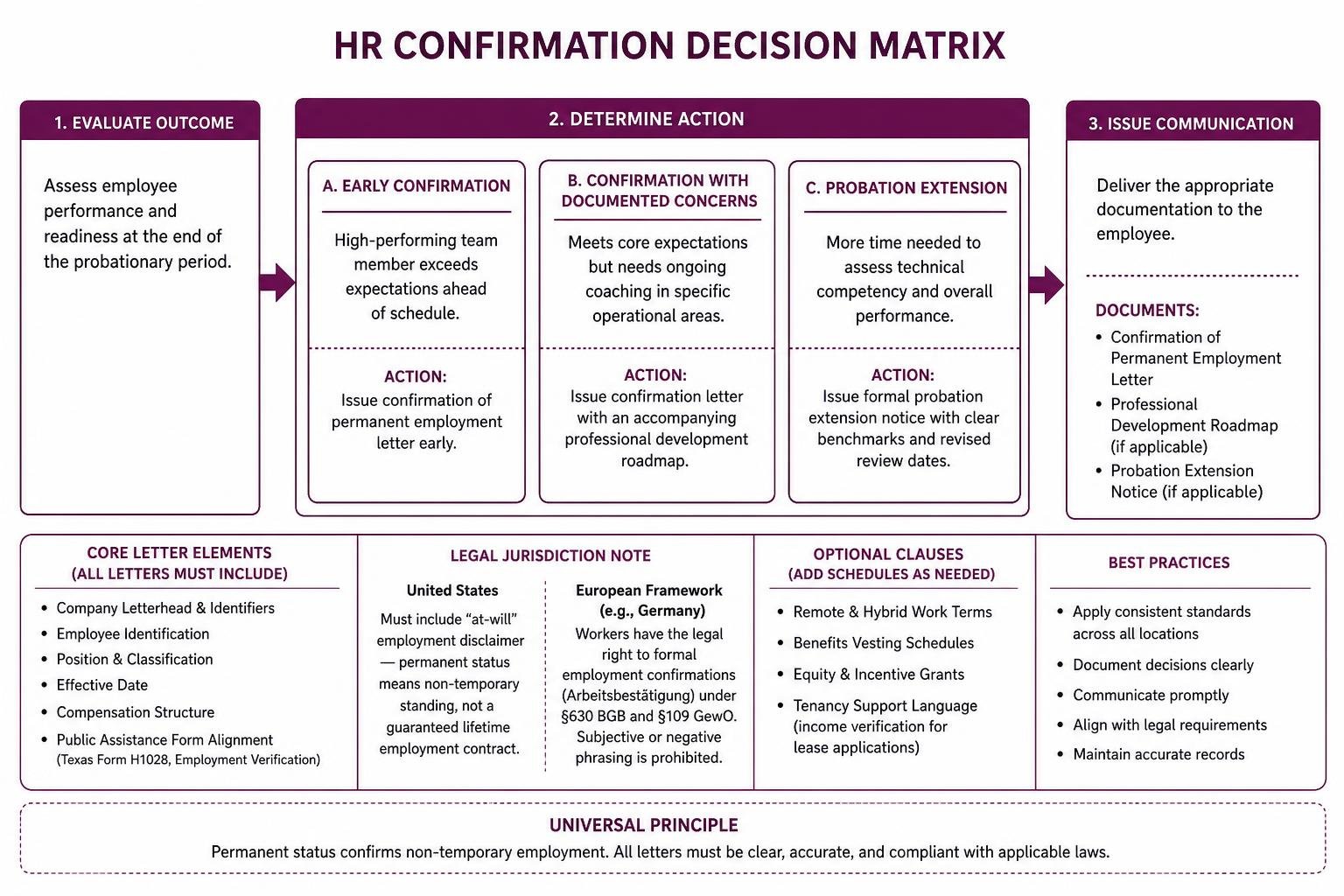
- Early Confirmation: High-performing team members who surpass expectations ahead of schedule can be confirmed early. This demonstrates institutional trust, reinforces positive performance cultures, and boosts employee retention.
- Confirmation with Documented Concerns: If an employee meets core technical expectations but requires ongoing coaching in specific operational areas, the confirmation letter can reference an accompanying professional development roadmap or thirty-day performance milestone plan.
- Probation Extension: When evaluators need more time to assess technical competency or role alignment, a formal probation extension notice must be issued prior to the expiration of the original trial period, detailing clear performance benchmarks, supplementary training resources, and revised review dates.
- Lease Deadline Requests: If a landlord or property manager requests employment proof on a short timeline, HR should confirm the employee's consent, issue only the necessary employment facts, and avoid including unrelated accommodation or medical information.
Step-by-Step Guide to Writing a Confirmation of Permanent Employment Letter
To maintain consistency, minimize administrative errors, and ensure cross-departmental compliance, HR departments should execute the following sequence:
- Retrieve Employee File: Pull the initial offer letter, job description, signed onboarding contracts, and probationary review documentation from the HRIS.
- Select the Standardized Template: Choose the appropriate corporate template matching the employee's jurisdiction, state-specific requirements, and role classification.
- Cross-Reference Payroll Data: Verify current base pay, overtime eligibility, active benefits deductions, and reporting structures against live payroll records to eliminate discrepancies.
- Incorporate Statutory Language: Ensure relevant regional disclaimers, such as at-will notices or mandatory statutory references, are embedded verbatim without unauthorized modifications.
- Confirm the Intended Recipient: Determine whether the letter is for the employee's records, a lender, a landlord, an agency, or another authorized third party.
- Protect Sensitive Housing Information: If the employee is also submitting an ESA letter or another accommodation request, keep that documentation separate from the employment confirmation record.
- Acquire Managerial & HR Sign-Off: Route the draft through the direct department supervisor and designated human resources officer for formal managerial verification.
- Deliver and Secure Acknowledgment: Present the letter through an official confirmation conversation, delivering the final document digitally or on physical letterhead, and obtaining a signed employee acknowledgment copy for compliance archives.
For additional phrasing strategies across varied corporate roles, review our employee work verification letters templates tips and tricks.
Archiving, Consent, and Standardizing HR Documentation
Protecting employee privacy is paramount. Under federal, state, and international data privacy regulations, employers must obtain documented employee consent prior to releasing employment or salary records to external entities.

Always store signed confirmation documents within the primary Human Resources Information System (HRIS) under restricted access protocols. Maintain digital audit trails detailing when records were generated, who accessed them, and which third parties received verified copies. Utilizing a standardized authorization letter for employee verification free templates and writing tips protects your organization against unauthorized data disclosure claims.
For renters with emotional support animals, this same privacy principle matters. Landlords may need to verify an ESA letter's legitimacy, but they do not need access to an employee's full personnel file, salary history beyond what the lease process requires, or private clinical details. Keeping employment confirmation, ESA documentation, and landlord verification workflows separate helps tenants, employers, and housing providers avoid avoidable compliance mistakes.
Frequently Asked Questions About Permanent Employment Letters
How long is an employment confirmation letter valid for third parties?
While employment confirmation letters do not carry an inherent statutory expiration date, third-party institutions, including commercial banks, mortgage underwriters, federal agencies, and landlords, generally require letters issued within the last 30 to 90 days. Documents older than three to six months are routinely rejected due to the need for current income verification.
If the letter is part of a rental file that also includes an ESA accommodation request, ask the landlord which documents must be current. Employment proof and ESA documentation are reviewed for different reasons, so their recency rules may not be identical.
Can an employer extend probation instead of issuing a confirmation letter?
Yes. If an employee has not fully demonstrated role competency but shows clear potential for improvement, an employer may extend the probationary period. However, this extension must be communicated in writing before the initial probation window expires, outlining specific performance targets, support resources, and a revised evaluation date.
If the employee is applying for housing, HR should avoid implying permanent status until the decision is final. A separate factual employment verification letter may be more appropriate while probation remains active.
Who has the legal authority to sign an employment confirmation letter?
Confirmation letters must be signed by an authorized corporate representative. This typically includes the Director of Human Resources, Chief People Officer, Payroll Administrator, or an executive corporate officer. Line managers should generally not sign these documents independently unless granted explicit delegation of authority by the HR department.
For rental applications, landlords should receive the letter through the employee or an authorized verification channel. ESA letters, by contrast, should come from the appropriate licensed provider rather than the employer.
Conclusion
A well-crafted confirmation of permanent employment letter bridges internal talent development with external institutional compliance. By maintaining clear records, respecting regional legal frameworks, and delivering timely status updates, employers enhance team morale while streamlining administrative operations.
For renters, the letter can also be one part of a broader housing paperwork package. It may help prove income stability, while a legitimate ESA letter supports a disability-related housing accommodation request. These documents should not be blended together: employment status belongs with the employer, and ESA documentation belongs with a licensed professional evaluation.
ValidPaw helps eligible clients in Texas and across all 50 states obtain legitimate ESA letters through telehealth evaluations by licensed Texas therapists, with fast 24-48 hour FHA-compliant documentation and landlord verification support. If your housing provider needs to confirm an ESA letter quickly, explore ValidPaw's instant landlord verification for fast, legitimate, and stress-free document processing today.