
How to Qualify Your Dog as an ESA Without Paying for Registration
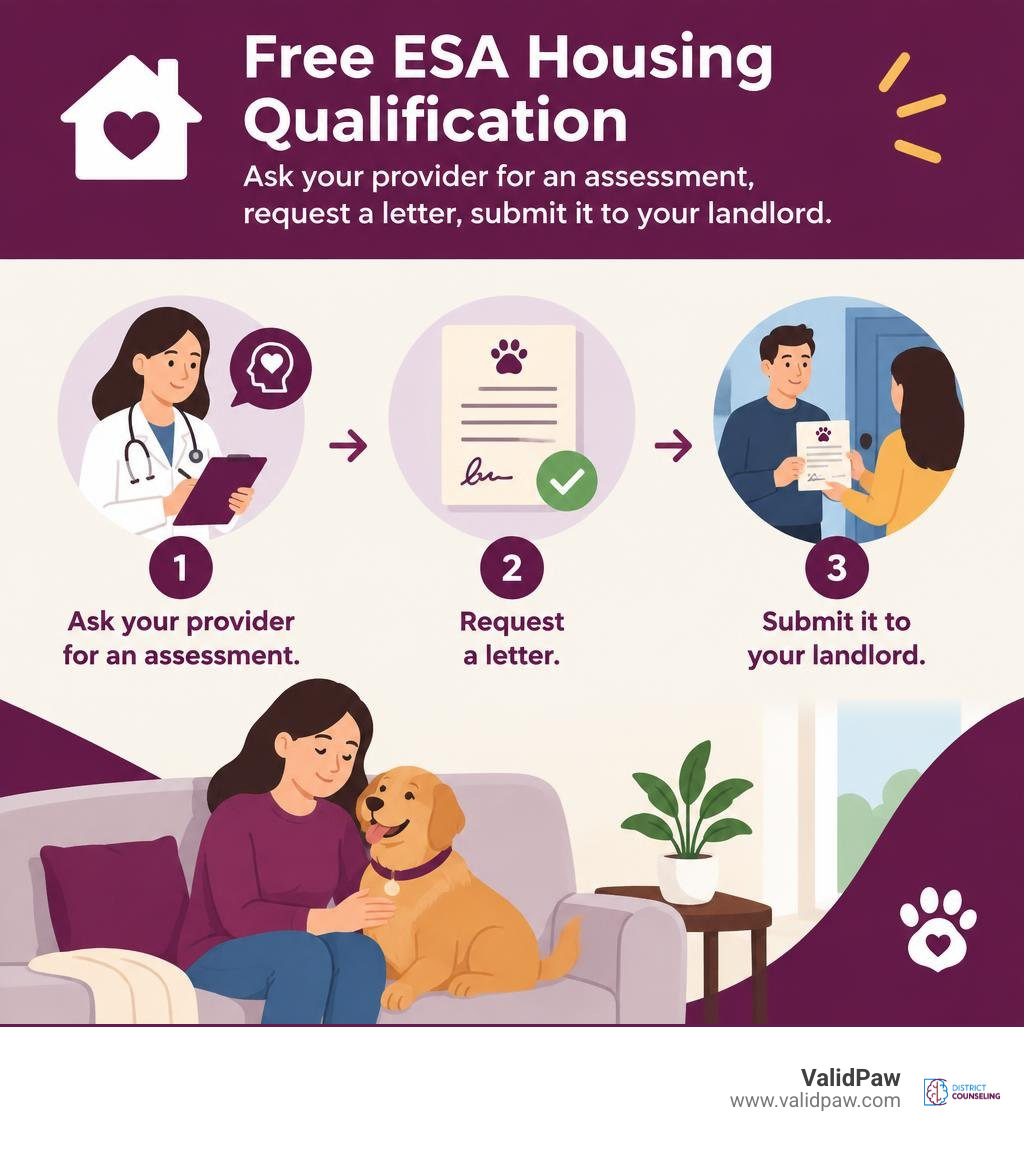
You do not need to register your dog as an ESA. Under federal law, there is no legitimate public or private database where an emotional support animal must be listed to secure legal standing. To qualify for a housing accommodation, you simply ask a licensed healthcare or mental health professional who is familiar with your clinical history to evaluate your disability-related need for an assistance animal. If they determine that your pet provides essential symptom relief or therapeutic comfort, they can write and sign an official ESA recommendation letter. Many primary providers provide this clinical documentation as part of routine care without adding specialized paperwork surcharges.
Once you receive your signed letter, you can present it directly to your landlord, condominium board, or property manager. Commercial kits featuring paid registry numbers, holographic ID badges, embossed certificates, and branded vests are completely optional and hold zero legal authority under federal regulations. Free does not always mean immediate, as your doctor or therapist may require an initial clinical evaluation or a follow-up consultation before finalizing documentation. Always remain cautious of predatory websites that promise instant certificates without a real assessment.
I’m Francisco Ortiz, a forensic mental health evaluator experienced in conducting structured ESA evaluations. If you are researching how to register your dog as an esa for free, this guide explains how to secure valid clinical documentation while bypassing deceptive commercial schemes.
The Myth of Official ESA Registries vs. Legal Requirements
One of the most widespread misconceptions across the internet is the belief that pet owners must enroll their companions in a centralized national database to gain official ESA recognition. In reality, neither the federal government nor state regulatory agencies maintain, recognize, or oversee any registry or certification database for emotional support animals.
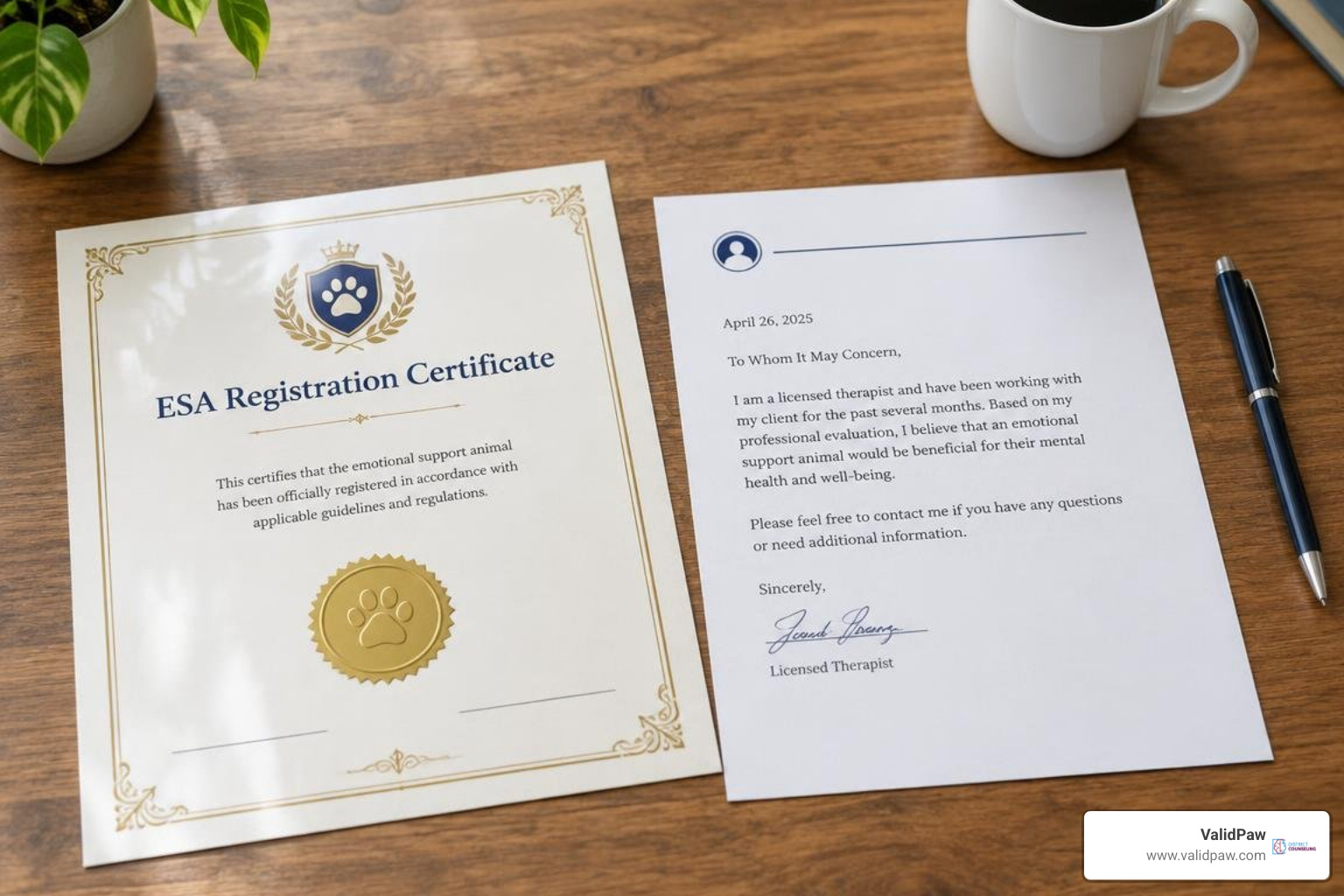
Under the Fair Housing Act (FHA) and guidance published by the U.S. Department of Housing and Urban Development, legal housing rights rely strictly upon an authentic diagnostic relationship between a patient and a licensed healthcare practitioner. An official-looking badge, harness patch, or numeric entry in an online directory does not establish legal protection under the law.
Experienced landlords, corporate property managers, and housing authorities routinely review documentation and are trained to spot commercial registry paperwork. Websites marketing downloadable registrations, certificates, and ID tags exploit common misunderstandings and provide paperwork that can lead to immediate rejection during housing applications. You can protect your rights and certify your dog the right way by working directly with a licensed mental health professional who evaluates your unique clinical needs.
How to Register Your Dog as an ESA for Free: The Legitimate Process
If you want to know how to get an emotional support animal letter without paying for superfluous commercial packages, the most reliable avenue is your established healthcare routine. Federal guidelines emphasize clinical assessment rather than transactional registration fees.
Qualifying conditions typically encompass mental, emotional, or psychiatric impairments recognized in the DSM-5, such as:
- Generalized anxiety disorder and social anxiety
- Major depressive disorder and persistent depressive conditions
- Post-traumatic stress disorder (PTSD) and acute stress responses
- Panic disorder and agoraphobia
- Chronic insomnia or mood dysregulation connected to an underlying psychiatric diagnosis
When a companion dog provides emotional grounding, reduces hypervigilance, mitigates panic episodes, or stabilizes severe depressive symptoms, you may qualify for zero-cost documentation through your current provider.
Step-by-Step: How to Register Your Dog as an ESA for Free Through Your Current Provider
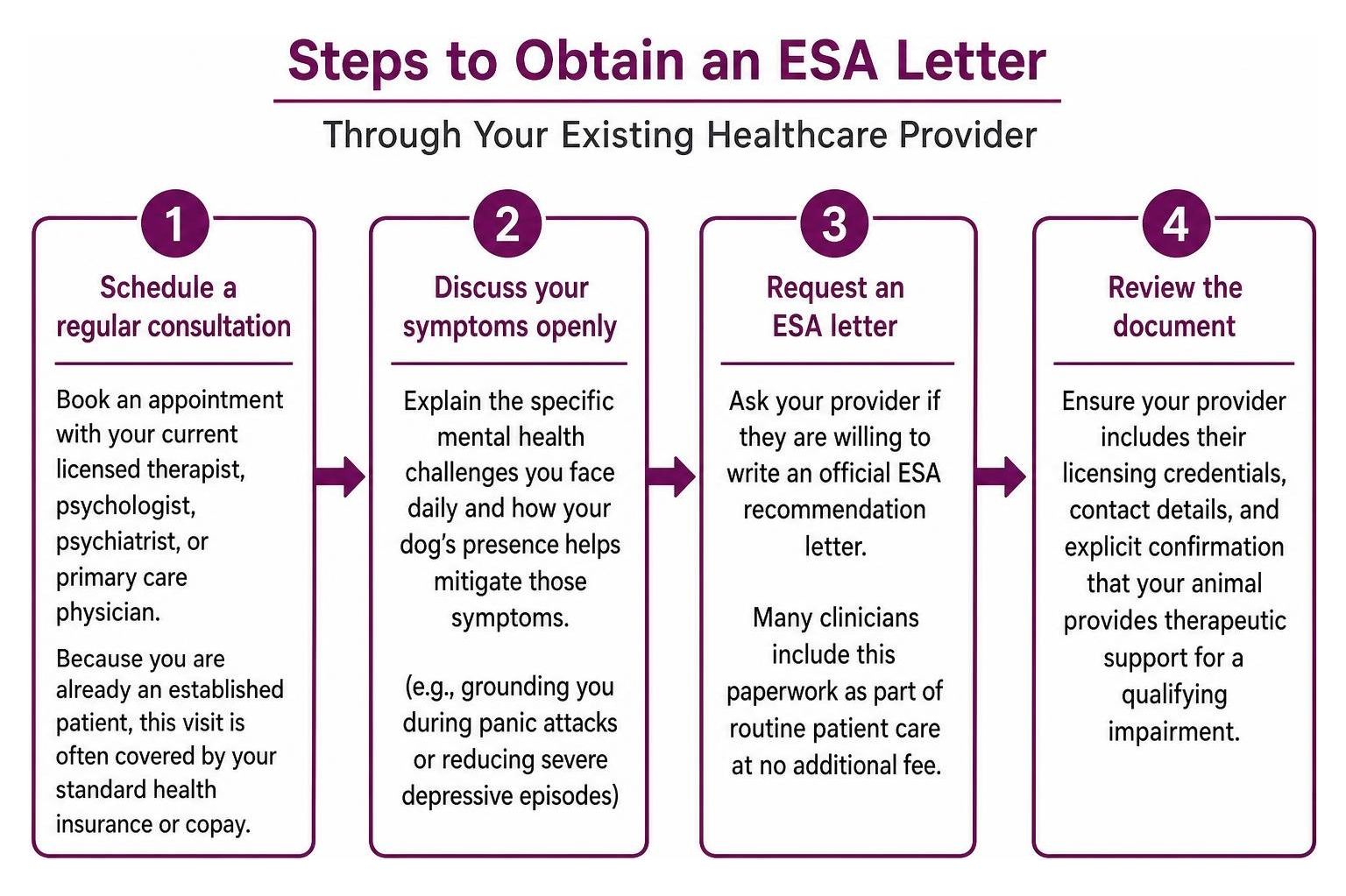
Follow these practical steps to request authentic documentation without incurring unnecessary costs:
- Schedule a standard consultation: Book an appointment with your current licensed therapist, clinical social worker, psychiatrist, or primary care doctor. Because this appointment takes place within an existing provider-patient relationship, it is typically covered under standard health insurance plans or routine co-pays.
- Discuss your symptoms candidly: Describe the functional challenges you experience during daily life and detail how your dog's presence actively helps alleviate those symptoms, such as interrupting anxiety attacks or facilitating emotional stabilization.
- Request an ESA letter: Ask your clinician whether they can draft an official letter supporting your housing accommodation. Clinicians who understand assistance animal guidelines regularly provide this paperwork as an integral component of ongoing treatment.
- Review document details: Confirm that the final letter contains the practitioner's active license information, office contact details, and a clear clinical statement outlining your disability-related need for an emotional support animal.
Essential Elements Required in a Valid Free ESA Letter
Property managers have the legal right to confirm that your documentation satisfies federal standards before granting a housing accommodation. To make sure your paperwork withstands scrutiny, follow standard ESA documentation requirements.
A complete and legally compliant letter must include:
- The clinician's official professional letterhead with office contact information
- The provider's full legal name, professional title, and state license number
- The state where the practitioner holds licensure along with the original date of issuance
- Clear confirmation of an established provider-patient relationship
- A professional statement affirming that your dog alleviates symptoms associated with a diagnosed mental or emotional impairment
- The clinician's handwritten or verified digital signature
Identifying Free ESA Letter Scams and Unofficial Websites
Many commercial websites market deceptive services promising instant certifications or free instant downloads. Understanding how to spot a legitimate ESA letter ensures you avoid invalid paperwork that could compromise your housing rights or invite administrative disputes.
| Feature | Legitimate Clinical ESA Letter | Fake Online Registry / Free Kit | | :--- | :--- | :--- | | Legal Standing | Recognized under HUD & Fair Housing Act | Zero legal standing; easily rejected | | Provider Requirement | Licensed mental health professional | Automated algorithm or unregulated quiz | | Clinical Consultation | Live phone, video, or in-person evaluation | No direct professional contact | | Documentation Format | Signed letter on professional letterhead | Badges, generic certificates, and ID tags | | Landlord Verification | Direct clinician contact details included | Non-verifiable database link |
Common Misconceptions About How to Register Your Dog as an ESA for Free Online
Fraudulent platforms employ misleading language to persuade pet owners that digital cards or registry numbers hold legal authority. Look out for these common warning signs:
- Automated quiz approvals: Any website that generates an instant approval letter immediately after you fill out a two-minute multiple-choice form without interacting with a licensed clinician is illegitimate.
- Universal or federal registries: Portals claiming to enter your pet into a national, federal, or governmental assistance animal database are fabricating certifications that do not exist under federal statute.
- Out-of-state and unverified providers: Many disreputable operators use non-clinical staff or clinicians unlicensed in your state, rendering the resulting letters invalid under local and federal tenancy rules.
- Accessory upselling: Schemes that insist you must buy branded vests, embossed tags, ID cards, or certificates to make your emotional support animal legal under housing regulations.
Exercising Your Housing Rights and Submitting Letters to Landlords
After securing a valid letter from your healthcare provider, you can submit an accommodation request to your landlord or property management office. Reviewing how to request an ESA accommodation in simple steps helps you navigate the formal submission process efficiently and professionally.

Under the Fair Housing Act, an authentic ESA letter entitles individuals with qualifying mental or emotional impairments to several key legal protections:
- Exemption from no-pet rules: Housing providers must make reasonable accommodations to allow your support animal, even in buildings that strictly prohibit standard pets.
- Complete waiver of pet fees: Landlords are legally prohibited from charging pet deposits, upfront registration fees, or monthly pet rent for a verified assistance animal.
- Size and breed allowances: ESA accommodations supersede general community restrictions regarding animal weight, breed categories, or physical size.
Note on Air Travel: Under updated Air Carrier Access Act (ACAA) rules, commercial airlines are no longer required to transport emotional support animals free of charge. Only task-trained psychiatric service dogs (PSDs) retain guaranteed cabin access rights without standard airline pet fees.
Frequently Asked Questions About Free ESA Qualification
Can a primary care doctor write an ESA letter for free?
Yes. A licensed primary care physician, nurse practitioner, or family doctor who actively treats your physical and psychological health can write a legally compliant ESA letter. If your physician determines that your dog helps alleviate symptoms of an emotional or mental impairment, they can incorporate the letter into your standard clinical documentation at no additional cost.
Does an emotional support dog need a special vest or registration number?
No. Emotional support animals do not need to wear vests, harness patches, identification badges, or special tags. They do not require registration numbers or national database entries. The sole document establishing legal recognition under the Fair Housing Act is a formal, signed letter issued by a qualified, state-licensed healthcare practitioner.
Can a landlord reject an ESA letter written by my regular therapist?
A landlord may only deny a legitimate ESA request under strictly defined legal criteria: if the specific animal poses a direct and demonstrable safety or health hazard to other residents, if the animal causes extensive property destruction, or if granting the requested accommodation would impose an unreasonable financial and administrative burden on the property owner.
Conclusion
Qualifying your dog as an emotional support animal does not require purchasing commercial registration kits, digital badges, or recurring membership plans. By discussing your mental health needs with your primary physician, therapist, or psychiatrist, you can obtain an authentic, legally compliant ESA letter as part of your standard healthcare consultations at little to no extra expense.
If you currently lack a regular healthcare provider or require an efficient, compliant clinical evaluation, we can connect you with licensed professionals across Texas and all 50 states. Start your legitimate ESA application today with ValidPaw to receive a 24–48 hour FHA-compliant letter backed by live professional consultations.