How to Register Your Pet as an Emotional Support Animal Legally
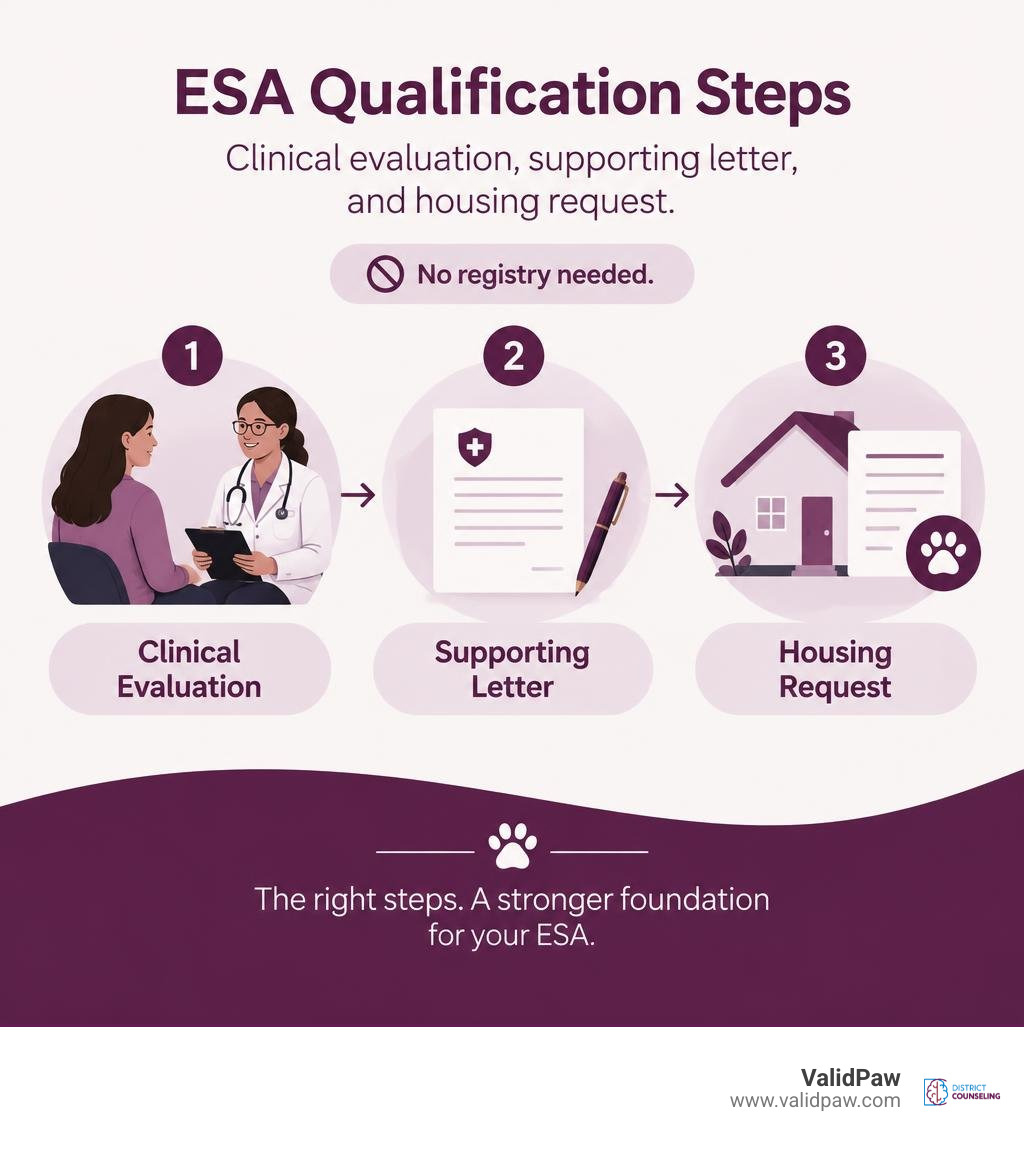
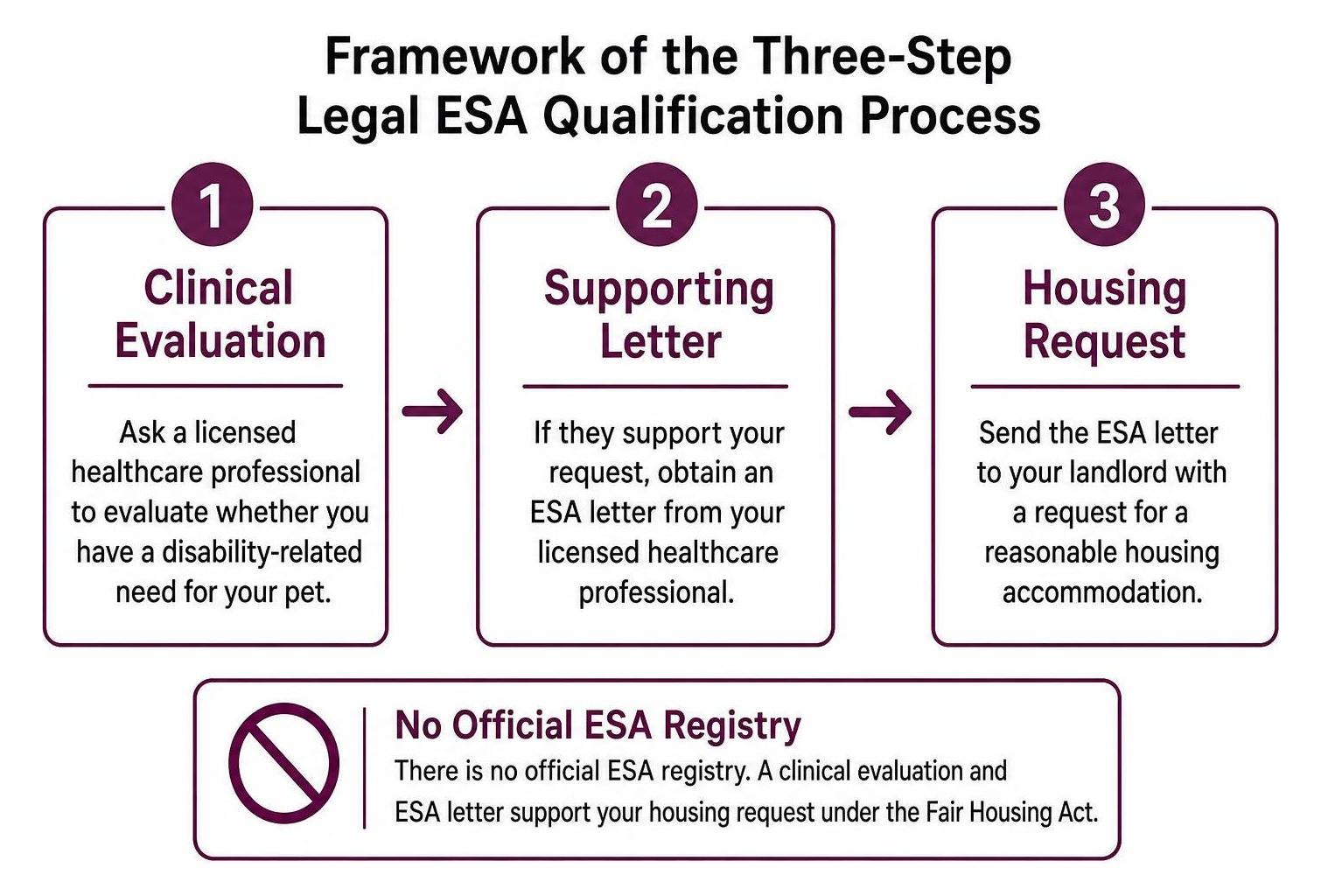
If you are asking, "How do I register my pet as an emotional support animal?", the first thing to know is that there is no official ESA registry. Instead, ask a licensed healthcare professional to evaluate whether you have a disability-related need for your pet. If they support your request, obtain an ESA letter and send it to your landlord with a request for a reasonable housing accommodation.
An ESA letter is not a pass for restaurants or airplanes. Its main legal use is to support a housing request under the Fair Housing Act.
I'm Francisco Ortiz, a mental health evaluator with experience assessing disability-related needs for emotional support animals. I help individuals who want to know how to register their pet as an emotional support animal understand why a clinical evaluation and housing request matter more than a certificate.
Understanding ESA Status: Emotional Support Animals vs. Service Animals
When navigating the rules around assistance animals, it is common to mix up service dogs and emotional support animals. However, federal law treats these two categories very differently.
Under the Americans with Disabilities Act (ADA), a service animal is defined strictly as a dog (or, in specific cases, a miniature horse) individually trained to do work or perform specific physical or psychiatric tasks for an individual with a disability. Examples include guiding someone with vision loss, alerting a handler when their blood sugar reaches critical levels, or detecting the onset of a panic attack to provide deep pressure therapy.
In contrast, an emotional support animal (ESA) provides therapeutic comfort and companionship simply through its presence. Because an ESA does not require specialized task training, it is not recognized as a service animal under the ADA. This means an ESA does not have automatic public access rights to grocery stores, restaurants, or indoor malls.
Instead, ESAs are recognized under the Fair Housing Act (FHA) as assistance animals. When you decide to qualify your beloved pet as an emotional support animal, you are pursuing housing protections rather than general public access.
| Animal Type | Governing Law | Specialized Training Required? | Public Access (Stores, Dining) | Housing Rights (No Pet Rent/Bans) | | :--- | :--- | :--- | :--- | :--- | | Service Animal | Americans with Disabilities Act (ADA) | Yes (individual task training) | Yes | Yes | | Emotional Support Animal (ESA) | Fair Housing Act (FHA) | No (basic household manners) | No | Yes | | Standard Household Pet | Local Municipal Ordinances | No | No | No (subject to fees and bans) |
As outlined in HUD guidance on assistance animals, assistance animals are not classified as ordinary pets in housing contexts. When properly documented, they are viewed as a reasonable accommodation necessary to afford someone with a mental health condition an equal opportunity to use and enjoy their home.
Step-by-Step Guide on How to Register an Emotional Support Animal
Because government-run registries do not exist, qualifying an animal comes down to establishing a clinical relationship and obtaining verifiable medical documentation. You can learn how to turn your pet into a legitimate ESA without scams by following three clear steps.
Requirements and Eligibility for an ESA
To qualify for an ESA, a person must have a diagnosed emotional, mental, or psychiatric condition recognized in the Diagnostic and Statistical Manual of Mental Disorders (DSM-5) that significantly limits one or more major life activities.
Common qualifying conditions include:
- Generalized anxiety disorder
- Major depressive disorder
- Post-traumatic stress disorder (PTSD)
- Bipolar disorder
- Panic disorders and severe social phobias
- Chronic insomnia tied to psychiatric conditions
During a mental health evaluation, a licensed mental health professional (LMHP) assesses your symptoms to determine whether an animal’s presence alleviates functional limitations—such as severe isolation, anxiety spikes, or debilitating sleep disruption. If you want to review specific criteria for canines, check out our ultimate guide to ESA dog requirements.
Obtaining a Legitimate ESA Letter from a Licensed Mental Health Professional
The only document recognized under federal housing law is an official ESA letter written by a healthcare professional licensed in your state. This can be your existing therapist, psychiatrist, clinical social worker, or a clinician you consult via telehealth.
A compliant ESA letter must contain:
- The clinician’s professional letterhead, contact details, and license type
- The clinician's active license number, state of jurisdiction, and issuance date
- Confirmation that you have an impairment that substantially limits a major life activity
- A direct statement explaining that the animal alleviates symptoms of your condition
- The clinician’s signature and the date of the evaluation
Whether you are looking into registering an ESA cat for housing or keeping a dog, the documentation standards remain the same.
At ValidPaw, we provide legitimate ESA letters via telehealth evaluations conducted by licensed therapists. We deliver fast, 24-48 hour FHA-compliant letters with instant landlord verification, helping clients across Texas—including Houston, Austin, Dallas, San Antonio, and Fort Worth—as well as Chicago, Illinois, and nationwide.
Submitting a Reasonable Accommodation Request to Your Housing Provider
Once your letter is secured, submit a formal written request for a reasonable accommodation to your landlord or property management company before moving the animal in (or as soon as a new medical need arises).

State and federal housing authorities, including the framework detailed in Mass.gov guidance on assistance animals in housing, require housing providers to participate in an interactive process. Your landlord cannot demand detailed medical records or ask invasive questions about your diagnosis. Once they receive your valid letter, they must process the accommodation request in a timely manner.
Legal Protections and Limitations for Emotional Support Animals
Under the Fair Housing Act, a verified emotional support animal is granted significant housing protections:
- No-Pet Policies: Landlords must waive "no-pets" rules in buildings, condominiums, and rental homes.
- Breed and Weight Waivers: Property rules capping an animal's weight or restricting specific breeds cannot be applied to an ESA unless an individual animal demonstrates dangerous behavior.
- Fee and Deposit Exemptions: Housing providers are prohibited from charging upfront pet deposits, monthly pet rent, or application surcharges for assistance animals.
However, these protections do not extend everywhere. Under the Air Carrier Access Act (ACAA), airlines are no longer required to accommodate ESAs for free in the cabin; they are treated as standard carry-on pets subject to airline pet fees and kennel rules. Furthermore, as clarified by ADA.gov service animal regulations and FAQs, ESAs do not have public access rights in grocery stores, gyms, or private businesses.
Avoiding Scams When Qualifying an Emotional Support Animal Online
The internet is full of commercial websites offering "instant certifications," official-looking badges, or entry into a "national ESA database" for a quick fee.
The U.S. Department of Housing and Urban Development (HUD) has repeatedly warned that these websites sell invalid credentials. Buying a certificate, registration card, or embroidered harness without a clinical evaluation by a licensed provider carries zero legal weight under fair housing law. If you present an online registry certificate to a landlord, they can legally deny your request. For a direct breakdown of how the process works without shortcuts, see how to go about registering an animal as an ESA in simple steps.
Tenant Responsibilities and Landlord Denial Grounds
Having an ESA comes with practical responsibilities. A landlord can legally deny or revoke an accommodation request if:
- The specific animal poses a direct threat to the health and safety of others that cannot be mitigated.
- The animal causes substantial physical damage to the property.
- The animal creates an unmanageable nuisance, such as persistent barking that violates quiet enjoyment clauses.
- Granting the accommodation would impose an undue financial and administrative burden on the property owner.

As an ESA handler, you remain financially responsible for any actual property damage your animal causes, and you must adhere to local leash, sanitation, and municipal vaccination laws.
Frequently Asked Questions About ESA Registration
Can a landlord legally deny my emotional support animal?
A landlord can only deny an ESA under specific circumstances: if your documentation is invalid, if the property is exempt from the Fair Housing Act (such as certain owner-occupied buildings), if the animal poses an active safety threat, or if the accommodation causes an undue financial burden. Landlords cannot deny an ESA simply because they dislike the animal's breed or size.
Do I have to pay pet deposits or monthly pet rent for an ESA?
No. Under the Fair Housing Act, assistance animals are exempt from all pet fees, mandatory pet deposits, and recurring monthly pet rent. However, standard security deposits still apply, and you must pay for any actual physical damage your animal causes to the unit.
Are emotional support animals allowed on airplanes or in restaurants?
No. The Air Carrier Access Act does not grant ESAs free cabin travel, and the Americans with Disabilities Act does not grant them access to public accommodations like restaurants, bars, or retail stores. ESAs are granted legal accommodations primarily within residential housing.
Conclusion
Qualifying your companion as an emotional support animal does not involve state registrations, laminated ID cards, or commercial registries. It requires an individualized mental health evaluation with a licensed clinician who can confirm your need and issue a compliant letter of support under the Fair Housing Act.
If you are ready to secure a legitimate, fully verifiable document backed by state-licensed professionals, we can help. Apply for a legitimate ESA letter with ValidPaw today to complete your confidential telehealth screening from the comfort of your home.