
How to Register an ESA Cat for Housing
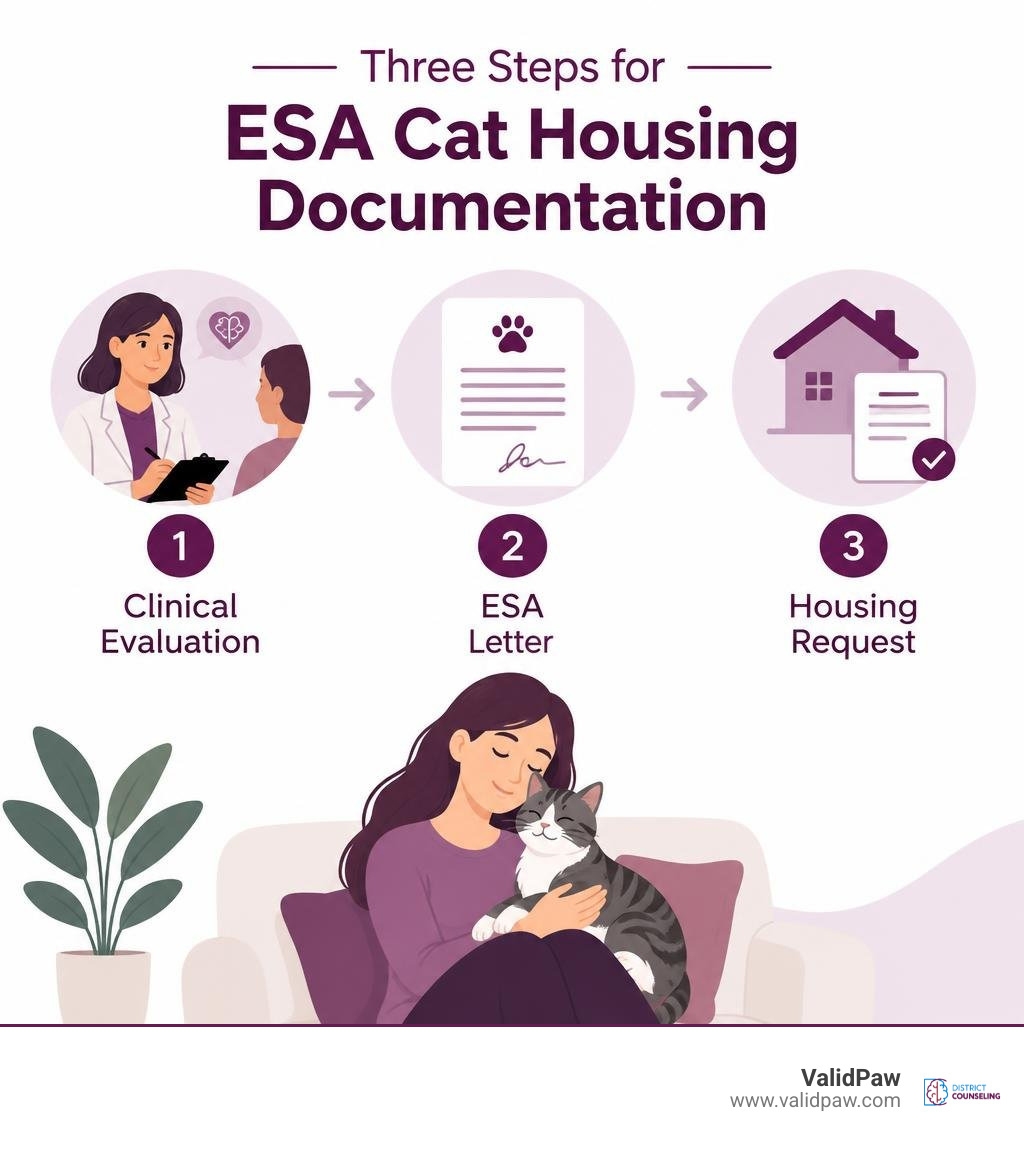
To register an ESA cat for housing, you do not need to sign up for a registry. Instead, meet with a licensed mental health professional who can assess whether you have a disability-related need for your cat. If they determine that you qualify, ask for an ESA letter and give it to your housing provider with a request for a reasonable accommodation.
An emotional support cat provides companionship that helps a person with a mental health disability. The Fair Housing Act may protect your ability to live with your cat, even in housing with a no-pet policy. It does not give ESA cats the same public-access rights as service animals.
I'm Francisco Ortiz, a licensed mental health professional with experience evaluating ESA requests and disability-related needs across several states. I'll explain how to register an ESA cat without paying for a registry you do not need, starting with the steps that matter for housing.
Emotional Support Cats vs. Service Animals: Understanding the Basics
Many people assume every assistance animal needs a formal certification badge or intensive specialized training. In reality, assistance animals fall into distinctly different categories under federal law. Domesticated felines are among the most comforting companions on the planet. Their purring, affectionate nature, and quiet presence offer measurable emotional well-being and therapeutic companionship to individuals experiencing mental health challenges.
While they offer immense relief, their legal standing differs significantly from service animals. Understanding these boundaries ensures you know your rights and responsibilities when living with or caring for your feline. For a deeper look at feline behavior, check out practical training and behavior advice for feline companions.
| Feature | Emotional Support Cat (ESA) | Psychiatric Service Dog (PSD) | Standard House Pet | | :--- | :--- | :--- | :--- | | Primary Legal Role | Provides comfort and alleviates symptoms of a mental disability | Performs specific trained tasks directly related to a disability | Companionship without legal assistance status | | Federal Protection | Fair Housing Act (FHA) | Americans with Disabilities Act (ADA), FHA, ACAA | None (subject to all pet rules and fees) | | Housing Rights | Exemption from pet rent, deposits, and no-pet rules | Complete housing protection with zero fees | Must follow all lease rules and pay deposits/rent | | Public Access | No public access rights (grocery stores, restaurants, etc.) | Full public access rights under Title II and Title III | No public access rights | | Air Travel Status | Treated as a pet under current airline rules | Protected in-cabin travel under ACAA without pet fees | Subject to airline pet carrier fees and size limits | | Training Required | None; basic good manners and house manners only | Extensive task-specific training required | Basic pet obedience |
Defining an ESA Cat and Mental Health Eligibility
An emotional support cat is not merely a beloved pet. Under federal guidelines, an ESA is an animal that works, provides assistance, or performs tasks for the benefit of a person with a disability, or provides emotional support that alleviates one or more identified symptoms or effects of a person's existing disability.
To qualify for an ESA, a person must have a diagnosed mental or emotional impairment that substantially limits one or more major life activities. Common conditions that may qualify include:
- Generalized anxiety disorders and panic disorders
- Major depressive disorder and chronic mood conditions
- Post-Traumatic Stress Disorder (PTSD) and acute stress reactions
- Agoraphobia and social anxiety
- Chronic emotional distress affecting sleep, appetite, or focus
When clinicians conduct mental health condition evaluations, we focus on whether a feline companion mitigates qualifying symptoms and reduces the daily life impact of the condition. For example, a cat’s grounding routine can anchor an individual during debilitating panic attacks, or their soothing physical contact can reduce depressive inertia.
Key Differences: Service Animals vs. Emotional Support Animals
The Americans with Disabilities Act (ADA) defines service animals strictly as dogs (and in rare cases, miniature horses) individually trained to do work or perform tasks for people with disabilities. Examples include guiding someone who is blind, alerting a person who is deaf, or pulling a wheelchair.
Cats cannot be recognized as service animals under the ADA because the statute limits service animals to canines. However, if you are looking to qualify your companion animal as an emotional support companion, federal housing regulations offer broad protection. Emotional support cats do not need to perform specific physical tasks; their therapeutic presence is what provides legal justification for housing accommodations.
How to Register an ESA Cat for Housing: The Complete Process

When people search for advice on how to register an ESA cat, they often encounter misleading websites selling plastic badges and instant registry numbers. In reality, the legal process involves clinical documentation rather than a commercial registry. State licensing boards and the U.S. Department of Housing and Urban Development (HUD) make it clear: an official letter from a Licensed Mental Health Professional (LMHP) is the only documentation that establishes your cat's ESA status.
To explore general assistance policies, you can read guidelines for animal accommodation as well as the formal HUD notice on assessing a person’s request to have an animal as a reasonable accommodation.
Step 1: Clinical Assessment on How to Register an ESA Cat Legally
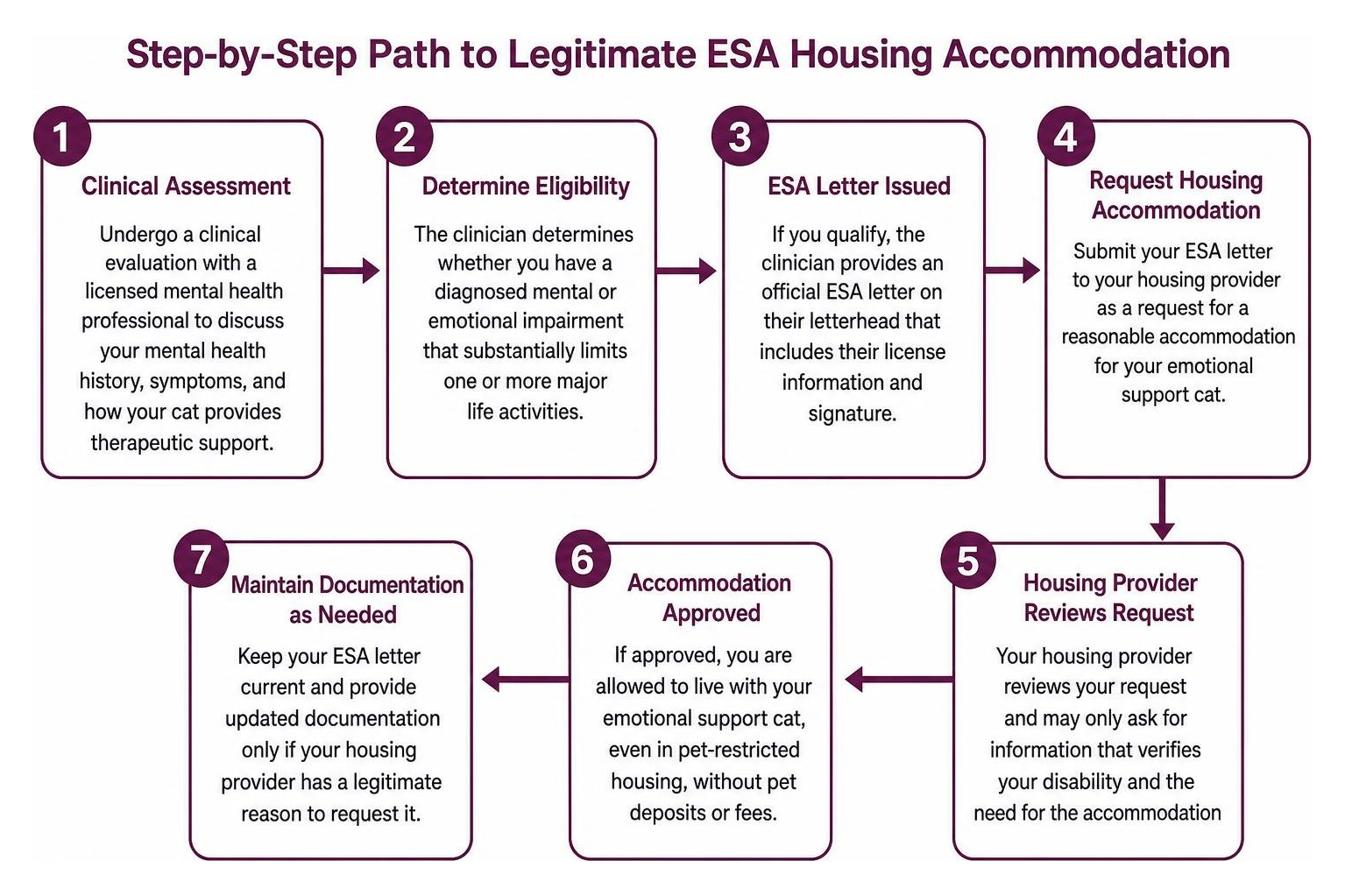
The first step is undergoing a direct clinical evaluation with a qualified professional, such as a licensed professional counselor, clinical social worker, psychologist, or psychiatrist. During this consultation, the clinician explores your mental health history, current symptoms, and how a feline companion provides therapeutic support.
Meeting clinical ESA assessment requirements ensures that your provider establishes a legitimate therapeutic relationship and accurately identifies whether your condition meets the diagnostic criteria under the Diagnostic and Statistical Manual of Mental Disorders (DSM-5).
Step 2: Receiving Valid Documentation for Your ESA Cat
If the clinician determines that an emotional support animal is a necessary component of your mental health management, they will issue an official ESA letter. A legitimate ESA letter must include:
- The practitioner’s full name, professional license type, and state license number
- Official clinic letterhead with verifiable contact information
- The date of issuance and expiration (ESA letters are valid for one year and require annual renewal)
- A clear statement confirming you have a diagnosed impairment that meets federal disability standards
- Confirmation that the cat alleviates specific symptoms of your condition
Reviewing official ESA letter requirements helps you verify that your document contains all necessary elements before you submit it to your property manager.
Step 3: Practical Landlord Steps: How to Register an ESA Cat Without Pet Fees
Once you hold your valid letter, submit a written reasonable accommodation request to your landlord or property management company. This request asks for an exemption from no-pet policies, monthly pet rent, and initial pet deposits.
Your landlord is legally required to respond in a timely manner. They can verify that the letter was written by an active, licensed healthcare provider, but they cannot demand your personal medical records, ask for a detailed diagnosis, or require you to purchase third-party registry kits.
Legal Rights and Housing Protections for ESA Cat Owners

The primary federal shield for emotional support animals is the Fair Housing Act (FHA), enforced by the Department of Housing and Urban Development (HUD). Under the FHA, housing providers must offer reasonable accommodations to tenants with disabilities, allowing them equal opportunity to use and enjoy a dwelling. For complete details, consult our resource on housing accommodation protections under the Fair Housing Act.
Housing Rights and Landlord Restrictions
The FHA applies to almost all residential housing, including rental homes, apartments, condominiums, and university housing. Under these protections:
- No-Pet Policies Do Not Apply: Landlords cannot enforce pet bans against legitimate assistance animals.
- Waiver of Fees: Housing providers cannot charge pet deposits, application fees, or monthly pet rent for an ESA.
- Breed and Size Limits Waived: Building restrictions on animal size or weight do not apply to assistance animals.
However, housing providers can lawfully deny an ESA request under specific statutory exemptions, such as owner-occupied buildings with four or fewer units, or single-family homes sold or rented without a broker (subject to FHA limits). A landlord can also deny an accommodation if the specific cat poses a direct threat to the health and safety of others or would cause substantial property damage that cannot be mitigated.
Air Travel and Public Access Rules
Unlike service animals, emotional support cats do not have public access rights under the ADA. This means retail stores, dining rooms, private offices, and grocery stores are under no obligation to admit your cat.
Regarding air travel, the U.S. Department of Transportation revised the Air Carrier Access Act (ACAA) to align airline rules with the ADA. Airlines are no longer federally mandated to recognize emotional support animals as assistance animals. When flying with an ESA cat:
- The cat is subject to standard commercial airline pet travel policies.
- You must keep your cat secured in an airline-approved, under-seat carrier.
- Airlines may charge standard carry-on pet fees.
- You must comply with all cabin health, age, and temperature guidelines.
Avoiding Registration Scams and Common ESA Myths
The internet is full of deceptive websites claiming to offer "official national ESA registrations," "instant government certification," or "lifetime identification cards." These services are predatory, invalid, and frequently flagged by housing providers and consumer protection agencies.
The Myth of Official Government ESA Registries
The federal government does not maintain, endorse, or recognize any registry, database, or certification program for emotional support animals. A digital certificate, metallic badge, or holographic ID card holds zero legal power under the Fair Housing Act.
Landlords who are familiar with HUD regulations will quickly reject registry printouts that lack a legitimate assessment from a licensed mental health professional. Spending money on these kits not only wastes your funds but can also delay your housing accommodation and strain your relationship with your landlord.
Frequently Asked Questions About ESA Cats
Do I need to train my cat to be an emotional support animal?
No. Emotional support animals are not required to undergo specialized task training or formal certification courses. Their therapeutic benefit stems naturally from their companionship, calming presence, and affectionate bond with their handler.
However, your cat must still be housebroken, manageable, and well-behaved in a residential community. If an animal causes severe property destruction or creates unsanitary conditions, a housing provider has the legal right to request its removal.
How long does it take to get an ESA letter for my cat?
When using telehealth platforms that connect you directly with state-licensed clinicians, the assessment and documentation process is straightforward. While traditional in-person clinical waitlists can take several weeks, a telehealth consultation can typically be reviewed and completed within 24 to 48 hours.
Can a landlord deny an ESA cat?
A landlord can lawfully deny an ESA accommodation under a few specific circumstances:
- The housing qualifies for an explicit statutory exemption under the Fair Housing Act.
- The animal poses a direct, demonstrable threat to the safety of other residents that cannot be reduced.
- The animal creates an undue financial or administrative burden on the property.
- The documentation provided is fraudulent, invalid, or issued by an unverified source without a legitimate clinical relationship.
Conclusion
Securing housing rights for your feline companion does not involve buying useless registry certificates or forcing your cat into formal service-dog training programs. By working directly with a licensed mental health professional, you can obtain a compliant, legally binding ESA letter that protects your housing under the Fair Housing Act.
If your cat provides essential therapeutic comfort for a mental health condition, we make the evaluation process simple, transparent, and compliant with all state and federal rules. Connect with our network of state-licensed clinicians today and apply for a certified ESA letter with fast turnaround times and full housing support.

