How to Make Your Pet an Emotional Support Animal for Housing
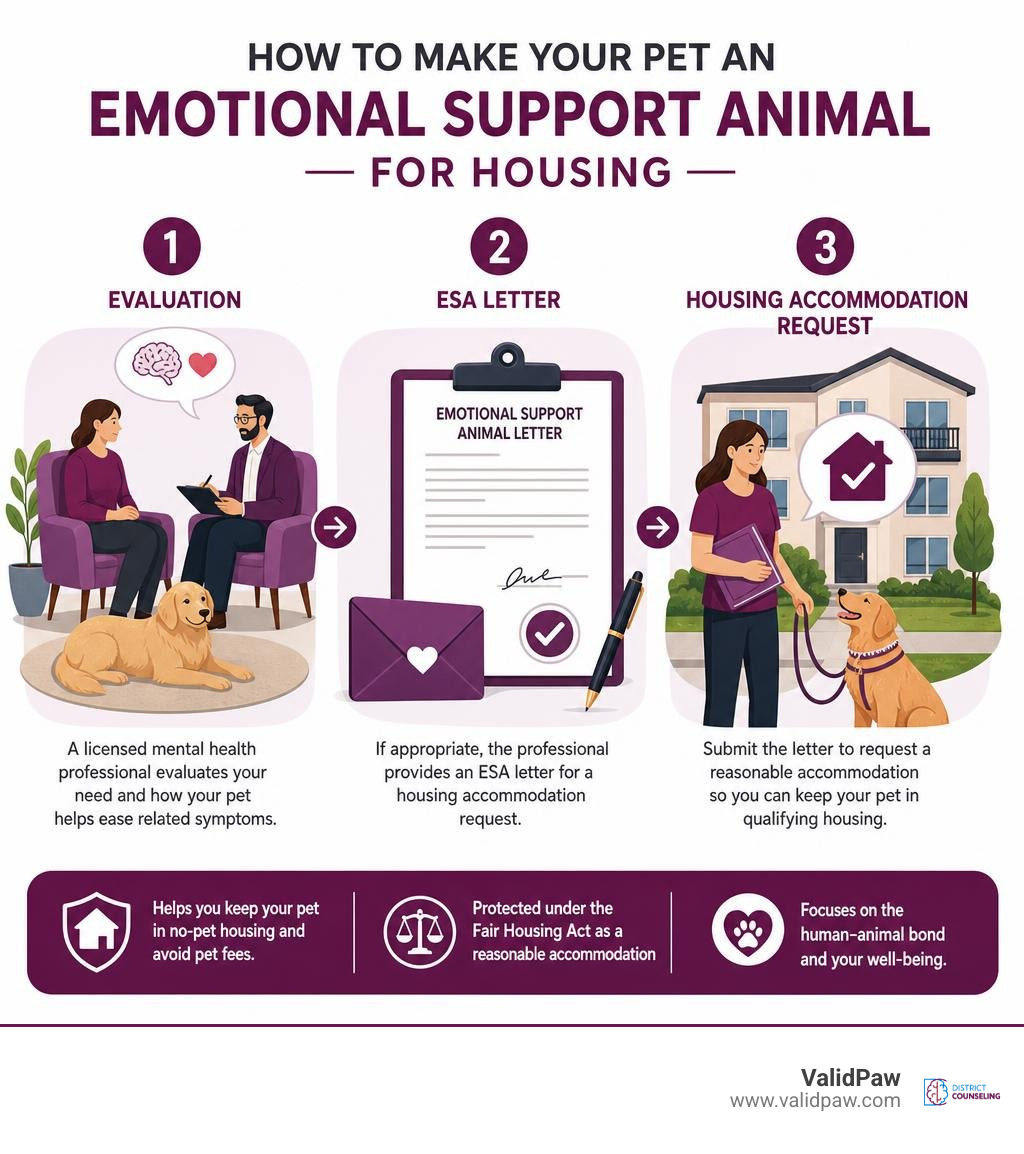
To make your pet an emotional support animal (ESA), you need a real evaluation with a licensed mental health professional who is licensed in your state. If the professional finds that you have a disability-related mental health need and your pet helps ease related symptoms, they can provide an ESA letter for a housing accommodation request.
This process can apply to a pet you already love. Your dog, cat, or another suitable domestic animal does not need special ESA certification, a vest, or task-based training. The key document is the letter from a qualified clinician - not an online registry.
A valid ESA may help a renter request a reasonable accommodation under the Fair Housing Act. That can include keeping the animal in qualifying no-pet housing and avoiding pet rent or pet deposits. It does not give an ESA the same public-access rights as a trained service animal, and airlines are no longer required to accept ESAs under federal flight rules.
I am Francisco Ortiz, a forensic mental health evaluator and behavioral health director licensed to conduct rigorous ESA evaluations in six states. I help people understand how to make your pet an emotional support animal through ethical, disability-focused clinical documentation and a process built for legitimate housing needs.
Understanding Emotional Support Animals vs. Service Dogs and Therapy Pets
Navigating working and assistance animals can feel overwhelming when terms like "service dog," "therapy animal," and "ESA" get tossed around interchangeably. They serve completely different roles under the law, and conflating them creates confusion for housing providers and businesses alike. Understanding Service dog or ESA getting the facts straight on emotional support animals is essential before beginning the documentation process.
Under the Americans with Disabilities Act (ADA), a service animal is strictly defined as a dog (or in rare cases, a miniature horse) that has been individually trained to perform specific physical or sensory tasks for a person with a disability. These tasks might include guiding someone who is blind, alerting a person with epilepsy to an impending seizure, or interrupting self-harm behaviors in someone with severe psychiatric conditions. Because of this specialized training, service animals have broad public access rights, meaning they can accompany their handlers into restaurants, grocery stores, hotels, and on public transit.
Emotional support animals, by contrast, provide therapeutic comfort, stability, and companionship simply through their presence. They do not need to perform physical tasks on cue. As a result, ESAs are not recognized as service animals under the ADA and do not possess general public access rights. You cannot legally take an ESA into a non-pet-friendly coffee shop or supermarket. Instead, their legal protections primarily fall under the federal Fair Housing Act (FHA), which ensures that individuals with qualifying mental health challenges can live with their supportive companions without facing discriminatory "no pet" bans or mandatory pet fees.
Therapy pets represent a third distinct category. These well-mannered animals—frequently dogs or cats—are evaluated and certified alongside their handlers to visit hospitals, nursing facilities, libraries, and schools to bring comfort to the public. Unlike service animals or ESAs, therapy animals have no specialized housing or public access rights; their presence is entirely based on permission from the specific institutions they visit.
| Feature | Emotional Support Animal (ESA) | Service Animal (ADA) | Therapy Pet | | :--- | :--- | :--- | :--- | | Primary Legal Protection | Fair Housing Act (FHA) | Americans with Disabilities Act (ADA) | None (Facility Permission Only) | | Primary Purpose | Therapeutic comfort to owner | Specific task-based disability work | Community comfort to third parties | | Public Access Rights | No (pet-friendly spaces only) | Yes (unrestricted public access) | No (invited facilities only) | | Housing Fee Exemptions | Yes (no pet rent or deposits) | Yes (exempt from all pet fees) | No (standard pet rules apply) | | Mandatory Task Training | None required | Required individual task training | Basic temperament evaluation | | Required Documentation | Legitimate ESA letter from LMHP | None required by law | Organization registration/proof |
Understanding the Basics: How to Make Your Pet an Emotional Support Animal
One of the greatest benefits of the ESA framework is that you do not need to adopt a specialized, pre-trained animal. Any companion animal you already share your home with can qualify. Most often, people choose dogs and cats due to their intuitive social nature, but the Fair Housing Act does not limit support animals to common domestic species.
Small domestic animals like rabbits, hamsters, guinea pigs, ferrets, and even birds can serve as emotional anchors. In certain situations, non-traditional animals can provide therapeutic benefits, and learning how to legally qualify your exotic pet as an emotional support animal follows the same foundational clinical evaluation rules.
The core factor is not the species or breed of your pet, but rather the therapeutic connection you share. Your companion provides grounding presence, creates routine, eases isolation, and alleviates psychological distress.
Qualifying Mental Health Conditions and DSM-5 Criteria
To legally qualify for an emotional support animal, a person must have an identifiable mental or emotional impairment that substantially limits one or more major life activities, such as sleeping, concentrating, working, or socializing. These conditions are cataloged in the Diagnostic and Statistical Manual of Mental Disorders (DSM-5) and commonly include:
- Generalized Anxiety Disorder (GAD) and social anxiety
- Major Depressive Disorder (MDD) and persistent depressive states
- Post-Traumatic Stress Disorder (PTSD) and acute stress conditions
- Bipolar disorder and mood regulation challenges
- Panic disorder and agoraphobia
- Chronic stress disorders and severe adjustment conditions
Reviewing paws for thought your guide to an emotional support animal diagnosis can help clarify whether your symptoms match clinical guidelines. For individuals managing dual diagnoses, exploring the ultimate guide to emotional support animals for complex mental health conditions explains how an ESA can integrate into broader clinical treatment plans.
Step-by-Step: How to Make Your Pet an Emotional Support Animal
Qualifying your existing pet as an ESA does not involve registering on a website or purchasing a harness. It is a healthcare-driven process centered on your clinical relationship with a licensed professional.

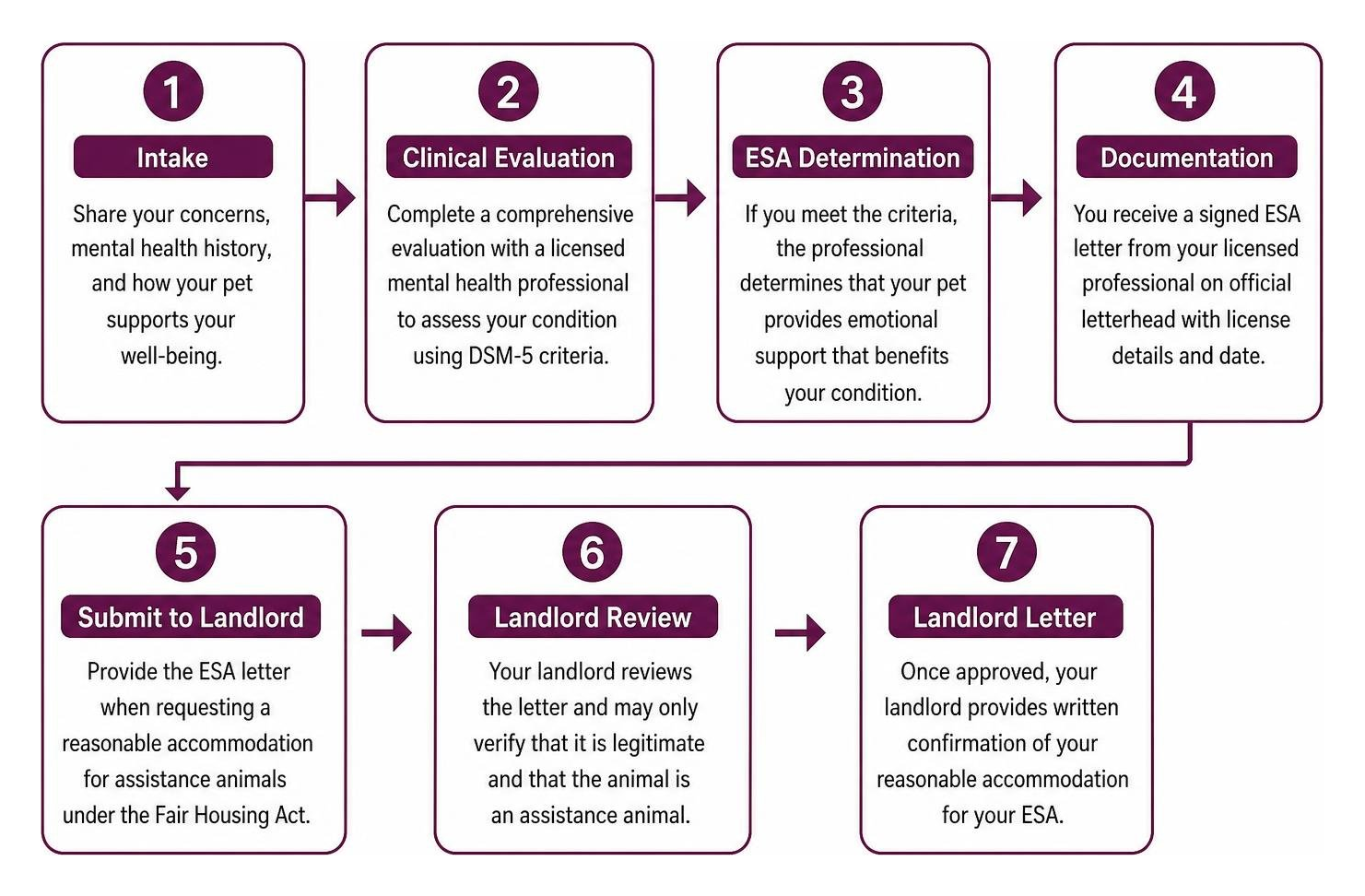
Here is how the qualification process works from initial assessment to housing approval:
Clinical Evaluation: How to Make Your Pet an Emotional Support Animal Legally
The only legal foundation for an emotional support animal is a comprehensive evaluation conducted by a Licensed Mental Health Professional (LMHP). This can be a Licensed Professional Counselor (LPC), Licensed Clinical Social Worker (LCSW), Licensed Marriage and Family Therapist (LMFT), clinical psychologist, or psychiatrist. In some cases, your primary care physician can also provide this documentation.
To ensure your evaluation is legally sound and fully compliant with state and federal regulations:
- Verify Licensure: Your clinician must hold an active, verifiable license in the state where you reside. If you live in Texas, your provider must be licensed by the appropriate Texas behavioral health board.
- Complete a Clinical Intake: You will participate in a clinical assessment to discuss your symptoms, mental health history, and how your daily functioning is impacted. Comprehensive resources like the ultimate guide to emotional support animal assessments outline what clinicians evaluate during these sessions.
- Establish Therapeutic Nexus: The clinician must determine whether the presence of your pet directly alleviates or mitigates specific symptoms of your condition.
- Obtain Official Documentation: If approved, you will receive a signed ESA letter written on the clinician's official letterhead, including their professional license number, contact information, issue date, and confirmation of your disability-related need.
For an overview of this process, consult how to register animal as ESA in 5 simple steps alongside established advice on How to Get an Emotional Support Dog in 5 Simple Steps.
Submitting Your ESA Letter for Housing Accommodation
Once you hold a legitimate ESA letter, you are ready to present a formal Reasonable Accommodation Request (RAR) to your landlord or property management company. Under guidelines issued by the U.S. Department of Housing and Urban Development (HUD), housing providers must treat legitimate assistance animals as a reasonable accommodation rather than traditional pets.
When submitting your request:
- Submit Written Notice: Provide a clear, polite written notice to your landlord stating that you are requesting a reasonable accommodation under the Fair Housing Act for your emotional support animal, and attach a copy of your valid ESA letter.
- Understand Fee Protections: A housing provider cannot charge you an upfront pet deposit, monthly "pet rent," or animal application fees for a verified ESA.
- Breed and Weight Waivers: Mandatory breed bans (such as restrictions on Pit Bulls, German Shepherds, or Rottweilers) and weight limits do not apply to legitimate assistance animals.
- Respect Landlord Verification: Housing providers are legally allowed to verify the authenticity of your clinician's license, which is why we provide instant landlord verification support to confirm documentation quickly.
To avoid common pitfalls in specific jurisdictions, review our detailed guides on how to register your emotional support animal in Texas the right way and everything you need to know about emotional support dogs in Texas.
Training Expectations and Avoiding ESA Registry Scams
While the law does not require your pet to undergo specialized task training, behavioral expectations in shared living environments remain high. An ESA must be manageable, well-mannered, and safe around neighbors and property staff.

An animal that barks continuously, displays aggression, or destroys property can legally lose its housing protections. Basic obedience commands like sit, stay, come, and polite leash manners ensure smooth community living. Following practical frameworks like How to Train an Emotional Support Dog helps establish solid indoor manners and reliable non-reactivity.
Red Flags: Fake Registries, Badges, and Instant Certificates
The emotional support animal market contains numerous deceptive platforms that prey on pet owners. Websites promising "instant official lifetime registration," "national ESA databases," or selling packages containing laminated ID cards and vests are not legally binding.
The Federal Trade Commission (FTC) and HUD have repeatedly clarified that there is no official federal registry for emotional support animals. A housing provider is not legally required to accept an online registry certificate or a downloaded ID card. In fact, presenting a purchased certificate from a known registry mill is one of the fastest ways to have a housing accommodation request denied.
Key red flags to watch for include:
- Websites promising approvals in 5 minutes without any real clinical interaction
- Offers to put your pet on a "National ESA Registry"
- Bundled packages that focus on plastic cards, metallic badges, and vests rather than a clinical evaluation
- Providers who are not licensed in your specific state
- Letters that do not provide clinician license numbers or contact details
To protect yourself and your pet, make sure you understand how to get your dog ESA registered a real step-by-step walkthrough based on genuine clinical evaluations rather than commercial gimmicks.
Frequently Asked Questions About Emotional Support Animals
Can a Landlord Deny My Emotional Support Animal?
Under the Fair Housing Act, a landlord or housing provider must grant reasonable accommodations for legitimate emotional support animals. However, this protection is not absolute. A landlord can legally deny an ESA request under specific circumstances:
- Direct Threat to Health and Safety: If the specific animal has a documented history of unprovoked aggression, biting, or threatening behavior that cannot be mitigated.
- Substantial Property Damage: If the animal causes significant, ongoing physical damage to the premises.
- Fundamental Alteration or Undue Financial Burden: If accommodating the animal imposes an unreasonable administrative or financial burden on the property operation.
- Statutory Housing Exemptions: The Fair Housing Act exempts certain smaller properties, specifically owner-occupied buildings with four or fewer units (such as a private duplex where the owner lives in one unit) and single-family homes rented directly by the owner without a real estate broker or management firm.
How Much Does an ESA Letter Cost and How Long Is It Valid?
A legitimate clinical ESA evaluation and letter generally costs between $150 and $300. This fee covers the licensed professional's time, diagnostic assessment, and letter preparation. Beware of platforms offering $30 instant documents, as these are universally rejected by knowledgeable property managers.
Standard ESA letters are valid for exactly one year from the date of issuance. Because mental health conditions and treatment needs change over time, housing providers are legally permitted to request an updated annual renewal letter confirming that you remain under active care and that the therapeutic accommodation continues to be clinically indicated.
Can I Have Multiple Emotional Support Animals in One Home?
Yes, you can qualify more than one animal as an ESA. However, each animal requires distinct clinical justification in your documentation. A mental health professional cannot simply issue a blanket approval for multiple pets without explaining how each animal serves a separate therapeutic role.
For instance, your clinician might note that an emotional support dog helps motivate daily physical routines and outdoor mobility for depression, while an emotional support cat provides nighttime grounding to manage nocturnal panic attacks. If you require multi-animal documentation, ensure your provider clearly outlines these complementary functions.
Conclusion
Living with a mental health condition presents real challenges, but you do not have to navigate them alone. For millions of people, a beloved dog, cat, or companion animal provides consistent therapeutic relief, stability, and comfort.
Securing your pet's status as an emotional support animal is straightforward when done through proper clinical channels. By prioritizing an authentic evaluation with a licensed professional over commercial registry shortcuts, you protect your rights, your housing security, and the bond you share with your pet.
We make this process seamless by connecting you directly with state-licensed mental health professionals for telehealth evaluations that are fully compliant with HUD standards and the Fair Housing Act. When you are ready to ensure your companion is protected, Apply for your legitimate ESA letter online and complete your evaluation with confidence.