
ESAs and Landlords: Your Housing Rights at a Glance
A landlord covered by the Fair Housing Act must consider a reasonable accommodation for a tenant who needs an emotional support animal (ESA) because of a disability, even if the lease bans pets. An approved ESA is not treated as a pet, so the landlord cannot charge pet rent, a pet fee, or a pet deposit. If the disability-related need is not clear, the landlord may ask for reliable documentation. The landlord must assess the request individually rather than reject the animal because of its breed or size.
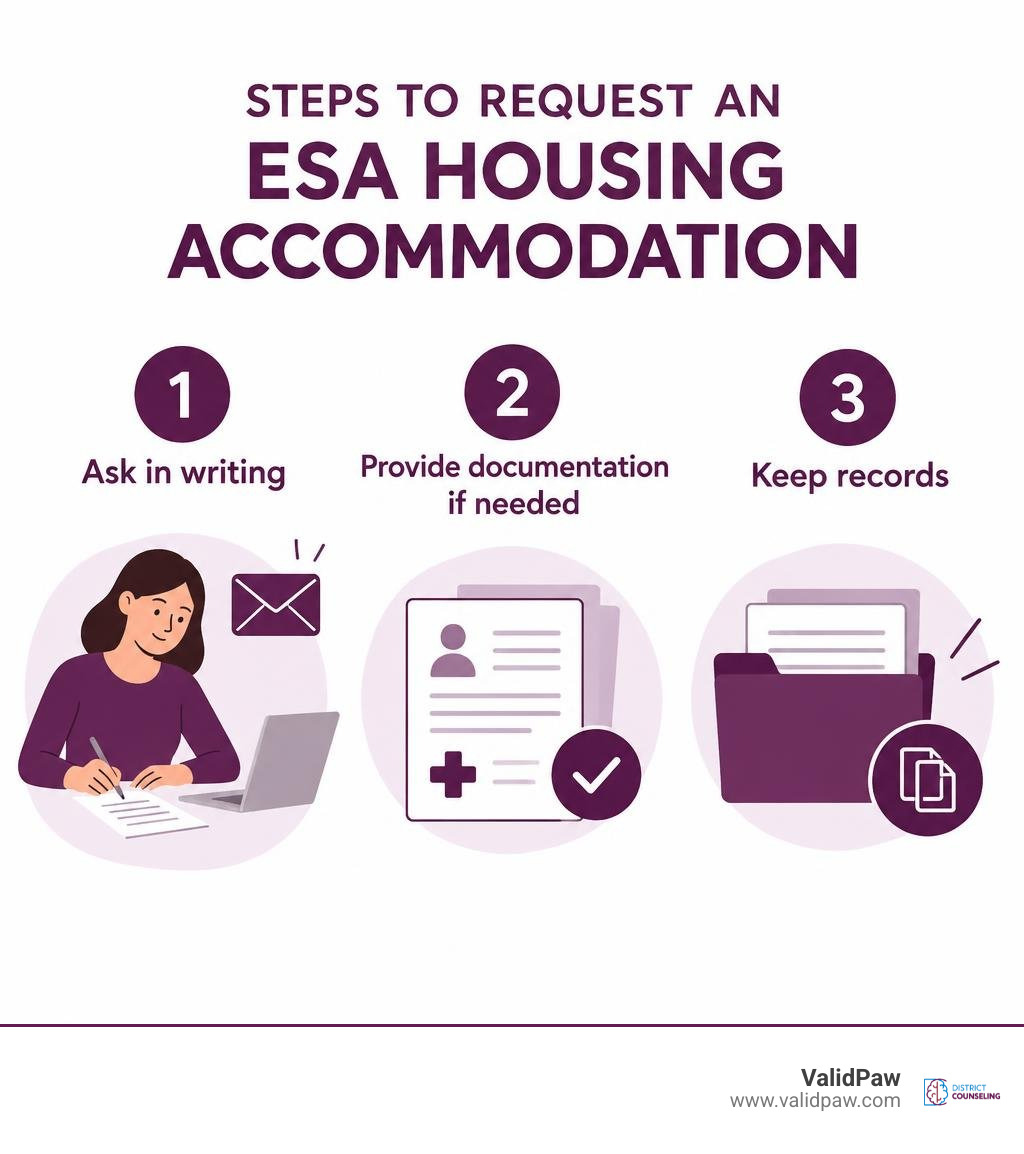
To get started, ask your landlord for an accommodation in writing. Share documentation if it is needed, and keep copies of your request and the response. This guide explains what landlords can ask, when they can say no, and what to do if your request is denied. When navigating interactions between ESAs and landlords, federal fair housing rules take precedence over ordinary pet policies.
I'm Francisco Ortiz, a mental health professional who regularly evaluates disability-related needs for housing accommodations. My clinical experience spans evaluations for residents in Texas, California, Florida, and several other states.
Understanding the Legal Framework for ESAs in Rental Housing
Renting a home when you rely on an assistance animal can feel overwhelming, especially if your property manager enforces strict no-pet rules. Federal civil rights statutes exist to ensure individuals with physical or mental health challenges have an equal opportunity to use and enjoy their living spaces. Under guidelines from the U.S. Department of Housing and Urban Development (HUD), an emotional support animal is legally classified as an assistance animal rather than a standard pet.
When you request to keep your companion in a rental unit, you are asking for a reasonable accommodation under federal law. A reasonable accommodation is a formal exception or adjustment to a housing provider's standard policies, practices, or rules. To fully grasp your protections, explore the ultimate guide to emotional support animal housing to see how federal regulations protect your tenancy from unfair restrictions.
Service Animals vs. Emotional Support Animals vs. Pets
Many housing disputes stem from confusion over what different animal designations actually mean. Property managers often conflate service dogs with support animals, or dismiss support animals as mere pets. These three categories serve distinct legal functions:
- Service Animals: Defined under the Americans with Disabilities Act (ADA) as dogs (and in specific cases, miniature horses) individually trained to perform specific physical or sensory tasks for a person with a disability. Examples include guiding someone with visual impairment, pulling a wheelchair, or alerting an individual to an oncoming seizure.
- Emotional Support Animals (ESAs): Animals that provide essential therapeutic comfort, companionship, and emotional stability to individuals experiencing diagnosed mental health conditions such as anxiety, depression, or PTSD. They require no specialized task training. While they lack public-access rights in grocery stores or restaurants, they hold full residential protection under housing laws.
- Pets: Domesticated animals kept strictly for pleasure or companionship without an underlying therapeutic need related to a diagnosed disability. Pets have no federal statutory protections in rental housing.
| Category | Legal Governing Body | Specialized Task Training Required? | Covered in Rental Housing? | Public Access Rights (Stores/Restaurants)? | Landlord Pet Fees Allowed? | | :--- | :--- | :--- | :--- | :--- | :--- | | Service Animal | ADA & Fair Housing Act | Yes (Specific Tasks) | Yes | Yes | No | | Emotional Support Animal | Fair Housing Act (FHA) | No Specialized Training | Yes | No | No | | Standard Pet | Local Ordinances Only | No | Only if Landlord Allows | No | Yes |
For property managers trying to navigate these categories, reviewing a practical service animal vs emotional support animal landlord guide clarifies how federal protections apply during daily management.
Federal Protections: The Fair Housing Act (FHA) vs. ADA
The Americans with Disabilities Act covers public accommodations, commercial facilities, and state or local government spaces under Title II and Title III. Because rental housing is considered a private residential space rather than a place of public accommodation, the Fair Housing Act serves as the primary federal shield for tenants seeking an emotional support animal.
The FHA prohibits housing discrimination based on disability, race, color, national origin, religion, sex, and familial status. Section 504 of the Rehabilitation Act extends these protections to housing programs receiving federal financial assistance. Under the FHA, housing providers must grant exceptions to no-pet clauses unless the animal poses a direct safety risk or causes an undue administrative burden. You can review how the Fair Housing Act for pets operates in plain terms to better advocate for your household.
Navigating ESA and Landlords: Rights, Prohibitions, and Protections
When a tenant submits an accommodation request, a housing provider must engage in what federal law calls an interactive dialogue. Landlords cannot ignore your paperwork, demand excessive medical histories, or impose unilateral rules designed to discourage you.
Federal statutes establish strict boundaries regarding what landlords legally cannot do to renters with emotional support animals. Property managers cannot ask intrusive questions about your private medical diagnosis, demand clinical case notes, or mandate that your animal perform tricks or tasks to prove its value.
Prohibited Pet Fees, Deposits, and Breed Restrictions
Because federal statutes do not classify an assistance animal as a pet, housing providers are prohibited from applying standard pet-related financial surcharges. A landlord cannot charge you:
- Upfront pet deposits (refundable or non-refundable)
- Monthly pet rent
- One-time administrative pet onboarding fees
As we often remind renters, ESAs live deposit-free because accommodating a disability is a civil right, not an optional pet luxury.
Furthermore, blanket pet policies regarding weight limits, size caps, or breed bans (such as restrictions on Pit Bulls, German Shepherds, or Rottweilers) cannot be applied to emotional support animals. A housing provider cannot reject an assistance animal simply because their property insurance carrier lists certain breeds as restricted. As clarified in legal analyses of insurance policies containing breed restrictions, landlords are expected to work with insurers or seek exemptions rather than denying a tenant's lawful accommodation.
Financial Penalties and Enforcement for Landlord Violations
Housing providers who unlawfully reject valid accommodation requests face severe legal consequences. If a landlord issues an improper denial, the tenant can file an administrative complaint with HUD or pursue a civil lawsuit in federal district court.
Civil penalties determined by Administrative Law Judges can exceed $25,000 for a first violation and surpass $125,000 for repeat offenses. In addition to statutory fines, housing providers may be ordered to pay actual damages, compensatory damages for emotional distress, and the tenant's reasonable attorney fees. Publications like the American Bar Association's guide to emotional support animals highlight how costly these discrimination complaints become when property owners ignore fair housing mandates.
How to Submit Documentation and Request Reasonable Accommodations
Submitting your accommodation request with clear documentation prevents misunderstandings. Although you can legally request an accommodation at any stage of your lease, planning when to tell your landlord about an emotional support animal helps avoid unnecessary leasing friction.
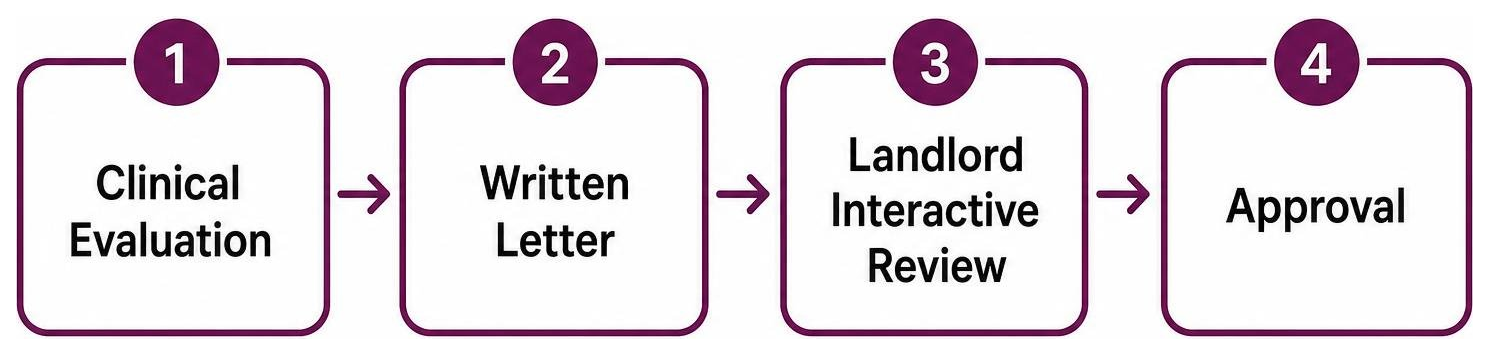
To ensure a smooth interaction, learn how to get landlord approval for an emotional support animal letter by delivering a polite, written notice accompanied by valid clinical verification.
What Makes a Legitimate ESA Letter Under Federal Law
When a tenant's disability is not outwardly visible, a landlord has the legal right to ask for reliable documentation showing a disability-related need for the animal. To comply with federal standards, your letter must originate from a licensed healthcare professional (such as a licensed clinical social worker, psychologist, psychiatrist, or licensed professional counselor).
A compliant emotional support verification letter must include:
- The clinician's full name, professional title, and contact details
- The practitioner's active license number, jurisdiction, and issue date
- Confirmation that the provider has established a clinical relationship with you
- An affirmation that you meet the definition of having a mental or emotional impairment under fair housing laws
- A statement establishing the nexus between your disability and the therapeutic support your animal provides
Spotting Fake Certifications: What ESA and Landlords Must Know
Many unaccredited websites promote misleading online registries, illegitimate ID tags, and fake certificates. Both tenants and housing providers must understand that there is no legal registry or government certification for emotional support animals in the United States.
Obtaining an unverified registration or certificate does not grant legal protections under the FHA. Housing providers can verify the validity of a letter by checking the provider's active license status on their state's public licensing board. If a document comes from an unaccredited website that issues letters without a real clinical evaluation, the landlord can reject it.
Legitimate Grounds for Denial and State-Specific Regulations

While the Fair Housing Act provides broad protections, landlords are not required to approve every request blindly. Property managers maintain clear legal avenues to protect their communities and physical investments.
Direct Threats and Denial Criteria for ESA and Landlords
A housing provider may deny an assistance animal under specific, documented conditions:
- Direct Threat to Health and Safety: If the animal exhibits documented aggression, has bitten a neighbor, or cannot be safely managed by the handler.
- Substantial Physical Property Damage: If the animal causes severe structural destruction that cannot be mitigated by reasonable measures.
- Undue Financial or Administrative Burden: If accommodating the animal would fundamentally alter the core nature of the housing provider's operations.
- Local Health Violations: If the tenant refuses to comply with basic local animal control requirements, such as up-to-date rabies vaccinations.
Tenants remain financially responsible for any actual physical damage their animal causes to the rental unit, which can be deducted from standard security deposits at move-out.
State Law Variations: California, Florida, Colorado, and Texas
While federal law sets the national baseline, individual states enforce additional statutes to ensure documentation integrity:
- California: Under AB 468, mental health clinicians must establish a client relationship at least 30 days prior to issuing an initial housing verification letter.
- Florida: Under Florida Statute § 817.265, fabricating an ESA request or submitting fraudulent medical documents is a second-degree misdemeanor punishable by fines, jail time, and 30 hours of court-ordered community service.
- Texas: Texas House Bill 4164 imposes civil and criminal misdemeanor penalties for individuals who misrepresent an animal as an assistance or service animal to evade property rules.
At ValidPaw, we provide legitimate documentation through comprehensive telehealth evaluations conducted by licensed Texas therapists, serving renters across Texas and all 50 states with fast 24–48 hour turnarounds and instant landlord verification.
FHA Property Exemptions and the "Mrs. Murphy" Rule
Certain rental properties are exempt from specific provisions of the federal Fair Housing Act. Landlords are generally exempt from federal ESA accommodation mandates if:
- An owner lives on-site in a building containing four or fewer independent units (known as the "Mrs. Murphy exemption").
- A single-family home is rented directly by an owner who owns three or fewer such homes, provided they do not use a real estate broker or management firm and avoid discriminatory advertising.
- The housing is operated by private clubs or religious organizations for their members.
Frequently Asked Questions About ESA Housing Laws
Can my landlord evict me or charge extra rent for having an ESA?
No. A landlord cannot evict you or charge surcharge fees simply because you request an accommodation for a support animal. However, you can face standard lease enforcement or eviction if your animal creates an ongoing nuisance, barks uncontrollably, poses a safety hazard, or damages the property.
Does a landlord have to accept an ESA if the lease has strict breed or weight bans?
Yes. Federal fair housing rules supersede standard private lease covenants regarding pet size, weight limits, and breed restrictions. Unless the landlord can establish that your specific animal poses an active threat or undue financial burden, blanket pet restrictions do not apply.
Can a landlord still screen my rental application if I have an ESA?
Yes. Landlords retain the right to evaluate your rental application using standard, objective screening criteria such as credit history, verifiable income, debt-to-income ratios, and past landlord references. Having an assistance animal protects you from pet-related rules, but it does not exempt you from normal tenant qualifications.
Conclusion
Understanding fair housing protections allows you to advocate for your mental wellness while building a respectful relationship with your housing provider. When you communicate transparently and back your request with verified clinical documentation, securing housing with your companion becomes a smooth, stress-free process.
If you are ready to secure a compliant verification letter from a qualified mental health clinician, apply for an official ESA letter online with ValidPaw today. Our experienced team ensures your documentation meets all federal standards, giving you peace of mind in your home.

