
How to Qualify Your Dog as an Emotional Support Animal
You do not need to register your dogs as emotional support animals with the government. To seek housing protection, the key step is to obtain an ESA letter from a licensed mental health professional who evaluates your condition and determines that your dog helps lessen symptoms of a disability.
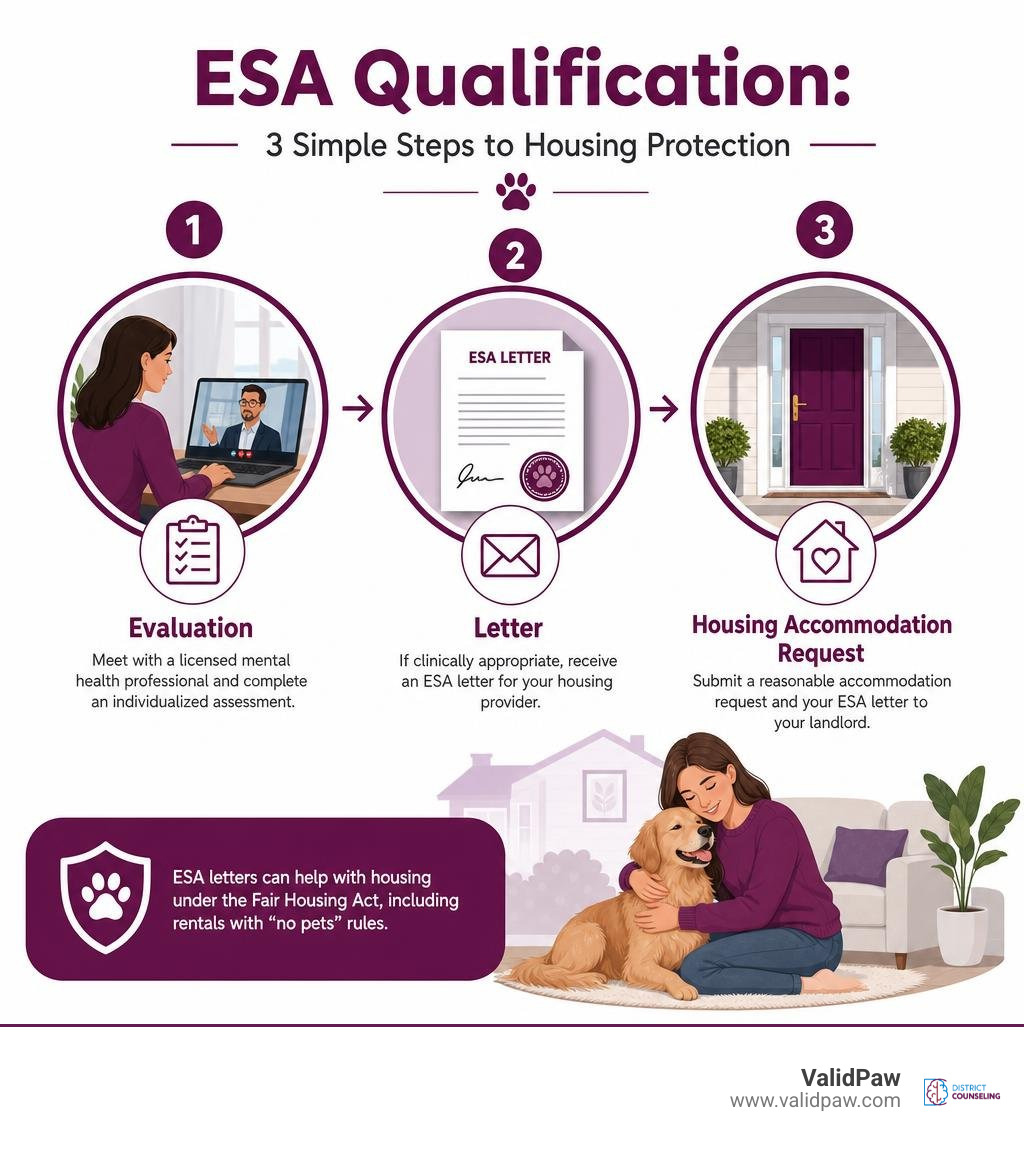
A legitimate path is simple:
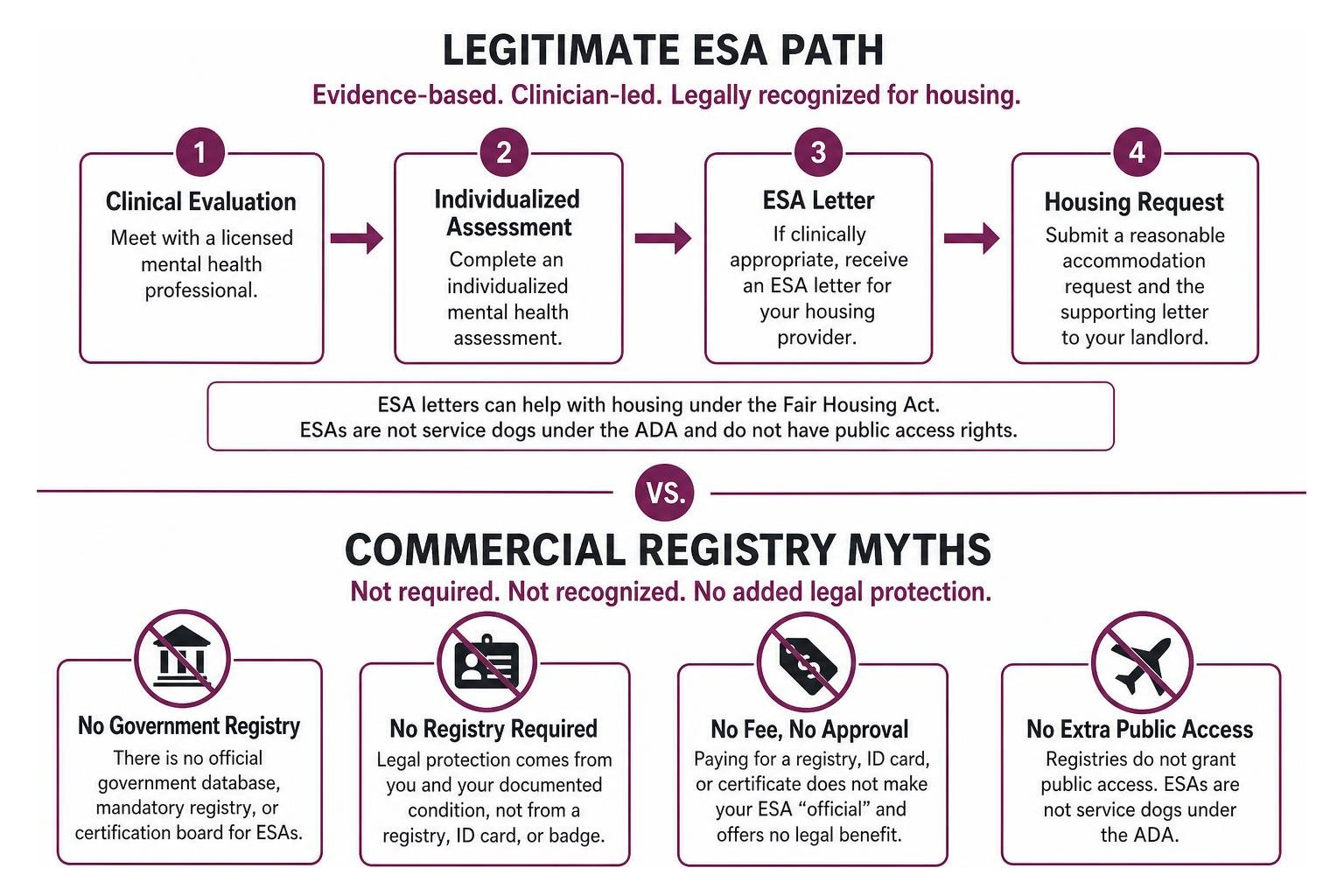
- Meet with a licensed mental health professional, including through appropriate telehealth where permitted.
- Complete an individualized mental health assessment.
- If clinically appropriate, receive an ESA letter for your housing provider.
- Submit a reasonable accommodation request and the supporting letter to your landlord.
An ESA letter can help with housing under the Fair Housing Act, including rentals with "no pets" rules. But an emotional support dog is not a service dog under the ADA. That means it does not automatically have access to restaurants, stores, or other public businesses, and most airlines now treat ESAs as pets.
I am Francisco Ortiz, a forensic mental health evaluator and behavioral health director licensed to provide ESA evaluations in California and several other states. I help pet owners who ask, "How do I register my dogs as emotional support animals?" understand that a sound clinical evaluation and valid documentation matter far more than an online registry or ID card.
The Legal Reality: Do I Need to Register My Dogs as Emotional Support Animals?
The short answer is no. Under both federal law and state regulations across the country, there is no official government database, mandatory registry, or certification board for emotional support animals (ESAs). Many pet parents search the internet hoping to find a government portal, but that system simply does not exist.
The confusion usually stems from confusing the Americans with Disabilities Act (ADA) with the Fair Housing Act (FHA). While the ADA strictly governs service animals in public places, emotional support animals derive their legal standing primarily from the FHA. The FHA does not require registry numbers, official badges, or holographic cards. Instead, legal protection attaches directly to you—the handler—and your documented mental or emotional health condition.
When exploring The Essential Guide to ESA Documentation Requirements, you will find that the only legally recognized instrument is an authentic prescription letter written by a Licensed Mental Health Professional (LMHP). Any website claiming that an animal is not "official" until you pay a registry fee is misrepresenting federal housing guidelines.
Step-by-Step: How to Register My Dogs as Emotional Support Animals with a Licensed Professional
Qualifying your dog involves a clinical relationship rather than a bureaucratic application. Here is the compliant path we follow to ensure your documentation meets all federal standards:
- Initial Clinical Intake: Complete an intake form detailing your daily mental health challenges, emotional symptoms, and how your dog’s presence provides therapeutic relief.
- Clinical Evaluation: Consult directly with a licensed therapist or mental health professional via telehealth or in person. This evaluation confirms whether you meet the diagnostic criteria for a qualifying mental health condition.
- Assessment of Therapeutic Value: The clinician determines whether your canine companion alleviates one or more identified symptoms of your condition.
- Issuance of the ESA Letter: If approved, your clinician drafts an individualized letter on their official letterhead, including their professional license number, state of practice, issue date, and direct contact details.
- Submission to Housing Provider: You present this document to your landlord alongside a formal request for reasonable accommodation.
For a streamlined breakdown of this clinical pathway, you can review How to Register Animal as ESA in 5 Simple Steps.
Why Registry Scams Fail When I Register My Dogs as Emotional Support Animals Online
The web is full of commercial registries selling instant PDF certificates, plastic badges, and embroidered vests. While these items might look official, landlords and property managers who understand U.S. Department of Housing and Urban Development (HUD) guidelines will immediately reject them.
HUD guidelines explicitly state that commercial registry certificates, ID cards, and registrations purchased from websites without a legitimate clinical evaluation do not establish a disability-related need for an assistance animal. When property managers cross-check these kits, they find no verifiable clinician behind the document.
Following a clear process—such as the one detailed in How to Get Your Dog ESA Registered: A Real Step-by-Step Walkthrough—protects you from wasting money on invalid products and ensures your housing request remains legally sound.
ESA vs. Service Dog: Understanding Legal Rights and Public Access
Understanding the boundary between an emotional support animal and a service dog is critical for every handler. Misrepresenting an ESA as a service animal can lead to public access disputes and, in many jurisdictions, civil penalties.

| Feature / Protection | Service Dog (ADA Title II & III) | Emotional Support Animal (Fair Housing Act) | | :--- | :--- | :--- | | Primary Legal Function | Trained to perform specific tasks directly related to a disability | Provides comfort and companionship to ease emotional symptoms | | Public Access (Stores, Cafes) | Full public access rights under federal law | No public access rights; subject to business pet rules | | Housing Protections | Protected under the Fair Housing Act | Protected under the Fair Housing Act | | Pet Fees & Deposits | Fully exempt in residential rentals | Fully exempt in residential rentals | | Air Travel (Cabin Access) | Guaranteed access under the ACAA | Treated as regular pets under individual airline rules | | Training Required | Individualized task-specific training | Basic obedience and good household behavior | | Required Documentation | No formal documentation legally required | Signed letter from a licensed mental health professional |
To gain a deeper perspective on these legal distinctions, explore our detailed analysis in Service Dog or ESA? Getting the Facts Straight on Emotional Support Animals.
Public Access Limitations for Stores and Restaurants
Under Title III of the ADA, private businesses that serve the public—including grocery stores, restaurants, coffee shops, hotels, and shopping malls—are required to admit service dogs. However, this mandate does not apply to emotional support animals.
Because ESAs are not individually trained to perform specific disability-mitigating physical tasks (such as guide work, wheelchair pulling, or medical alert tasks), private businesses have the legal right to enforce their standard pet policies. While some establishments choose to be dog-friendly, an ESA letter does not grant you the right to bring your dog into non-pet-friendly commercial spaces.
Air Travel Regulations: Flying with Support Dogs
Prior to 2021, the Air Carrier Access Act (ACAA) required commercial airlines to accommodate emotional support animals in the passenger cabin free of charge. However, the U.S. Department of Transportation (DOT) revised these regulations to align more closely with the ADA definition of service animals.
Under current DOT regulations, airlines are no longer required to recognize emotional support animals as assistance animals. Instead:
- ESAs are subject to each airline’s standard domestic pet policies, size limits, and pet travel fees.
- Only trained service animals (including psychiatric service dogs trained to perform specific disability-related actions) retain guaranteed cabin access.
- Handlers traveling with ESAs must secure their dogs in approved travel carriers that fit under the seat, provided the animal meets the airline's weight and breed restrictions.
Housing Protections and Landlord Verification Rules
Under the federal Fair Housing Act (FHA), housing providers are legally required to provide reasonable accommodations to tenants with disabilities. This includes allowing assistance animals—both service dogs and emotional support animals—into residential properties, even those with strict "no-pets" rules.

When you deliver an authentic ESA letter to your landlord, you are formally requesting a reasonable accommodation. As outlined in The Ultimate Guide to Emotional Support Animal Housing, landlords must evaluate your request in a timely manner and cannot arbitrarily dismiss legitimate documentation.
Pet Rent, Deposits, and Breed Restrictions
One of the strongest protections granted to ESA handlers under the FHA is financial relief from standard pet-related overhead:
- No Pet Rent: Landlords cannot charge recurring monthly pet rent for an emotional support animal.
- No Pet Deposits: Property managers cannot require additional security deposits or non-refundable pet fees.
- Breed and Weight Waivers: General building restrictions regarding dog weight or breed bans (e.g., restrictions against Pit Bulls, German Shepherds, or large breeds) do not automatically apply to legitimate assistance animals.
- Tenant Responsibility: While landlords cannot charge pet fees upfront, you remain financially responsible for any actual physical damage your dog causes to the rental unit.
A landlord may only deny an ESA request under narrow legal exceptions: if the specific animal poses a direct, demonstrable threat to the health and safety of others, if it causes substantial property damage that cannot be mitigated, or if accommodating the animal creates an undue financial and administrative burden on the property owner.
State-Specific Housing Rules in California and Texas
State laws work in tandem with federal guidelines to govern assistance animal accommodations.
In California, the Fair Employment and Housing Act (FEHA) works alongside the FHA to prohibit housing discrimination. Under California Civil Rights Department housing regulations, housing providers cannot demand intrusive medical records, ask for detailed diagnostic histories, or require specific standardized forms when a compliant ESA letter is provided.
In Texas, the Texas Property Code and Texas Fair Housing Act closely mirror federal standards, ensuring that residents across major metropolitan areas like Houston, Austin, Dallas, San Antonio, and Fort Worth can secure reasonable accommodations without paying arbitrary pet surcharges. For state-specific nuances, consult Everything You Need to Know About Emotional Support Dogs in Texas.
Frequently Asked Questions about Qualifying an ESA
Can a landlord verify my emotional support animal letter?
Yes, landlords have the legal right to verify that your documentation is authentic. However, verification is subject to strict privacy limits under the FHA:
- What landlords CAN do: Contact the licensed mental health professional listed on your letter to confirm that they wrote the letter, that their clinical license is active and in good standing, and that you are under their professional care.
- What landlords CANNOT do: Demand your private medical records, ask for specific diagnostic test results, inquire about your medical history, or require your therapist to explain the intimate details of your mental health condition.
At ValidPaw, we provide instant landlord verification services, allowing property managers to quickly confirm document legitimacy while safeguarding your medical privacy.
What should I do if my dog performs trained tasks for a disability?
If your dog has been trained to perform specific tasks directly related to mitigating your disability—such as deep pressure therapy during panic attacks, waking you from PTSD nightmares, alerting you to medical spikes, or retrieving dropped medication—your dog may be a psychiatric service dog (PSD) rather than an ESA.
Psychiatric service dogs are recognized as full service animals under the ADA. Unlike ESAs, PSDs are legally permitted to accompany their handlers into public accommodations, including grocery stores, restaurants, public transit, and airline cabins under the ACAA. If your dog performs these tasks, you do not need an ESA letter; you are protected under ADA Title II/III regulations.
How do I qualify my beloved pet for mental health support?
Qualifying your existing pet is an accessible and clinical process. Any domesticated dog, regardless of age, breed, or formal obedience certification, can serve as an emotional support animal if its companionship provides measurable relief from your symptoms.
To take the first step toward official recognition, learn how you can Qualify Your Beloved Pet as an Emotional Support Animal Today through an intake assessment and an evaluation with our licensed clinicians.
Conclusion
Living with an emotional support animal provides real, life-changing therapeutic support for anxiety, depression, PTSD, and other mental health challenges. However, safeguarding your housing rights requires following the legitimate legal process—not buying useless registry numbers or instant online certificates.
The path to turning your canine companion into a legally recognized support pet relies on a clinical evaluation by a licensed mental health professional who can issue an FHA-compliant prescription letter.
If you are ready to secure your housing protections with fast, 24-to-48-hour delivery and complete landlord verification support, apply for a legitimate ESA letter online with ValidPaw today. Our team of licensed clinicians is here to provide the authentic care and documentation you and your dog deserve.

