
How to Get Your Dog Recognized as an Emotional Support Animal
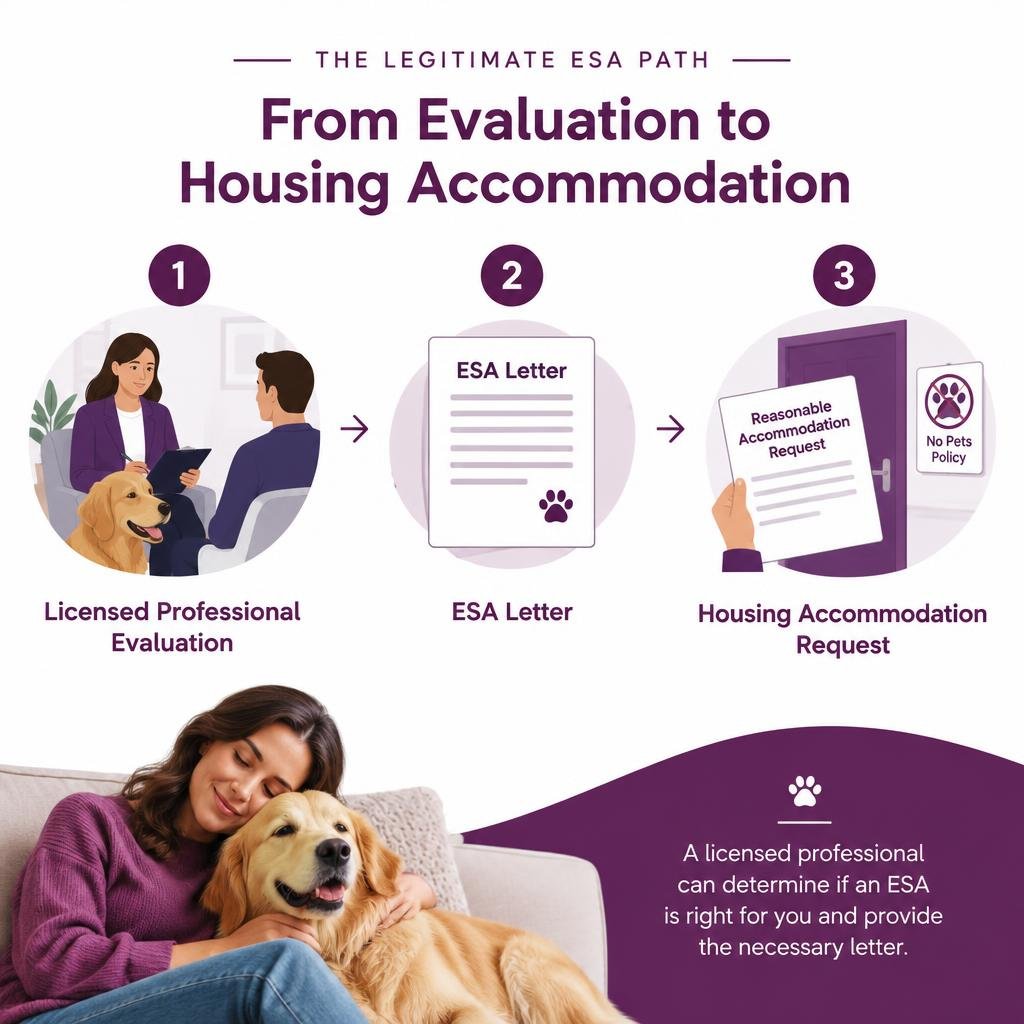
You do not need to certify or register your dog. To seek a housing accommodation, meet with a mental health professional licensed in your state. This can often be done by telehealth. If they determine that an emotional support animal helps with a qualifying disability, they can write an ESA letter. You can then give that letter to your housing provider when requesting a reasonable accommodation, even if the building has a no-pet policy.
Your dog can be one you already own. Be wary of sites that sell instant certificates or registry IDs without a real clinical evaluation; those products do not replace an ESA letter.
I'm Francisco Ortiz, a forensic mental health evaluator who conducts ESA assessments across six states. I help people asking how to get my dog ESA certified understand the clinical evaluation and documentation they actually need.
What Is an Emotional Support Dog and How Does It Differ from a Service Animal?
An Emotional Support Animal (ESA) is a companion animal that provides therapeutic benefit, comfort, and companionship to an individual dealing with a mental or emotional impairment. Unlike ordinary pets, an ESA is recognized under federal law as an assistance animal specifically in residential settings. However, people frequently confuse emotional support dogs with service animals, leading to misunderstandings about public access and training requirements.
Service animals—specifically service dogs and miniature horses—are defined and protected under the Americans with Disabilities Act (ADA). These animals undergo specialized training to perform specific, measurable tasks directly related to an individual’s physical, sensory, psychiatric, or intellectual disability. For example, a psychiatric service dog (PSD) might be trained to interrupt self-harming behavior, perform deep pressure therapy during panic attacks, or search a room for safety before an individual with PTSD enters.
In contrast, emotional support dogs do not require specialized task training. Their primary therapeutic value stems from their everyday presence, loyalty, and companionship. Because they do not perform specialized disability-mitigating tasks, the ADA does not grant ESAs public access rights. You cannot take an ESA into non-pet-friendly spaces like restaurants, grocery stores, or shopping malls.
To better understand the clinical basis for how assistance animals support psychological well-being, exploring this scientific guide on emotional support animal assessments clarifies what clinicians evaluate during an appointment. You can also review vet-reviewed advice on certifying an emotional support dog for insights into pet health and behavioral readiness.
| Feature | Emotional Support Dog (ESA) | Service Dog (including PSD) | | :--- | :--- | :--- | | Governing Federal Law | Fair Housing Act (FHA) | Americans with Disabilities Act (ADA) | | Specialized Training Required? | No specialized task training required | Yes; individually trained to perform specific tasks | | Public Access Rights | Limited (pet-friendly spaces only) | Broad access to public accommodations and businesses | | Housing Protections | Exemption from pet bans, breed bans, and pet fees | Complete housing protection under ADA and FHA | | Air Travel Regulations | Treated as standard pets by most airlines | Permitted in commercial airline cabins free of charge | | Required Legal Documentation | ESA Letter from a Licensed Mental Health Professional (LMHP) | No mandatory paperwork (self-attestation and behavioral task verification) |
Who Qualifies for an Emotional Support Animal?
To qualify for an emotional support animal, an individual must have a diagnosed mental or emotional health condition that significantly impacts one or more major life activities, such as sleeping, working, maintaining social relationships, or concentrating.
Common conditions that qualify under clinical evaluation include:
- Generalized Anxiety Disorder (GAD) and social anxiety
- Major Depressive Disorder (MDD) and clinical mood disorders
- Post-Traumatic Stress Disorder (PTSD) and acute stress responses
- Panic disorder and phobias
- Autism spectrum conditions and sensory processing difficulties
- Bipolar disorder and emotional dysregulation
During an evaluation, a clinician determines whether the companionship of a dog provides therapeutic relief that directly eases the severity of these symptoms. For example, caring for a dog can establish a vital daily routine for someone navigating severe depression, or physical contact with a canine can ground someone experiencing sudden panic attacks.
You do not need to purchase a specially bred puppy to receive these benefits. An existing household pet who already provides you with comfort can be evaluated as your ESA. For detailed rules regarding qualifying conditions and required letter elements, review our essential guide to ESA documentation requirements.
How to Get My Dog ESA Certified: The Step-by-Step Process
Securing legitimate legal protection for your support animal does not involve obtaining a government license, a shiny badge, or an online registration certificate. Instead, it involves a legitimate telehealth or in-person consultation with a Licensed Mental Health Professional (LMHP) authorized to practice in your state.

Here is how the streamlined evaluation and accommodation process works:
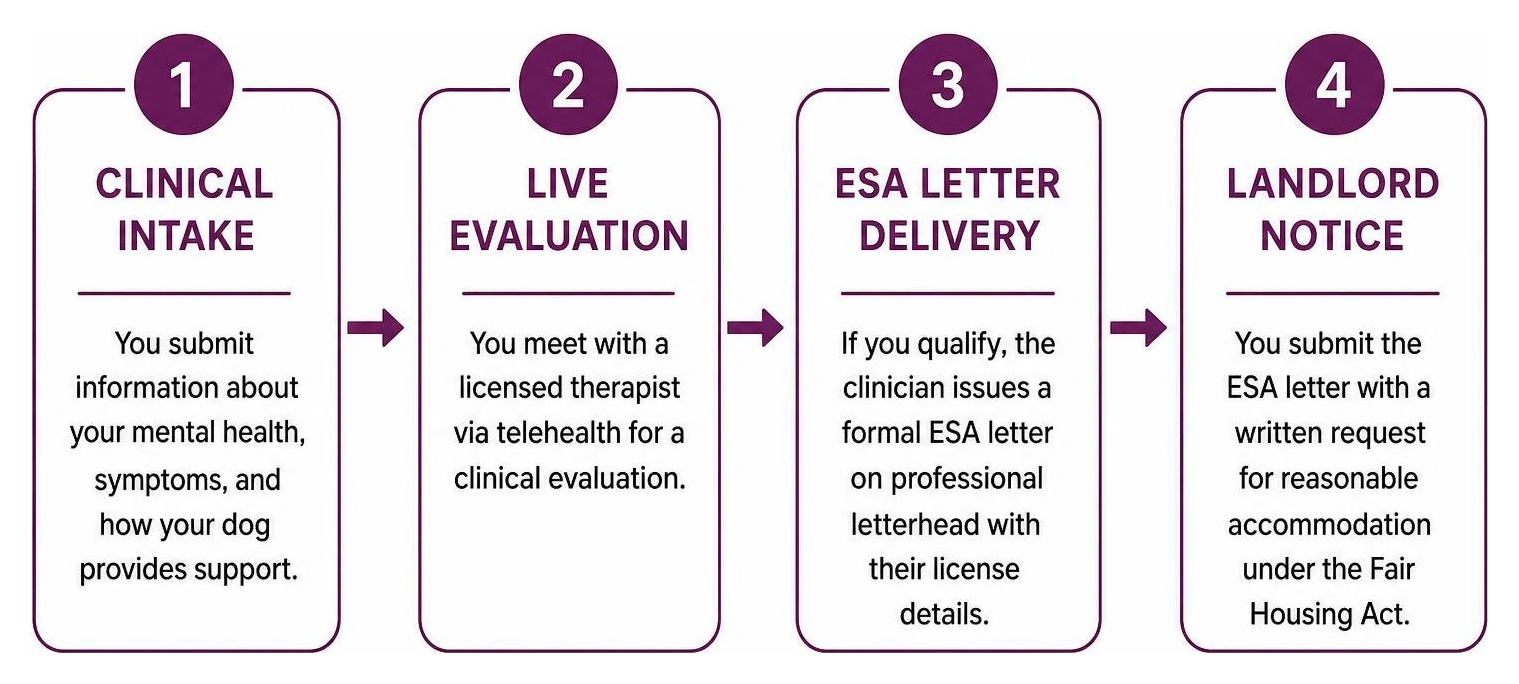
- Complete a Clinical Intake: You submit information regarding your mental health history, symptoms, and how your dog alleviates your emotional distress.
- Consult with a Licensed Therapist: You meet with a licensed clinician (such as an LCSW, LPC, LMFT, or psychologist) via telehealth for an evaluation.
- Receive Your Official ESA Letter: If the clinician determines you qualify, they issue a formal, signed recommendation letter printed on their professional letterhead containing their license details.
- Deliver the Letter to Your Housing Provider: You submit the document alongside a written request for reasonable accommodation under the Fair Housing Act.
If you are looking for a complete, actionable walkthrough of every stage of the evaluation journey, explore this step-by-step walkthrough to get an ESA letter. For individuals facing imminent lease deadlines or moving dates, services designed for getting an ESA letter in 48 hours provide rapid, compliant clinical assessments.
Evaluating Your Eligibility: How to Get My Dog ESA Certified Based on Need
A proper evaluation starts with a thorough clinical assessment. Mental health professionals must hold active, valid credentials in the state where the client resides. Whether you are living in Texas, Illinois, or any other state, your provider must practice within their legal jurisdiction.
Furthermore, several states have implemented specific consumer protection guidelines. For instance, some jurisdictions require a 30-day clinical relationship or multiple sessions before issuing housing letters to ensure that evaluations reflect genuine therapeutic need. Meeting these standards ensures your documentation stands up to scrutiny by property management companies and HOA boards.
Submitting Documentation to Housing Providers
Once your licensed provider issues your ESA letter, you are ready to request accommodation under the federal Fair Housing Act (FHA). You should present the letter to your landlord, leasing office, or property manager before moving in or bringing your pet into the rental unit.
Under the FHA, housing providers must offer reasonable accommodations by:
- Waiving "no-pet" policies to permit your emotional support dog
- Waiving mandatory pet deposits, one-time pet fees, and monthly "pet rent"
- Overriding building-specific breed restrictions and weight limitations
Landlords have the right to verify that the letter was issued by a legitimate, licensed provider. Working with platforms that offer instant verification support ensures that property managers can promptly confirm the document's validity without unnecessary friction. For a complete guide on navigating these conversations gracefully, read about making your dog an ESA the right way.
Legal Rights, Housing Protections, and Travel Rules for ESAs
Understanding your rights prevents unnecessary conflicts and protects both you and your animal companion.
Housing Protections (Fair Housing Act)
The Fair Housing Act covers virtually all multi-family housing communities, apartments, condominiums, and rental homes across the country. Landlords cannot reject an ESA based on standard breed restrictions (such as bans on Pitbulls, German Shepherds, or Rottweilers) or weight limits.
However, housing protections are not absolute. Landlords may legally deny an ESA request under specific, narrow circumstances:
- The animal poses a direct health or safety threat to other residents that cannot be mitigated.
- The animal causes substantial, ongoing physical damage to the property.
- The accommodation creates an undue financial and administrative burden on the landlord.
- The dwelling is an owner-occupied building with four or fewer units, or a single-family house rented without a broker (the Mrs. Murphy exemption).
Air Travel Rules (Air Carrier Access Act)
In early 2021, the U.S. Department of Transportation revised regulations under the Air Carrier Access Act (ACAA). Airlines are no longer federally required to recognize emotional support animals as service animals.
Today, commercial airlines treat ESAs under standard pet policies. This means:
- Airlines make independent determinations regarding whether support animals may fly in the cabin.
- In most instances, emotional support dogs must travel as standard carry-on pets, fitting inside an approved under-seat carrier and incurring standard airline pet fees.
- Only fully trained Psychiatric Service Dogs (PSDs) and physical service dogs maintain guaranteed cabin access rights under current federal aviation regulations.
For a deeper dive into legal nuances across various environments, you can consult this comprehensive online ESA guide.
Avoiding Common Pitfalls: Registries vs. Legitimate Letters
One of the largest misconceptions surrounding assistance animals is the belief in a "national registry" or "official government certification."
There is no official government registry, national database, or mandatory certification program for emotional support animals.
Commercial websites that promise "instant lifetime registration," digital ID badges, or ESA certificates without a clinician consultation sell worthless novelty items. Housing providers and legal authorities routinely reject registry cards because federal guidelines clearly state that an ESA letter signed by a licensed practitioner is the sole legal standard for accommodation.
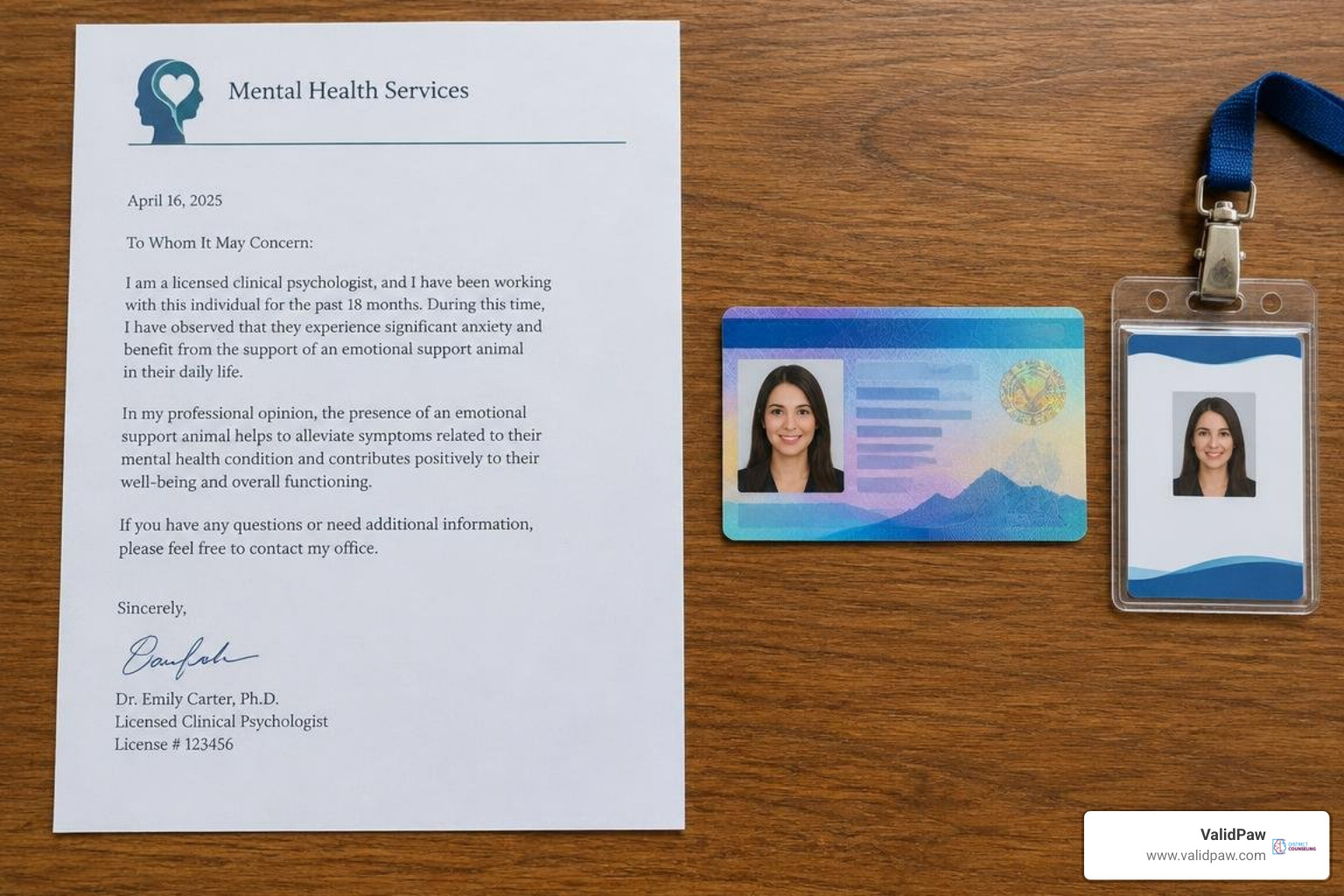
Before purchasing any online assistance package, make sure you know how to distinguish compliant services from predatory vendors by reviewing our guide on spotting legitimate ESA documentation. Learning about avoiding fake registries will save you money and protect you from housing rejections.
How to Get My Dog ESA Certified Without Falling for Online Scams
To make sure your documentation is legally compliant and recognized by landlords, look out for these red flags and best practices:
- Beware of Instant Downloads: Any website offering an ESA letter within five minutes of taking an automated quiz without a live mental health evaluation is fraudulent.
- Verify Professional Licensing: Ensure the evaluating practitioner is actively licensed in your home state and provides their professional license number, jurisdiction, and contact details on their official letterhead.
- Avoid Mandatory Accessory Bundles: Vests, collars, holographic ID tags, and decorative certificates have zero legal weight under the FHA. Legitimate providers focus on clinical compliance rather than plastic accessories.
- Insist on Verifiable Letterheads: Your letter must include the provider’s letterhead, issuance date, state license details, and an explicit recommendation that an ESA helps alleviate symptoms of an emotional or mental impairment.
Following the proper steps to obtain legitimate ESA documentation guarantees your housing rights remain fully protected under federal law.
Frequently Asked Questions About Emotional Support Dogs
Can any dog breed or existing pet become an ESA?
Yes. Any breed, size, or age of dog can qualify as an emotional support animal, as long as a licensed mental health professional establishes that their presence provides therapeutic relief for your condition. You do not need to adopt an unfamiliar dog; your existing canine companion is eligible.
However, support dogs must display acceptable household manners. If an animal creates severe noise disturbances, acts aggressively toward neighbors, or destroys property, landlords can request its removal regardless of ESA status.
Can airlines deny my emotional support dog from flying in the cabin?
Yes. Following federal Department of Transportation policy updates, commercial airlines are no longer required to accept emotional support animals in the cabin free of charge. Most carriers require emotional support dogs to travel under standard pet guidelines, meaning they must fit within an approved carrier under the seat and pay relevant pet travel fees. If you require an animal specifically trained to mitigate psychiatric symptoms in public transit, you may want to explore whether a Psychiatric Service Dog evaluation is appropriate.
How long does an ESA letter remain legally valid?
Under housing provider standards, an ESA letter is generally considered current for one year from the date it is written. Many property management companies require tenants to submit an updated letter annually during lease renewals to confirm ongoing therapeutic support. Routine annual consultations with your mental health provider keep your documentation compliant and up to date.
Conclusion
Securing legal recognition for your emotional support dog does not require expensive training courses or meaningless online registrations. By scheduling a clinical evaluation with a licensed therapist, you can obtain a legally compliant ESA letter that protects your living arrangements and eliminates costly pet fees.
At ValidPaw, we connect you directly with licensed mental health professionals through fast, convenient telehealth evaluations. Whether you reside in Texas or anywhere across all 50 states, our clinicians provide fully FHA-compliant letters within 24 to 48 hours, complete with instant landlord verification.
Ready to protect your housing rights and keep your canine companion by your side? Apply for a legally compliant ESA letter today and complete your evaluation from the comfort of home.

