Why Finding the Right Therapist for Your Texas ESA Letter Matters
If you need a therapist for an emotional support animal letter in Texas, here is the short answer:
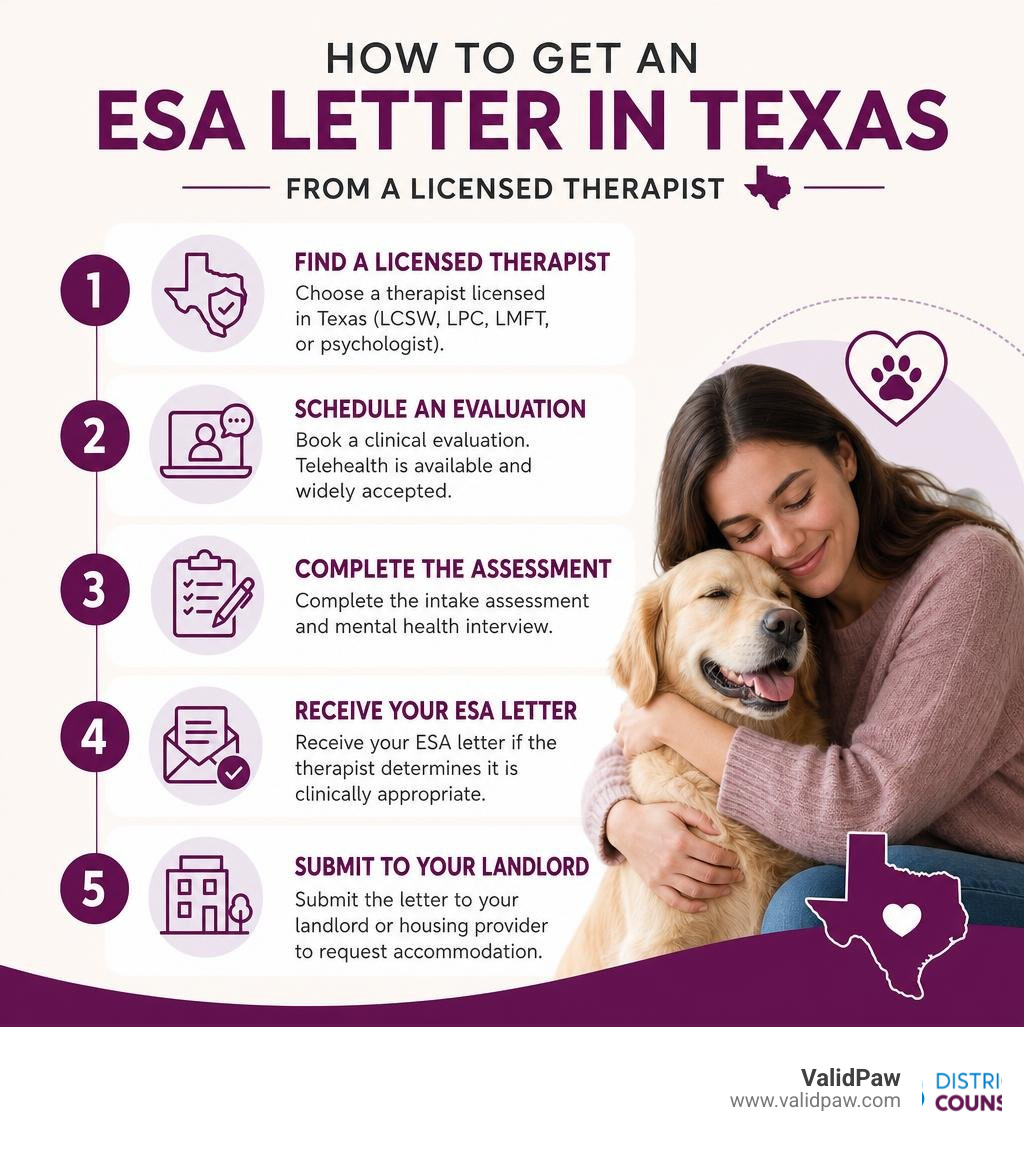
How to get a Texas ESA letter — quick steps:
- Find a therapist licensed in Texas (LCSW, LPC, LMFT, or psychologist)
- Schedule a clinical evaluation — telehealth is available and widely accepted
- Complete the intake assessment and mental health interview
- Receive your ESA letter if the therapist determines it is clinically appropriate
- Submit the letter to your landlord or housing provider
You do not need to register your animal. You do not need a vest, tag, or certificate. You need one thing: a letter from a licensed mental health professional (LMHP) who is currently licensed in Texas.
Millions of people rely on their pets for emotional stability. In fact, research shows that 84% of pet owners report a mostly positive impact on their mental health, and 66% say their pets help reduce stress and promote calm. For renters in Texas dealing with anxiety, depression, PTSD, or other mental health conditions, an ESA letter can mean the difference between keeping your pet at home and facing a housing denial.
But finding a legitimate therapist — one whose letter will actually be accepted by your landlord — is where most people get stuck.
My name is Francisco Ortiz, and as a Certified Forensic Mental Health Evaluator and Lead Forensic Mental Health Evaluator at District Counseling PLLC, I have conducted clinically rigorous evaluations as a therapist for emotional support animal letters in Texas and across five other states, grounded in forensic protocols and federal housing compliance standards. In the sections ahead, I will walk you through exactly what the process looks like, what makes a letter legally valid, and how to avoid the scams that could put your housing at risk.
Understanding ESA Laws and Housing Protections in Texas
When it comes to housing, Texas residents are protected by both federal and state laws. Under the Fair Housing Act (FHA) and guidance from the U.S. Department of Housing and Urban Development (HUD), emotional support animals are not classified as standard "pets." Instead, they are recognized as assistance animals that provide therapeutic support to individuals with physical or mental disabilities. HUD also provides official guidance on assistance animals and reasonable accommodations for housing providers and tenants.
To ensure your request for accommodation is respected, it is essential to understand Everything You Need to Know About Texas ESA Letter Requirements. When you present a valid ESA letter to your landlord, they are legally obligated to make a reasonable accommodation. This means:
- No Pet Rent or Deposits: Landlords cannot charge you pet fees, pet rent, or a security deposit for your ESA.
- Waiver of Breed and Size Restrictions: Standard community rules regarding animal size, weight, or breed do not apply to ESAs.
- No-Pet Policies Do Not Apply: Even if an apartment complex has a strict "no pets allowed" policy, they must accommodate your ESA.
However, many housing providers confuse Emotional Support Animals with Service Animals. To help clear up the confusion, we have outlined the core differences below:
| Feature | Emotional Support Animal (ESA) | Service Animal (including PSD) | | :--- | :--- | :--- | | Primary Legal Protection | Fair Housing Act (FHA) | Americans with Disabilities Act (ADA) | | Training Required | None (provides comfort through presence) | Highly trained to perform specific tasks | | Species Allowed | Any domesticated animal (dogs, cats, rabbits, etc.) | Dogs (and in rare cases, miniature horses) | | Public Access Rights | Limited to housing (no public stores or restaurants) | Full public access rights | | Document Required | Letter from a licensed Texas therapist | None (landlords/businesses may only ask two questions) |
Under HUD guidelines, a landlord can only deny your ESA under very narrow circumstances-such as if the animal poses a direct, documented threat to the safety of others, or if it causes substantial physical damage to the property that cannot be mitigated.
How to Find a Legitimate Therapist for Emotional Support Animal Letter Texas
Finding a qualified therapist for an emotional support animal letter in Texas requires verifying that the professional is active and legally allowed to practice in the Lone Star State. Because Texas has strict regulations regarding telehealth and mental health services, you must work with someone who holds a valid license from a Texas state board, such as the Texas State Board of Examiners of Professional Counselors or the Texas State Board of Social Worker Examiners.
If you are looking for a secure, professional, and entirely remote option, you can connect with ValidPaw: ESA Evaluations by Licensed Professionals to complete your clinical consultation.
When searching for a provider, you should always ask yourself: Is Your ESA Letter Legitimate? How to Spot the Real Deal. Legitimate providers will always conduct a live, interactive evaluation (via phone or video) and will never offer "instant" approval without a clinical conversation.

Why You Must Work with a Licensed Therapist for Emotional Support Animal Letter Texas
In Texas, housing providers have become increasingly vigilant about verifying the authenticity of ESA documentation. To protect yourself and your animal, your letter must be written by a Licensed Mental Health Professional (LMHP) who is currently licensed in Texas. This includes:
- Licensed Professional Counselors (LPC)
- Licensed Clinical Social Workers (LCSW)
- Licensed Marriage and Family Therapists (LMFT)
- Licensed Psychologists or Psychiatrists
When exploring your options, keep in mind The Real Price of a Legitimate Texas ESA Letter. If a service offers a letter for an impossibly low price (such as $20 or $30) without a therapist consultation, it is almost certainly a scam. A legitimate evaluation requires a therapist's professional time, clinical expertise, and licensing accountability, which is reflected in a fair, transparent fee.
What to Expect During Your Therapist for Emotional Support Animal Letter Texas Evaluation
During your evaluation, the therapist's primary goal is to establish a "therapeutic nexus"—meaning they must determine that you have a qualifying mental health condition and that your animal directly alleviates one or more of your symptoms.
To prepare for your session, it helps to understand Everything You Need to Know About Requirements for ESA Letter Success. The evaluation process typically involves:
- Intake Assessment: Completing a questionnaire detailing your mental health history and how your animal helps you.
- Clinical Interview: A video or phone call with your Texas-licensed therapist to discuss your daily functional limitations.
- Clinical Determination: If the therapist agrees that an ESA is a necessary part of your treatment plan, they will write and sign your official letter.
A variety of mental health conditions can qualify you for an ESA letter in Texas, including:
- Generalized Anxiety Disorder (GAD) and panic attacks
- Major Depressive Disorder (MDD)
- Post-Traumatic Stress Disorder (PTSD)
- Social Anxiety Disorder
- Severe stress, insomnia, or chronic loneliness
Avoiding ESA Scams and Misrepresentation Penalties in Texas
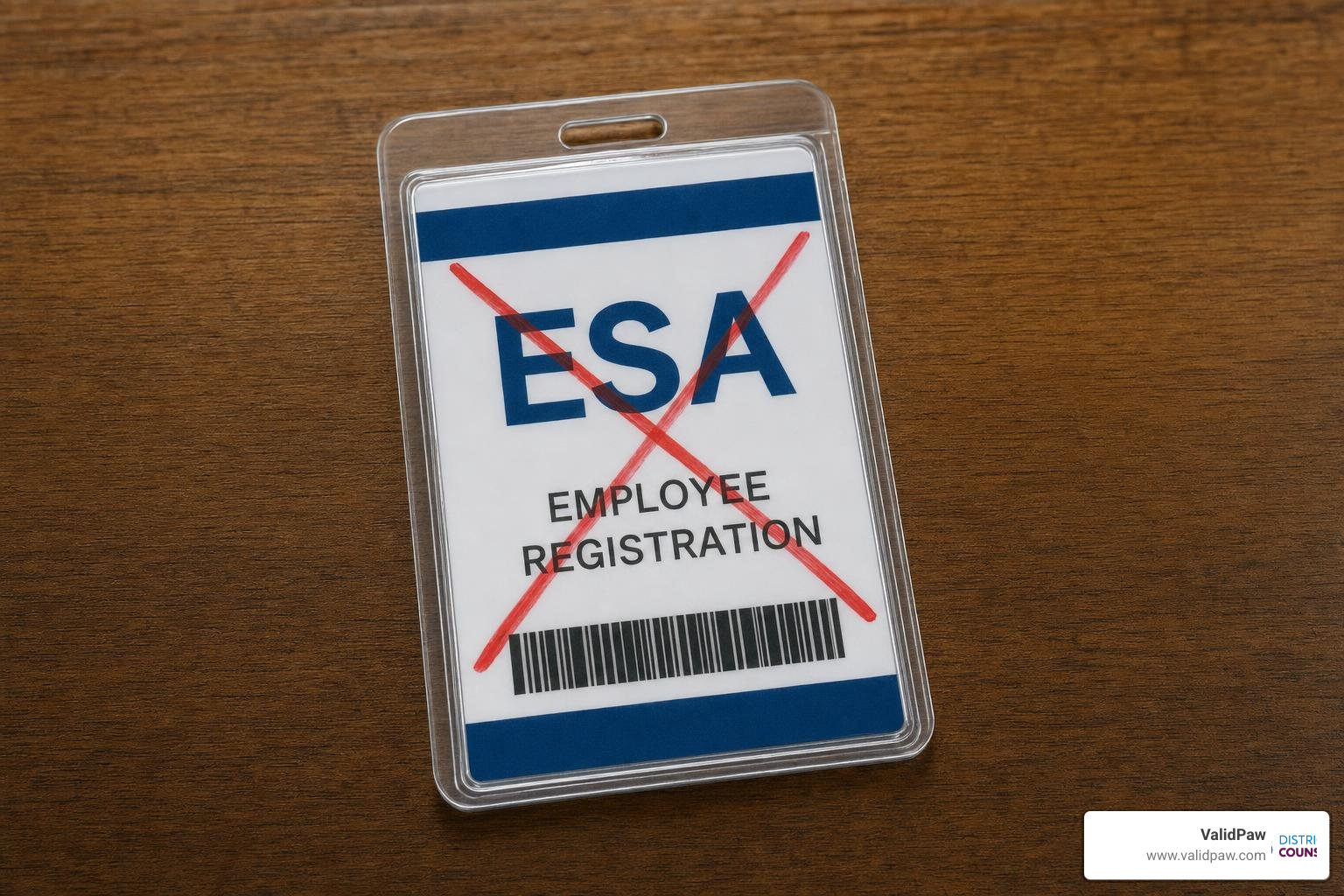
The internet is flooded with websites offering "official ESA registration," "lifetime certificates," or "national database entry." Let us be completely clear: there is no such thing as an official national or state ESA registry. Neither HUD nor Texas state law recognizes registration badges, vests, or ID cards as valid proof of an ESA.
In fact, trying to bypass a clinical evaluation can lead to serious legal trouble. Under Texas Human Resources Code Section 121.003, there are strict civil penalties for fraudulently representing an animal as a service or assistance animal. If you present fake documentation to a landlord, you could face steep fines and have your housing application summarily denied.
To protect yourself, make sure you learn How to Register Your Emotional Support Animal in Texas the Right Way—which, as you now know, simply means obtaining a legitimate letter from a licensed therapist and avoiding the fake badges altogether.
Texas ESA Guidelines for Different Housing Types
Depending on where you live in Texas, your housing provider might have different administrative processes for handling ESA requests.
- Rental Apartments: Whether you are renting a modern loft in Austin or a suburban townhouse in Fort Worth, standard FHA rules apply. Once you submit your letter, the landlord must review it. They cannot force you to use their specific forms or demand to see your medical records.
- University Housing: Under the FHA, dorms and campus housing at major Texas universities (like UT Austin, Texas A&M, or UH) are required to accommodate ESAs. However, universities often have specific student disability services departments that require you to submit your letter before moving in.
- Large Metro Areas: If you are navigating the competitive rental markets of North Texas, our Dallas ESA Guide: Turning Your Best Friend Into a Support System offers tailored advice for local renters. Similarly, if you are situated in Southeast Texas, you can learn How to Get ESA Letter in Houston in 7 Days to secure your housing accommodation quickly and legally.
Frequently Asked Questions About Texas ESA Letters
Navigating Texas rules and ESA guidelines can raise a few practical questions. Below, we address some of the most common questions Texas renters ask us.
Can I have more than one emotional support animal in Texas?
Yes, you can have more than one ESA in Texas, but the clinical requirements are higher. If you wish to accommodate multiple animals, your therapist must write a letter that provides specific clinical justification for each animal. For example, the letter must explain how your first animal helps manage your depression, while your second animal specifically alleviates your panic attacks.
To see how a professional draft looks, you can review these Sample ESA Letters That Actually Work.
Does a Texas ESA letter expire?
While federal law does not explicitly state that an ESA letter expires, most housing providers and landlords will only accept letters that are dated within the last 12 months. This is because landlords have the right to verify that your mental health condition and your need for an accommodation are ongoing.
If you are in a rush to update your paperwork, we have compiled The Fastest Ways to Get a Legitimate Mental Health Support Letter to help you stay compliant without the stress.
What is the difference between an ESA and a Psychiatric Service Dog (PSD) in Texas?
The primary difference lies in task training and public access. An ESA provides comfort simply by existing and being by your side; they do not require any specialized training and only have legal protections in housing.
A Psychiatric Service Dog (PSD), on the other hand, is individually trained to perform specific tasks that directly mitigate a mental health disability (such as waking you from a nightmare, creating physical space in a crowd, or detecting the onset of a panic attack). Because they are service animals, PSDs are protected under the ADA and have public access rights to restaurants, grocery stores, and flights.
For a deeper dive into how these clinical evaluations differ, check out The Ultimate Guide to Emotional Support Animal Assessments.
Conclusion
Securing a legitimate ESA letter in Texas does not have to be a stressful or confusing process. By avoiding online registration scams and working directly with a Texas-licensed mental health professional, you can protect your rights as a tenant and ensure your companion is legally protected in your home.
At ValidPaw, we connect you with licensed Texas therapists via secure telehealth evaluations, delivering FHA-compliant letters in as little as 24 to 48 hours. We handle the clinical assessments professionally and ethically, providing you with instant landlord verification support if your housing provider ever has questions.
Ready to secure your peace of mind? Apply for your Texas ESA letter today.