
How an ESA Letter Can Help You Avoid Pet Rent
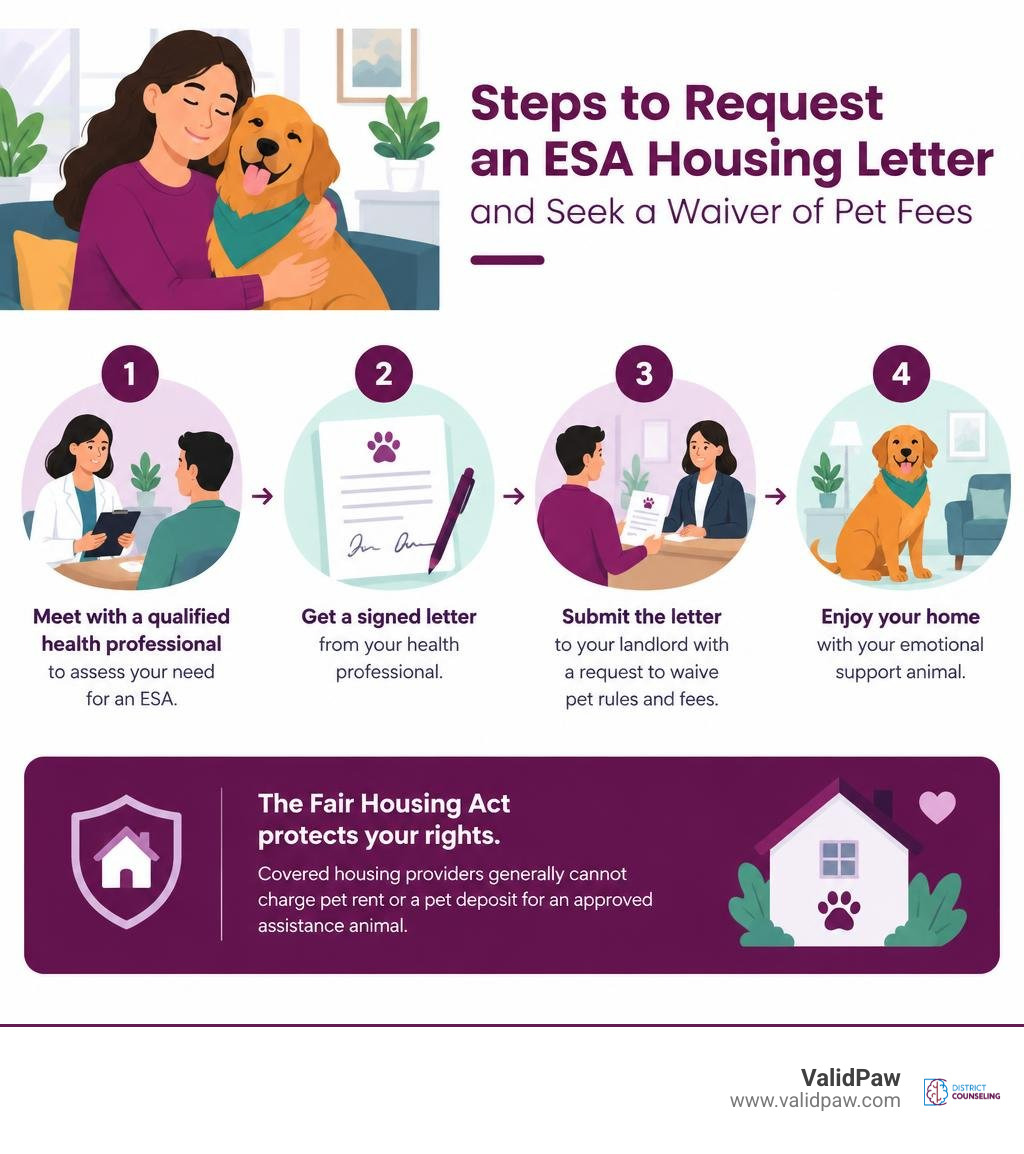
To get an emotional support animal letter for housing, meet with a qualified health professional who can assess whether you have a disability-related need for an animal. If they confirm that need, submit their signed letter to your landlord with a request to waive pet rules and fees.
Under the Fair Housing Act, covered housing providers generally cannot charge pet rent or a pet deposit for an approved assistance animal. You can still be responsible for damage the animal causes.
I’m Francisco Ortiz, a forensic mental health evaluator and behavioral health director with experience assessing disability-related needs for emotional support animals. I’ll explain how to use an emotional support animal letter for housing while keeping your diagnosis private.
Understanding ESA Housing Laws and Your Exemption from Pet Fees
Across the United States, roughly 1 in 4 adults lives with a mental, emotional, or physical disability. In rental communities, access issues remain prevalent: over half of all reported housing discrimination complaints involve allegations tied directly to disability rights. Federal legislation provides strong legal protections so that individuals can comfortably use and enjoy their living spaces.
The primary law protecting emotional support animals in residential properties is the federal Fair Housing Act (FHA), enforced alongside HUD regulations. Many people confuse the Americans with Disabilities Act (ADA) with the Fair Housing Act. The ADA primarily regulates public spaces such as restaurants, stores, and hotels, restricting service animal status strictly to dogs and miniature horses individually trained to perform specific physical tasks.
In contrast, federal fair housing laws define assistance animals much more broadly. Under housing regulations, an assistance animal is an umbrella term encompassing both task-trained service animals and emotional support animals (ESAs). ESAs do not require specialized behavioral task training because their therapeutic presence alone provides vital support that alleviates symptoms of an underlying condition.
Under federal rules, you can protect your budget because ESAs live deposit free, meaning landlords cannot treat them as optional luxury pets.
| Feature | Service Animal | Emotional Support Animal (ESA) | Standard Pet | | :--- | :--- | :--- | :--- | | Primary Governing Law | Americans with Disabilities Act (ADA) & FHA | Fair Housing Act (FHA) & Section 504 | State / Local Contract Law | | Specialized Training Required? | Yes (Task-specific training) | No (Provides comfort via presence) | No | | Permitted Housing Types | Virtually all residential housing | Most residential housing | Landlord discretion only | | Exempt from Monthly Pet Rent? | Yes | Yes | No | | Exempt from Pet Deposits/Fees? | Yes | Yes | No | | Public Access Rights (Stores/Malls)| Yes | No | No (Except pet-friendly venues) |
Assistance Animals vs. Pets: Why Landlords Cannot Charge Pet Rent
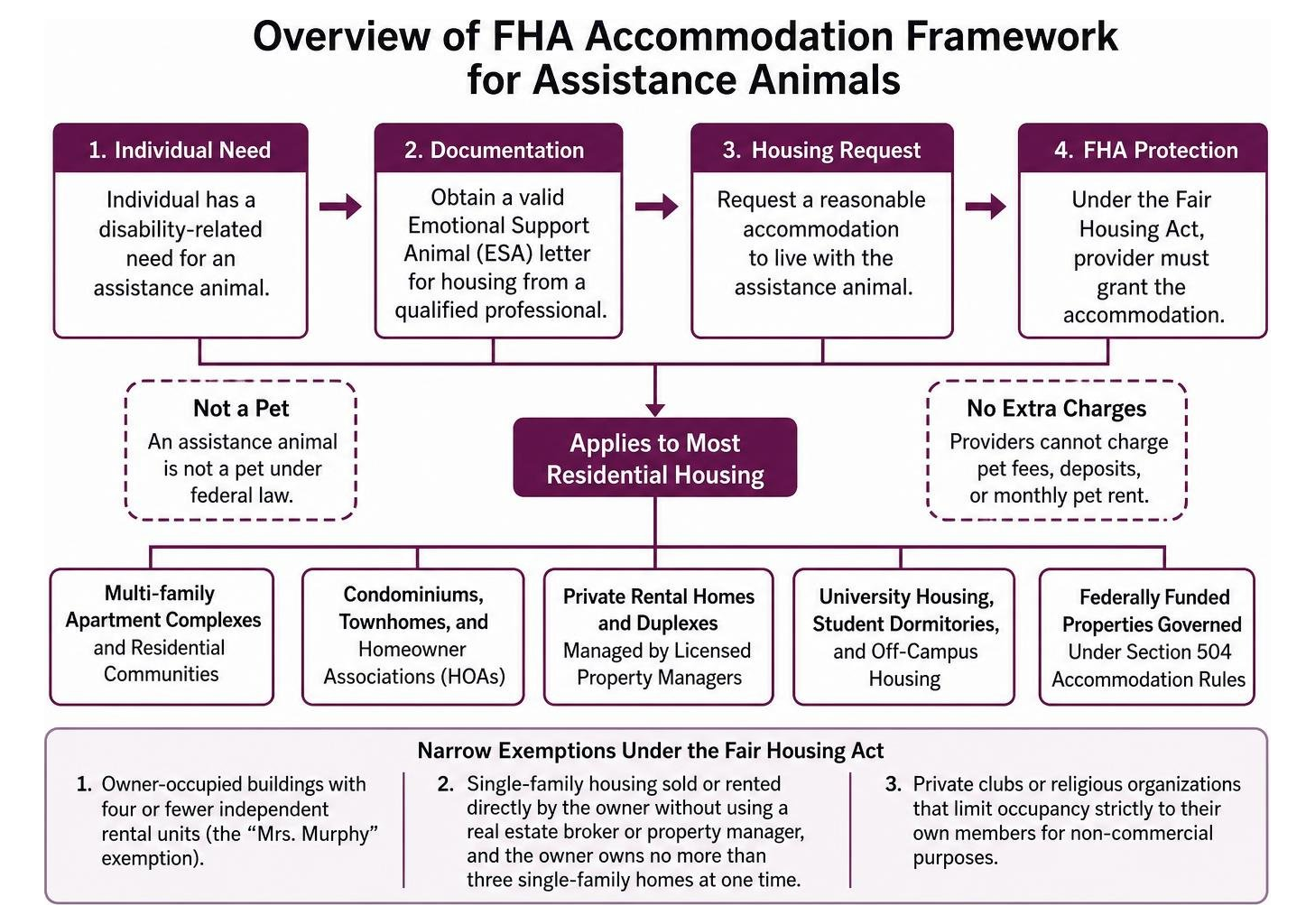
The fundamental reason a landlord cannot charge pet fees, initial pet deposits, or recurring monthly pet rent for an ESA is legal classification: assistance animals are not pets. Under federal law, an emotional support animal functions as an auxiliary aid or accommodation, comparable to a wheelchair, a walker, or corrective medical equipment.
Because an ESA is an accommodation for a qualifying condition, assessing an extra surcharge would amount to charging a disabled tenant a financial penalty for their accommodation. Consequently, even when standard leases feature strict pet rules, knowing how a lease handles support animals ensures you are not forced into paying unauthorized monthly add-ons. Landlords cannot circumvent this rule by renaming pet fees as administrative charges or mandatory animal screening fees.
Types of Covered Housing Under Federal Fair Housing Protections
Federal fair housing mandates apply to most housing across the country, whether you rent an apartment in Houston, Austin, Dallas, San Antonio, Fort Worth, or Chicago. Covered properties include:
- Multi-family apartment complexes and residential communities.
- Condominiums, townhomes, and homeowner associations (HOAs).
- Private rental homes and duplexes managed through licensed property managers.
- University housing, student dormitories, and off-campus housing.
- Federally funded properties governed under Section 504 accommodation rules.
A few narrow exemptions exist under the Fair Housing Act:
- Owner-occupied buildings with four or fewer independent rental units (the "Mrs. Murphy" exemption).
- Single-family housing sold or rented directly by the owner without using a real estate broker or property management firm, provided the owner owns no more than three single-family homes at one time.
- Private clubs or religious organizations that limit occupancy strictly to their own members for non-commercial purposes.
What Makes an Emotional Support Animal Letter for Housing Legally Valid?
An emotional support animal letter serves as legal documentation confirming your disability-related need for an assistance animal. However, not every document found online meets federal standards. Housing authorities and federal regulators explicitly dismiss generic instant-download certificates, registry IDs, and decorative badges purchased from novelty websites.
A reliable document must reflect an authentic professional relationship between you and a qualified clinician, consistent with Fair Housing Act ESA requirements.
Requirements of an Emotional Support Animal Letter for Housing Under the FHA
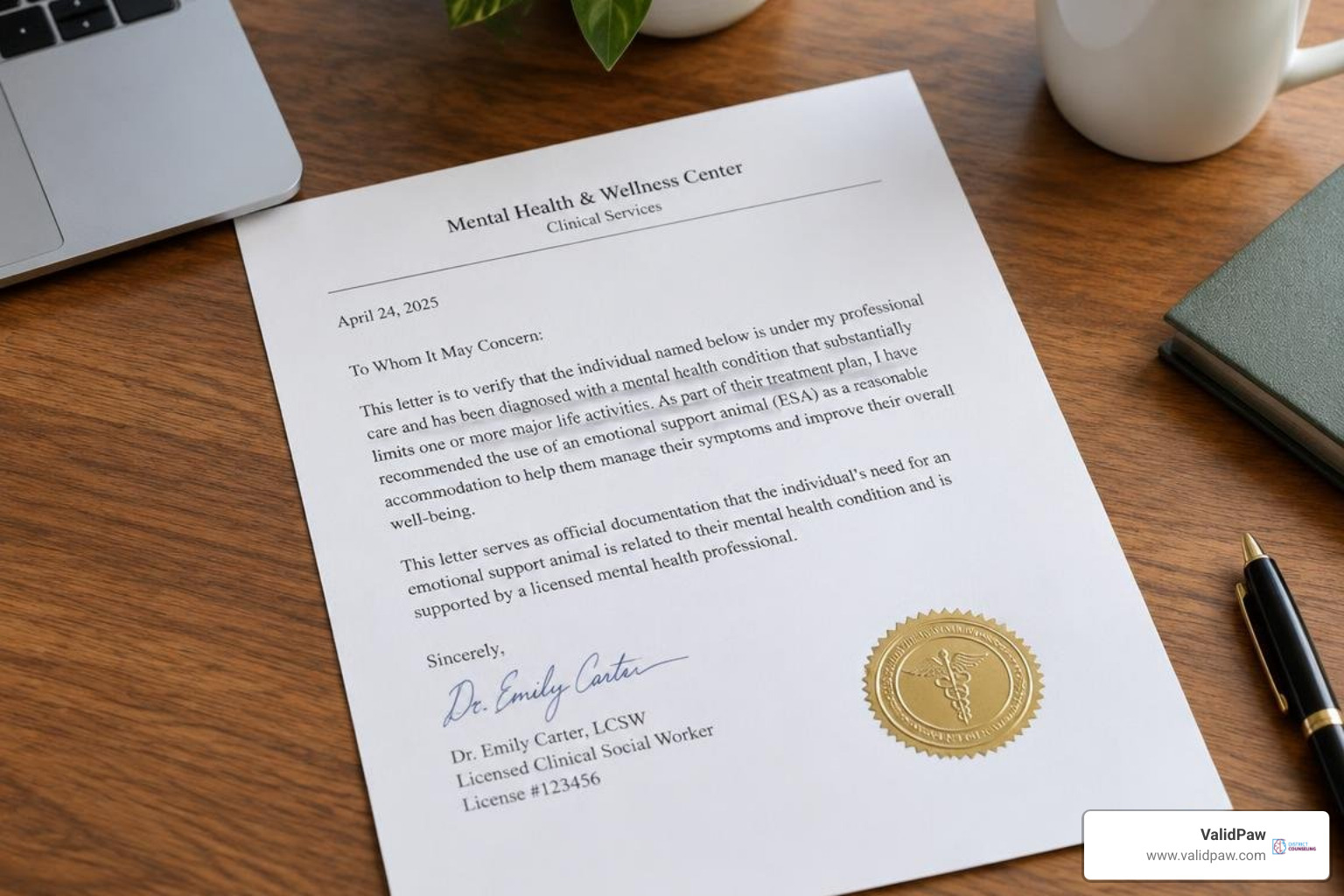
To meet standard verification requirements, your letter must be issued by a licensed health professional and contain specific factual components. Official guidance for medical professionals outlines the elements needed to establish credibility:
- Professional Details: The practitioner’s full legal name, clinical license type, state of licensure, license expiration date, and active practice contact details.
- Official Letterhead: Issued directly on the clinician’s professional letterhead, complete with date of issuance and original signature.
- Disability Status: Clear affirmation that you meet the legal definition of an individual with a physical or mental impairment that substantially limits one or more major life activities.
- The Disability-Related Nexus: An explanation that the animal's presence alleviates one or more identified symptoms or functional limitations associated with your condition.
- Animal Description: The type of animal (and specific identifier or name, if established).
Understanding what landlords look for in verification letters ensures your documentation passes administrative checks without unnecessary delays.
Who Can Write Your ESA Letter and Privacy Protections
A valid letter can be written by a broad range of licensed professionals who have evaluated your health needs:
- Licensed Professional Counselors (LPC) and Licensed Clinical Social Workers (LCSW).
- Licensed Marriage and Family Therapists (LMFT).
- Clinical Psychologists and Psychiatrists.
- Medical Doctors (Physicians) and Nurse Practitioners.
Telehealth evaluations by licensed clinicians are legally recognized under HUD guidelines. At ValidPaw, our licensed therapists provide authentic, compliant evaluations via telehealth for residents in Texas and all 50 states, issuing verifiable documentation within 24 to 48 hours without requiring in-person office visits.
Crucially, you are entitled to strict medical privacy. Federal laws prevent property managers from demanding private medical charts, therapy session notes, or invasive diagnostic specifics. Knowing what landlords cannot legally ask protects your personal health history during the review process.
Step-by-Step: How to Submit Your ESA Letter and Eliminate Housing Fees
Requesting a reasonable accommodation is a structured process. Presenting your request cleanly and maintaining thorough records prevents misunderstandings and ensures rapid approval.

To ensure smooth processing, submit your documentation through proper channels using methods for providing solid ESA proof to your leasing office.
How to Request Accommodation Using an Emotional Support Animal Letter for Housing
Follow this sequential approach when submitting your paperwork:
- Obtain Your Documentation First: Secure your clinical letter before bringing the animal onto the property whenever possible.
- Draft a Formal Written Request: While oral requests are technically recognized, written submissions create an immutable paper trail. You can adapt a free ESA accommodation request template to state your intent clearly.
- Determine Your Timing: Decide when to notify your landlord. Many renters prefer to submit their accommodation request after their initial rental application is formally approved to avoid subtle leasing bias.
- Attach Animal Records: Provide up-to-date local vaccination records and proof of municipal licensing where required by local health ordinances.
- Keep Written Logs: Retain electronic copies, email timestamps, and signed delivery confirmations of all communications.
Navigating Breed Restrictions and Weight Limits for Apartment Living
Many rental properties enforce strict building policies prohibiting certain dog breeds (such as Pit Bulls, Rottweilers, or German Shepherds) or capping animal weight at 25 or 50 pounds.
Under federal fair housing regulations, emotional support animals are fully exempt from standard property breed bans and weight limits. An assistance animal cannot be rejected simply because of its breed or size. Housing providers must evaluate each animal on an individualized basis rather than relying on generalized assumptions about a breed.
Tenants should review how breed restrictions apply to assistance animals and check specific guidelines regarding apartment weight thresholds to resolve policy disputes effectively. Furthermore, while dogs and cats are the most common ESAs, unique domesticated animals like rabbits or hedgehogs can also qualify when properly documented.
Landlord Rights, Permitted Inquiries, and Legal Grounds for Denial
Housing providers are permitted to verify incoming requests, but their review must remain within federal guidelines. Understanding essential ESA landlord rules helps both parties conduct an orderly review.
When disability and accommodation needs are not obvious, landlords are legally permitted to confirm the authenticity of the verification letter with the issuing clinician. Reviewing the steps to secure prompt landlord approval helps you avoid administrative stalls.
Valid Reasons Landlords Can Deny an Accommodation Request
While fair housing protections are broad, accommodation requests can be lawfully denied under specific circumstances:
- Direct Threat to Health or Safety: If an individual animal exhibits unprovoked aggression, biting, lunging, or threatening behaviors toward other residents or staff, and that risk cannot be mitigated.
- Substantial Physical Property Damage: If the animal causes significant structural harm to the unit or common areas that the handler fails to control.
- Undue Financial and Administrative Burden: If accommodating the animal imposes extraordinary, unsustainable financial or operational hardship on the housing provider.
- Fundamental Alteration of Operations: If the request forces the provider to change the core nature of its residential services.
- Inauthentic or Insufficient Documentation: If the applicant submits an unverified, generic certificate or refuses to provide legitimate verification from a licensed clinician.
What to Do If Your Landlord Ignores or Illegally Denies Your ESA
If a property manager refuses to respond, creates unnecessary administrative hurdles, or issues an unlawful denial:
- Request an Interactive Dialogue: Remind the provider in writing of their legal obligation under HUD rules to engage in an interactive discussion before issuing a final rejection.
- Present Regulatory Guidance: Share official HUD memoranda clarifying that assistance animals are exempt from pet rents and standard breed limits.
- File a Housing Discrimination Complaint: You may file a formal complaint with the U.S. Department of Housing and Urban Development (HUD) Office of Fair Housing and Equal Opportunity (FHEO) or your state's civil rights agency.
- Seek Legal Assistance: Consult with fair housing advocacy groups or specialized tenant-rights attorneys to enforce your accommodation rights.
Frequently Asked Questions About Emotional Support Animal Housing Laws
Can my landlord charge an extra security deposit for my emotional support animal?
No. Housing providers cannot charge any specialized assistance animal deposit, pet deposit, or surcharge. You are still responsible for your standard, general security deposit required of all tenants. If your assistance animal causes physical damage to the flooring, walls, or fixtures beyond ordinary wear and tear, the property manager may deduct repair expenses from your standard security deposit or bill you upon move-out.
Does an emotional support animal require special obedience or service training?
No. Unlike service animals covered by the ADA, emotional support animals do not require specialized task training or formal service certifications. Their therapeutic support derives from the emotional bond and companionship they provide. However, the animal must remain well-behaved, housebroken, and manageable in shared community spaces.
How often do I need to renew my emotional support animal letter for housing?
Most property managers and housing authorities require an ESA verification letter to be dated within the last 12 months at the time of submission or lease renewal. Scheduling an annual telehealth check-in with your mental health clinician ensures your documentation remains up to date and legally defensible.
Conclusion
Securing an emotional support animal letter protects your right to keep your supportive companion by your side while saving you hundreds or thousands of dollars in unfair pet rents and non-refundable deposits. Federal fair housing rules establish clear protections for renters who require assistance animals for emotional and mental well-being.
If you are ready to eliminate unlawful pet fees and secure reliable documentation from licensed professionals, ValidPaw is here to assist. Complete your evaluation and get your official ESA housing letter through our streamlined telehealth platform, featuring fast 24 to 48-hour turnarounds and direct landlord verification.

